Recently, I have received a couple of emails asking about mobile home steps and smaller porches or platforms. While we do have a couple of popular articles titled 45 Great Manufactured Home Porch Designs and 9 Beautiful Manufactured Home Porch Ideas, they cover larger decks and porches. This article will focus on mobile home steps or stairs with small platforms only.
Some of us need to save up before we can build our dream deck or porch but we need to get in and out of our home safely in the meantime. Here’s everything you need to know about mobile home steps whether you want to buy or build:
There is a difference between steps and stairs but we usually use one word to describe both.
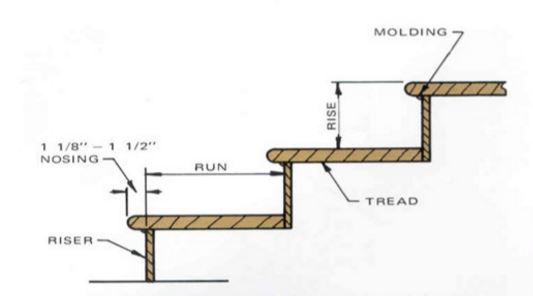
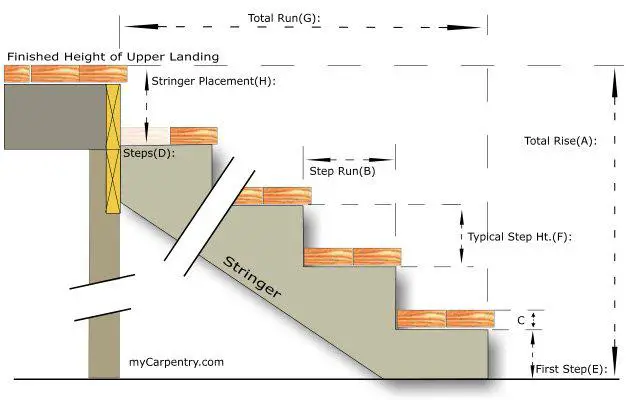
Technically, steps have three (3) or less risers and stairs have four (4) or more. Of course, you’ll need to know what a riser is to understand this difference. Below are the basic terms used when talking about steps or stairs:
Before we get into all the details about mobile home steps you’ll want to know the following terms and details about steps.
The rise and run of steps is very important. The rise is the vertical height, or space, between each step. Riser height will be determined by your local code but the standard height is around 7 3/4″.
The run is the tread depth (or horizontal depth) and typical code will require it to be approximately 8 1/4″ to 9″.
A stringer is the frame, or what the tread sits on on wooden steps. If the steps are 36″ wide or more there must be three stringers, one on each side and one in the middle.
The slope is the diagonal aspect of the stairs. It is important when creating stringers so you know exactly how to make the cuts. The ideal slope is 30-35 degrees.
The tread is the part of the step that you step on. The depth, or width, and length of the step’s tread is regulated by local code but it’s usually around 1″-1.25″ thick and 10.5-11.5″ wide.
The part of the tread that protrudes over the riser. It shouldn’t protrude more than one (1) inch.
These terms are part of the support that you hold onto as you walk up and down the stairs. A baluster is the vertical support for the handrails.
Code usually requires at least one handrail to be present on steps with four risers or more. The height of the railing is also determined by local code but in general it’s usually 34 inches.
The top four materials for mobile home steps are wood, concrete, fiberglass, and metal. Each material has advantages and disadvantages.
Wood is the most popular material when building your own mobile home steps because its convenient and cheap. It’s important that you choose the right type of wood though.
Wood is easy to get, fairly affordable, and easy to work with but it is susceptible to rot, insects, and water damage.
Weight, durability, insect and waterproofing, staining ease, and longevity are all important aspects that must be considered when choosing the wood for your mobile home steps.
There are three basic types of decking lumber: treated, cedar, and composite wood. The Family Handyman has a great article that covers the pros and cons of each wood here.
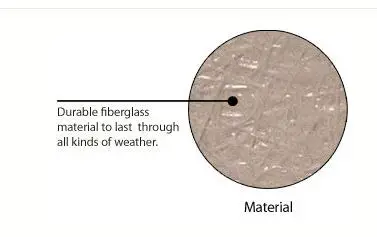
Fiberglass is a smart choice for mobile home steps. It is lightweight, affordable, and long-lasting. Fiberglass mobile home steps are usually framed in wood and then fiberglass is formed around it.
Fiberglass is weather resistant. Water, wind, or sun will not damage it. It is also a very low-maintenance material and can last for decades.
Ordering fiberglass mobile home steps online is a great decision since the numerous online suppliers keep prices competitive. Make sure to factor in shipping costs into the price of the steps as you shop.
Metal steps are another favorite of mobile homeowners. Metal mobile home steps are easy to move and setup because it is lightweight and can be broken down flat with the removal of a few screws. Metal is long lasting but it can rust.
Metal is also an affordable choice for mobile home steps. While you’ll probably not want to use them permanently, they are a great choice for temporary or RV use.
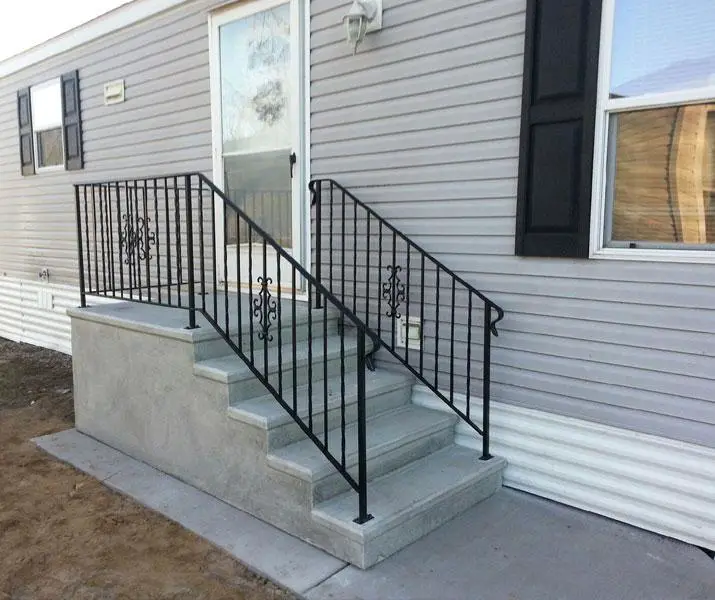
Concrete steps are a popular choice for mobile home steps. A huge advantage of concrete is its longevity, concrete can last up to century.
There are a few disadvantages of concrete. Concrete costs more, it weights a ton, and the ground preparation required to get concrete steps level is more difficult than other step material. Concrete stairs can settle and become unlevel over time, too. You’ll likely need a machine to move concrete steps if there are more than three risers.
This price comparison chart was found on Complete Mobile Home Supply’s website. It will give you an idea of the average price for each material based on the number of steps needed:
If you need steps quickly you’ll want to buy pre-made mobile home steps.
Fiberglass and metal are the two most popular options for online shoppers due to weight and shipping restrictions. However, local home improvement stores and mobile home supply centers will have concrete and/or wooden steps for sale. Below are a few examples of steps available online:
The Dura Grip II Fiberglass steps have a 12” landing surface; the wider the landing the less likely you are to take a tumble due to missed steps. If someone has a tough time getting up and down, wider steps can help.
The Dura Grip II series offers a textured stone-like surface that provides better footing and a 10 year manufacturer’s warranty.
These would be excellent steps if you already have a patio for your mobile home, but still need those extra steps from the patio deck to your front door.
The steps are pine and have been treated so that they can handle the seasons and have the strength to support you as you go in and out of your home. Holding the steps in place is a cross-braced metal frame. This step style comes in various sizes; so it is an economical choice whether it is a big or small help needed. The pressure treated wooden steps come with a hand rail, so there is no need to purchase them separately.
For The Best Prices Click Here
Think of this option as the Dura Grip’s little brother! Treated wood is used as the support for the fiberglass shell. The fiberglass is coated with a resin for extra strength and slip resistance. These steps also can come in two different color schemes. These steps also come with a hand rail when purchased.
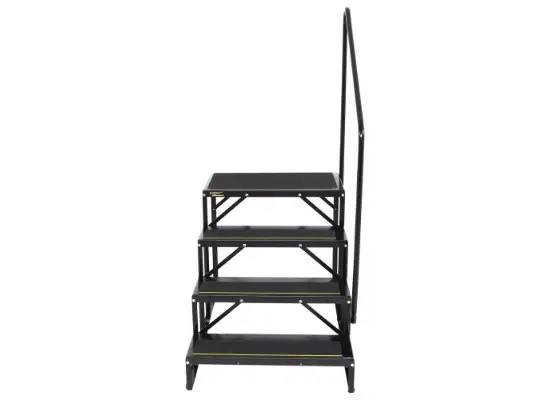
Metal is an affordable and convenient option for mobile home steps. Steps like the one above may not be ideal for permanent needs but for low-cost and temporary steps metal may be a good choice. These are ideal for RV use as they are foldable and lightweight.
The metal step example above has a large landing or platform at the top of the steps. This is a great design for mobile home steps.
For homeowners with mobility issues a ramp may be the perfect choice. A standard example is a portable wheelchair ramp. They are usually made of high quality aluminum and can support up to 800 pounds. The two tracks can separate for easy moving and storage. Several sizes are available, from two to six foot.
This ramp model is specifically intended for wheelchair accessibility over stairs, and up ledges. If you are wanting a more grip on ledges with your wheelchair accessible ramp, a lip extender can also be purchased.
Buying mobile home steps is usually the most convenient option but you can always build your own! If you have some construction experience you should have no problems.
Calculating the stringer cuts and slope is probably the most difficult part of the entire mobile home step building process. Luckily, there are several step calculators online that will help you.
Below is the material list from Doityourself.com on their article titled How to Build Outdoor Stairs:
[column size=one_half position=first ]
[/column]
[column size=one_half position=last ]
[/column]
MyCarpentry.com has two handy stair calculators here that you can use to determine everything you need when building your own stairs.
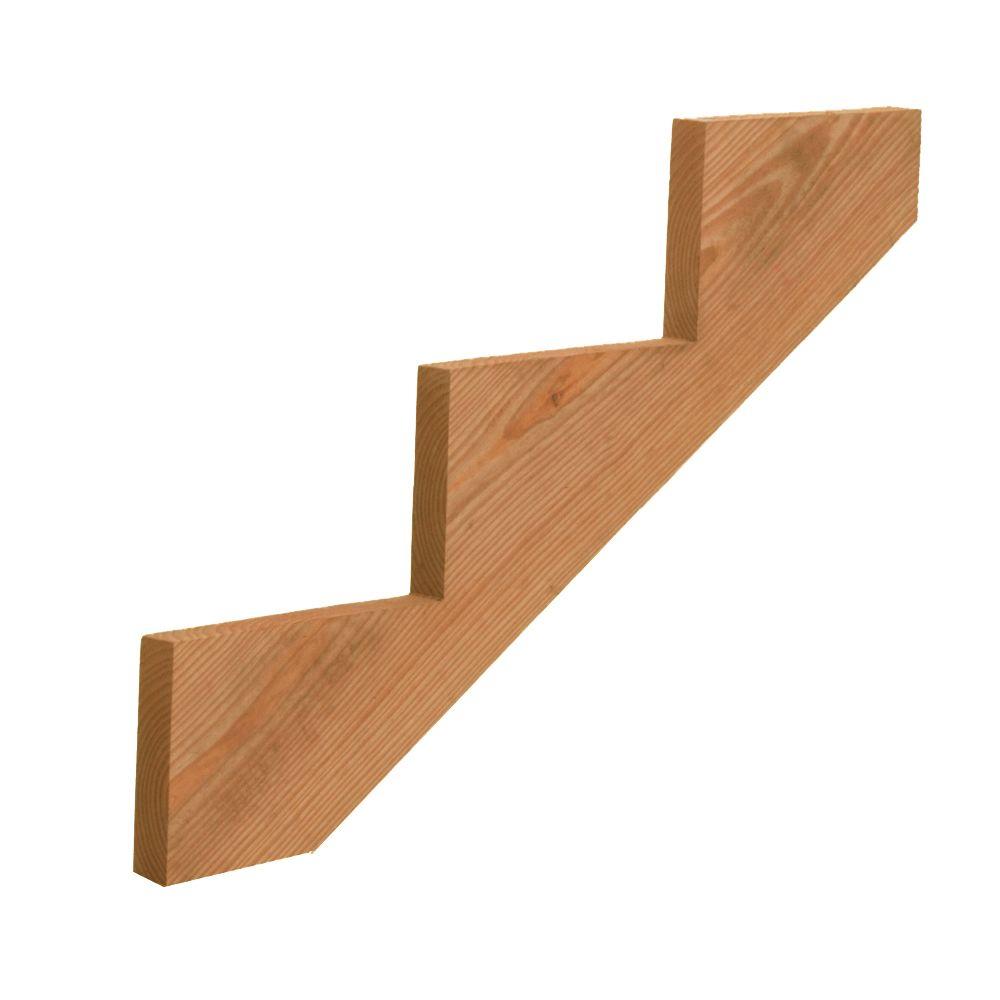
You may not even have to do much math if you buy pre-cut stringers. You can buy a 3 step stringer from your local home improvement store for less than $20. This stringer at Home Depot is $13.97:
As with all home construction projects, rules and regulations will vary. Some states require a platform at the top of the steps and some states regulate the width and height of each riser.
Carpentry-pro-framer.com has an extensive list of codes for stairs:
Keep in mind that these are just basic codes. Check your local codes before building your own mobile home steps.
There is a lot to building and buying mobile home steps so it’s important that you continue research (especially if you are going to build).
When I searched Google for information about building outdoor steps there were over 35,600,000 results. The following seemed to be the most informative as they included photos or videos and explained the process in simple terms:
Instructables: Step-by-step instructable (with images)
Popular Mechanic: How to Build Stairs in 3 Easy Steps
Do It Yourself: How to Build Outdoor Stairs
Slide Player has several decks about building steps here.
Please note, some of the pre-made steps shown above are from my affiliates. I picked those models because they represent the basic types and materials available for mobile home steps. Your support is always appreciated as we get a small percentage of the sales if you buy from the affiliates using the links provided. It helps us create more great content for you.
Thank you for reading Mobile and Manufactured Home Living!
Image Sources: Featured Image
Learn about mobile home additions and understand the pros, cons, and necessary steps for a…
Learn how to paint mobile home walls effectively, overcoming challenges with shiny surfaces and battens…
There're a ton of smart storage hacks to organize your camper on Pinterest and Amazon…
A small bathroom should be beautifully focused on function. Of course there are a few…
Over 100 beautiful manufactured home deck and porch designs plus free design plans and DIY…
If you own an older mobile home with a flat roof or have needed to…
This website uses cookies.