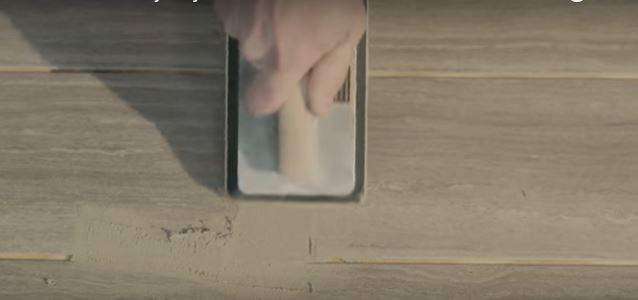
Luxury vinyl tile is a hot new trend in home decor and design but can you use vinyl tile in manufactured homes and Should you?
Flooring plays a huge factor in home decor, energy efficiency, and comfort. It can completely change the look of a room and help reduce your heating and cooling costs.
There are several flooring options available so it’s important to learn about each material’s strengths and weaknesses. We’ve previously covered a few flooring choices here. Today, we’re going to take a look at using vinyl tile in manufactured homes.
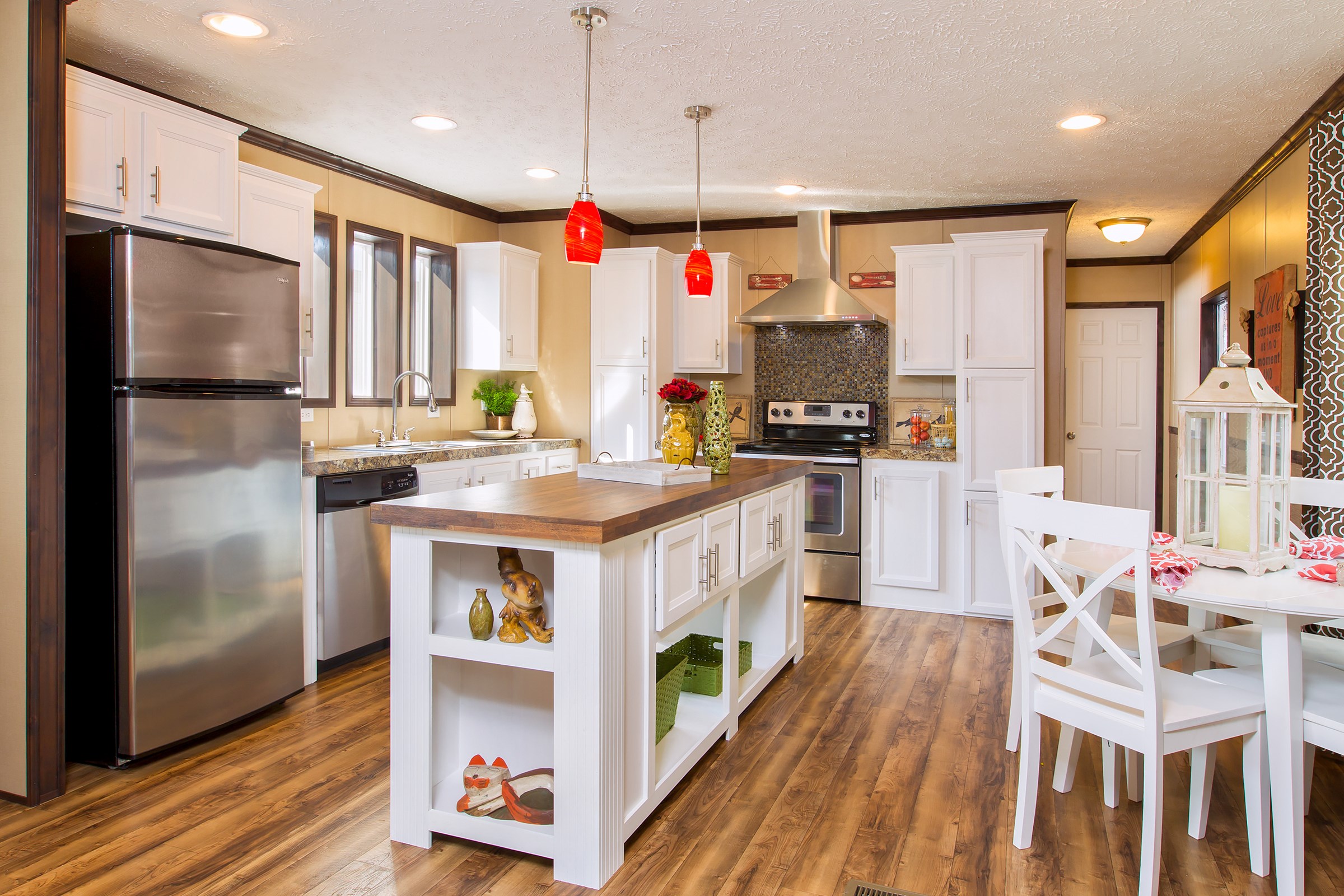
This new manufactured home from Clayton Homes has gorgeous vinyl tile flooring:
Vinyl tile in new manufactured homes, especially kitchens, baths, and mudrooms, is a huge trend. If it’s in the new homes then it must be a good choice for older mobile homes, right?
Here’s what I learned about vinyl tile in manufactured homes:
I’ll be honest, I thought linoleum and vinyl were essentially the same product.
While linoleum and vinyl look alike and are both available in rolls and tile, they are completely different.
Linoleum is a made from natural materials and vinyl is completely synthetic. Armstrong explains the difference between linoleum and vinyl on their blog:
“Linoleum is made from natural components like linseed oil, tree resin, wood and cork flours, limestone, and pigments. It even comes with a jute backing. Its ingredients provide it with that unique scent, evoking memories of schools and kitchens of yore.
Vinyl is manufactured using vinyl, felt, fiberglass and dyes.”
Vinyl has lower maintenance than linoleum and is great for the do-it-yourself crowd because it’s easy to install. Vinyl flooring is also more budget-friendly than linoleum but it has a shorter lifespan. Linoleum can last 20-40 years while vinyl tends to have a 10-20 year lifespan.
Linoleum has many benefits but you must apply a sealant over it to give it a full water resistance. Vinyl doesn’t need any additional sealants.
The water resistance and cost makes vinyl tile an ideal material for mobile home flooring.
In addition to better vinyl, there’s been a good deal of advancement in the adhesives industry. Glues are stronger and last longer than ever. Together, the advancements in vinyl and adhesives have created a vinyl tile that is easy to install, long-lasting, and durable. Keep in mind, you cannot compare the box of tile at your local dollar store to the more expensive vinyl tile at your flooring center. Flooring tends to be a ‘get what you pay for’ product.
There are different types of vinyl tile available based on thickness, material composition, pattern, and adhesive.
Luxury vinyl tile (or LVT) has become a hot trend in the home building and design world. But what exactly is luxury vinyl tile?
About.com explains it best:
“Luxury vinyl flooring (LVF) is resilient flooring that closely mimics the look of natural materials–either wood or stone–by portraying realistic images and textures.”
Vinyl tile with patterns replicating wood grains, stone patterns, or traditional tile designs are very popular! Designers are putting these vinyl tiles everywhere.
The vast array of designs make vinyl tile a great flooring choice for manufactured homes. Luxury vinyl tile can come in an array of shapes and sizes. Standard square, rectangle, and plank are the most popular choices.
You will want to purchase all the flooring you need at one time. This is especially important if you are using a single floor covering for your entire home. You can’t count on stores to keep the same patterns or even the same brand. There are also differences in the manufacturing so products produced Monday may be a shade darker than Thursday’s run.
There are a few differences between manufactured homes and site-built homes and they should be considered when remodeling. Subfloors and marriage lines are the most obvious differences. Flooring changes will involve both.
Just like a site-built home, manufactured homes have a subflooring. The difference is that the lower-cost manufactured home models usually have particle board subfloors or OSB. Particle board soaks up water like a sponge so it is important that the subfloor be well-protected in all rooms with water features.
Subfloors that are bowed or have soft spots must be repaired or replaced before you install new floor covering.
The marriage line in double wides and triple wides is another issue that must be considered when choosing a floor covering.
Professionals stress that traditional tile should not be used if you have to cross the marriage line. Uneven leveling between the two sides can cause cracking in traditional tiled flooring. Using carpet and vinyl, in either a single sheet or tile, remedies that issue.
You may or may not have to remove your home’s flooring before you lay new flooring down. You can install floating laminate flooring right over carpeting. Some vinyl tile brands can be installed on top of sheet vinyl, too.
If you have to replace or repair your manufactured home’s subfloor you will need to remove the current floor covering.
Learn how to patch a mobile home subfloor here.
Removing carpet, linoleum, or vinyl sheet flooring from a factory-built home can be difficult.
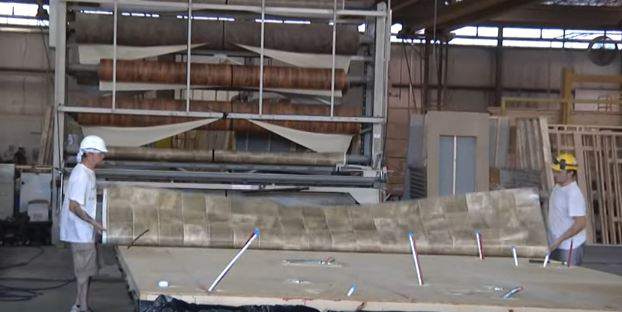
Manufactured homes are built from the ‘ground up’ so carpeting and sheet flooring is laid down in a single sheet before walls are built. You can’t just rip it out. Sheet flooring is often glued as well so you can expect a good wrestling match.
You will have to cut the carpeting or vinyl around the perimeter of the room and ‘dig out’ as much as you can from under the wall.
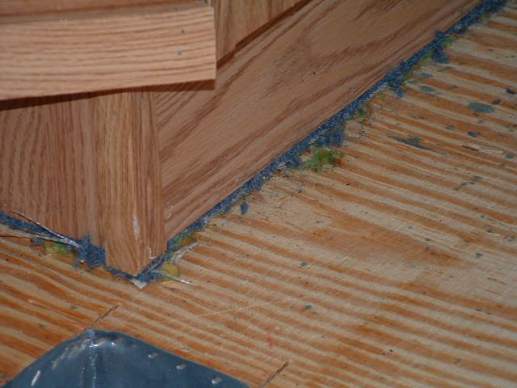
Here’s an image showing the carpet left under a cabinet in a manufactured home:
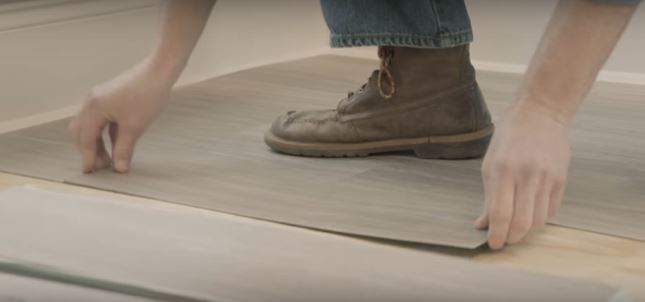
Different brands of luxury vinyl tile vary slightly on installation. In general, there are three approaches for DIY or expert installation:
Most installations are completed with just a few tools: chalk-line, rubber mallet, pencil, and a tape measure.
According to product experts at Ferma Flooring, luxury vinyl flooring installation begins with underlayment:
“A protective or noise-reducing barrier, underlayment goes on top of the subfloor before the flooring material is installed. . . The type of underlayment used will vary depending on what type of flooring is being installed.”
Here’s their list of acceptable subfloors from Ferma Flooring:
Luxury vinyl tile can be grouted to increase its water resistance. Grouting can make the flooring look more cohesive and more like ceramic tile.
Durable and easy to maintain, vinyl tile is a practical flooring choice for manufactured homes. Stain and moisture resistant, vinyl tile cleans easily and keeps your home comfortable. The soft and spongy feel of the luxury vinyl tile makes standing and working easier on your feet and back, too.
Here’s a comprehensive list of luxury vinyl tile manufacturers.
Learn more about flooring replacement for manufactured homes here.
As always, thanks so much for reading Mobile and Manufactured Home Living! Have you installed luxury vinyl tile in your home? We’d love to see it!
Armstrong’s The Floor Board Blog, About.com’s Home Renovations Blog, Flooring-Professionals.com, Laminate-Flooring-Installed.com, Foremost.com
Learn about mobile home additions and understand the pros, cons, and necessary steps for a…
Learn how to paint mobile home walls effectively, overcoming challenges with shiny surfaces and battens…
There're a ton of smart storage hacks to organize your camper on Pinterest and Amazon…
A small bathroom should be beautifully focused on function. Of course there are a few…
Over 100 beautiful manufactured home deck and porch designs plus free design plans and DIY…
If you own an older mobile home with a flat roof or have needed to…
This website uses cookies.