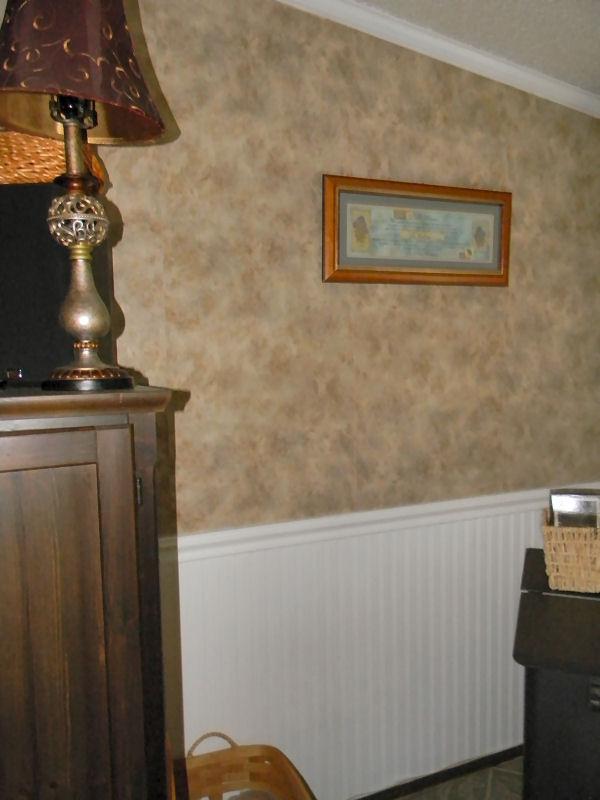
Updating vinyl walls in mobile homes is one of the quickest and easiest updates you can do. We can completely change the entire look of a room with a single paintbrush!
Unfortunately, painting mobile home walls is time consuming (especially the cleaning part).
Older manufactured home usually have a faux wood paneling or walls made from vinyl on gypsum (VOG) panels. These walls have a coated paper facing that repels water and ‘holds’ the gypsum together. This coated paper makes painting mobile home walls difficult.
If you’re fortunate enough to have the faux wood paneling that was popular before the 1980’s you’ll have a much easier time painting your walls. The wood paneling doesn’t have a water repellent paper facing so binding paint to it isn’t as difficult.
In this article, we’ll cover the most popular options to update and paint your mobile home walls with an emphasis on painting VOG walls with glossy paper facing.
VOG stands for Vinyl on Gypsum (or vinyl over gypsum). Gypsum is calcium sulfate dihydrate, a soft and lightweight white or gray chalk-like mineral.
Vinyl on gypsum panels is typically 5/16″ thick with a glossy paper coating. They do not have tapered edges so installers use battens, or strips, to cover the seams where two panels meet. These battens are notorious within the mobile home world – most homeowners dislike them immensely.
VOG panels are used because they are lightweight, water resistance, easy install, clean, and maintain.
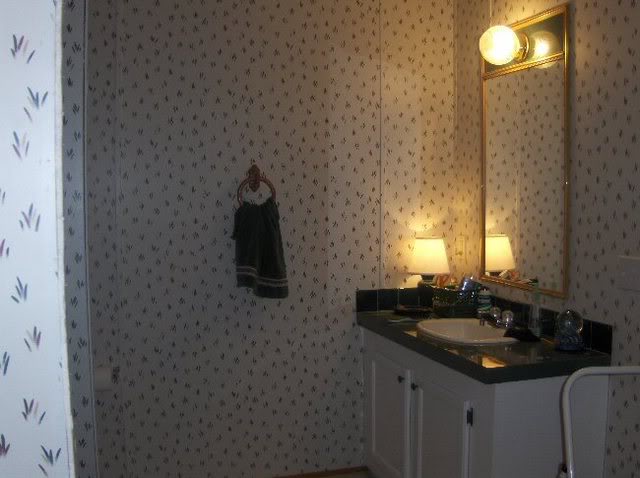
Below you can see low-gloss VOG panels used in a manufactured home bathroom:
Fortunately, modern manufactured home builders are beginning to use different wall materials. It may still be made with gypsum but the top coating doesn’t have the high gloss coating or the quickly outdated patterns.
Painting is the easiest and cheapest method to update mobile home walls. A single color, as opposed to an outdated pattern, can update a room quickly.
Painting is especially easy if you leave the battens, or strips, that cover the seams alone and simply paint over them.
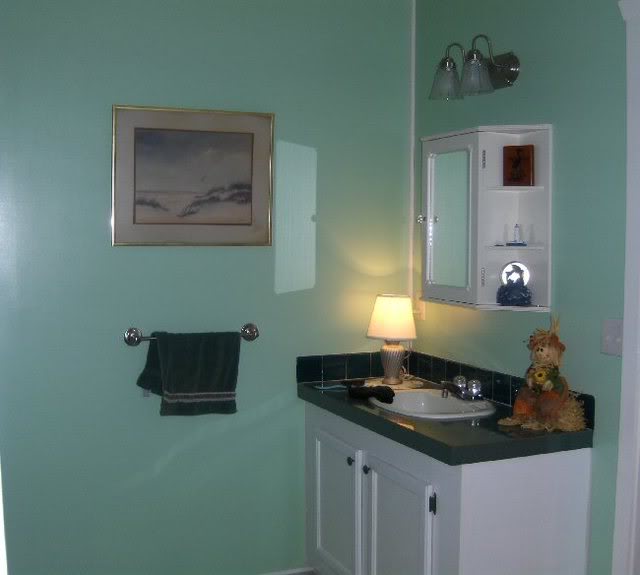
Here’s the same bathroom shown above after the room was painted a solid color:
Painting the vinyl coated walls in a mobile home is a bit more difficult than most realize. The glossy paper coating on the walls requires more preparation than a standard sheetrock wall.
Fortunately, many mobile homeowners have painted their walls with great success and we’ve collected helpful advice and tips from them. Here’s the process they recommended:
Paint and primer will not stick to dirty walls.
Smoke from cooking, dander from pets, and airborne particles from the furnace and air conditioner naturally stick to walls so you need a detergent or non-abrasive cleaner to get the walls as clean as possible.
Every inch of the wall should be wiped with the cleaning agent, allowed to dry, and then wiped again. Repeat if necessary.
You want the primer and paint to bond to every part of the wall.
The suggestion we received most was to buy the highest quality paint and primer you can afford.
The paint industry continuously improves their recipes so chances are you will find a great primer and paint (or combination primer+paint) if you stick to the better-known brands. Ask your local home improvement store for the latest recommendation.
Unfortunately, better paint technology means higher prices so expect to spend at least $25.00 per gallon.
See the section below for top brand suggestions.
Using high-quality brushes and rollers is another popular recommendation from homeowners that have painted their mobile home walls successfully.
High-quality brushes and rollers transfer the paint to the walls better and give a more uniform finish which is exactly what you need.
All painting professionals will tell you that it’s better to paint walls in several light coats instead of one or two heavy coats. This allows the paint to dry faster and the finish will be more uniform and smooth.
Above is an image of two light coats of Kilz Primer done by Geneva at MyHeartsSong.com.
Knowing which company manufactured your home’s VOG panels will help you determine their recommended paint and primer. Unfortunately, not all homeowners have access to that information so a little guessing is required.
CDS, a large VOG manufacturer, recommends an oil primer with two coats of alkyd or latex semi-gloss enamel paint:
Other gypsum board manufacturers have released their own recommendations and tips:
Related: Create an Awesome Gallery Wall for Less Than $50!
Choosing which primer and paint (or combination product) to use on your mobile home walls is probably the trickiest part of the whole job. Go to 3 different paint stores and you will hear 3 different opinions.
Below is a list of products that have worked well on mobile home walls (they are listed in no particular order) based on bloggers and readers that have had great results when painting their mobile home walls:
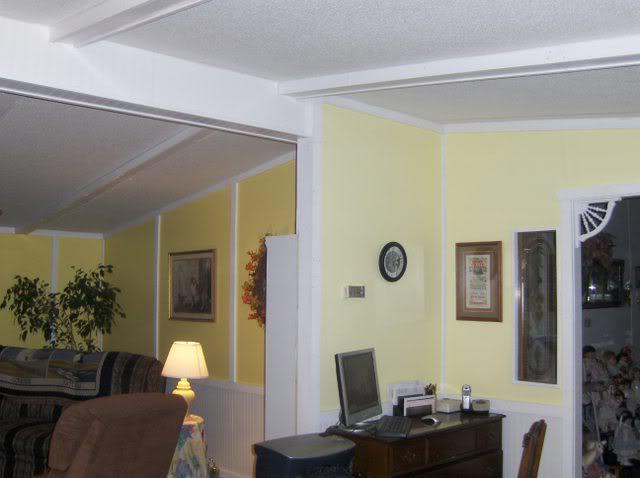
Above is a great mobile home wall update where the owners used the VOG panel battens to their advantage.
The owner painted the walls, added wainscoting on the lower third of the wall, and replaced the factory-installed battens with 1″ trim. This gives the space a whole new look without the hassle of removing the battens.
Battens are used to cover the seam where two VOG wall panels meet. By installing battens the factory is able to build homes faster and cheaper.
Unlike drywall or sheetrock, VOG panels do not require taping and mudding so the edges of the panels are not tapered and the installation process is much faster. This is ideal in a fast-paced manufactured home factory. This is not ideal for homeowners that want a seamless wall.
You can remove the battens in your mobile home. Once the battens are removed you can paint, texture, or wallpaper over the walls.
Removing the battens is the easy part, filling in the gaps that the battens were covering, and then making the entire wall look cohesive is the difficult part.
Related: Removing Walls in a Mobile Home
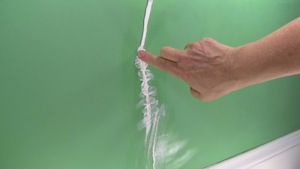
Use an acrylic caulk to fill in the gap or crack between your VOG wall panels. Remember, the panels do not have tapered seams like a sheet of drywall or sheetrock so filling in the gap smoothly and evenly can be difficult.
Here’s the process we recommend for using caulk to fill in your VOG wall seams:
You’ll want to be careful when you remove the battens or strips that cover the seams between two VOG panels. A small thin pry bar that will fit under the strip
Here is a video that shows a man removing the strips that cover the seams of two modern VOG panel used in a manufactured home:
Prime the wall and ensure an even coat has been applied in the gap that the batten used to cover. Let dry. Repeat if necessary.
Choose the caulk most suitable for your walls. Use the charts below to choose the best caulk.
Place an even bead of caulk in the gap to fill in the crack (you’ll need to work quickly at this point).
Using a wet finger, or smooth caulking tool, run along the gap to create an even bridge of caulk between the two VOG panels.
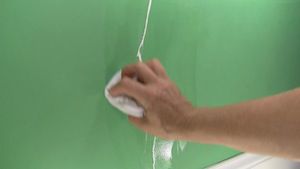
Use a straight-edged tool such as a credit card to smooth the caulk so that it creates an even surface across the wall. This process may require a few attempts to get enough caulk into the gap. Carefully remove any excess caulk from the wall with a wet rag.
Allow to dry and ensure there is no shrinkage (choosing the correct caulk is important to keep the caulk from shrinking). Paint, texturize, or cover the wall with wallpaper, fabric, bead-board, shiplap – just about anything can be used to update mobile home walls as long as the framing can handle the weight.
The two main types of caulk is silicon and latex but there are some caulks that are a combination of both.
The Home Depot has a handy rundown of each type of caulk below:
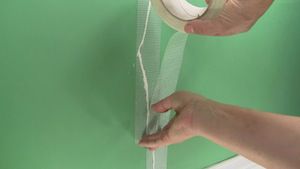
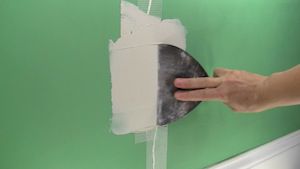
You can also use drywall compound instead of caulk, or if you want to take it even further, you can tape and mud the gap between the two panels.
Admittedly, it is difficult to get the tape even and it will be very difficult, if not impossible, to get the seam perfect since your VOG panels do not have tapered edges like drywall or Sheetrock. Still, if you’re more comfortable with drywall compound and tape it can be used to fill in the gaps.
You’ll still want to primer the wall and the seam between the VOG panels. Tape and mud as you would sheet rock.
Check out this video for more tips on how to paint those vinyl walls in your mobile home:
Adding a texture to your mobile home walls is a great method of updating your mobile home walls.
Drywall compound is used most often to add texture because it’s affordable, easy to get, easy to work with, and easy to clean.
You’ll still want to use a primer on your walls before you apply the texture to get the proper bond. Once the primer is dry you can begin adding your texture to the wall.
You can go with simple textures such as the ‘stucco’ look, the sand or orange peel, or complex textures. You can even use stencils to create raised textures:
The following websites provide great step-by-step instructions for 3D wall texturing and stenciling with compound:
Domestic Diva: Raised Wall Art Trees
PlumDoodles: Faux Bricks Using Drywall Mud
One of our favorite websites, My Hearts Song, shares a step-by-step article about how they removed the strips and added an orange peel texture to their single-wide mobile home walls.
If removing the strips is your main priority and you want to texture your walls lightly, then you’ll definitely want to check it out. Geneva, the owner, has a great question and answer section, too.
Related: 11 Cheap DIY Wall Decor Ideas
You can give your mobile home walls a whole new look by removing the strips (battens) and hanging wallpaper.
If using wallpaper, you will want to make sure the paper is thick enough for your needs.
Paintable wallpaper is easy to hang but it needs to be thick enough to withstand the wet paint and keep the paper from showing the gap made by removing the battens. Of course, you can always fill the seam in with caulk or drywall compound (see below).
MyMobileHomeMakeover.com shares their experience wallpapering their double wide’s walls. You can read the article here. The article mentions one issue they encountered when wallpapering their bathroom:
In a bathroom we redid, we used only the wall repair wallpaper and painted it when we were done. This worked fairly well, but in some spots you can still tell there is an empty strip below the paper.
My 1978 mobile home had faux wood paneling throughout the home. It was super easy to paint thankfully. Two coats and I was done. However, I kept the paneling original with the lines or grooves. You don’t have to keep those, though. You can fill them in with spackle and then paint over them. Rachel Ray had a segment on her show that shows you how:
https://youtu.be/ihVe2zztaRo
It is not easy to hang wallpaper with intricate patterns so try to find a solid or simple pattern that can be matched easily.
This Old House has a great tutorial for hanging wallpaper here.
Related: Using Accent Walls in Your Mobile Home
Many people have painted, textured, and papered their vinyl walls in mobile homes and you can, too!
The trick is to get the best bond possible and that’s made possible by cleaning the walls well and using a good primer.
Learn about mobile home additions and understand the pros, cons, and necessary steps for a…
Learn how to paint mobile home walls effectively, overcoming challenges with shiny surfaces and battens…
There're a ton of smart storage hacks to organize your camper on Pinterest and Amazon…
A small bathroom should be beautifully focused on function. Of course there are a few…
Over 100 beautiful manufactured home deck and porch designs plus free design plans and DIY…
If you own an older mobile home with a flat roof or have needed to…
This website uses cookies.