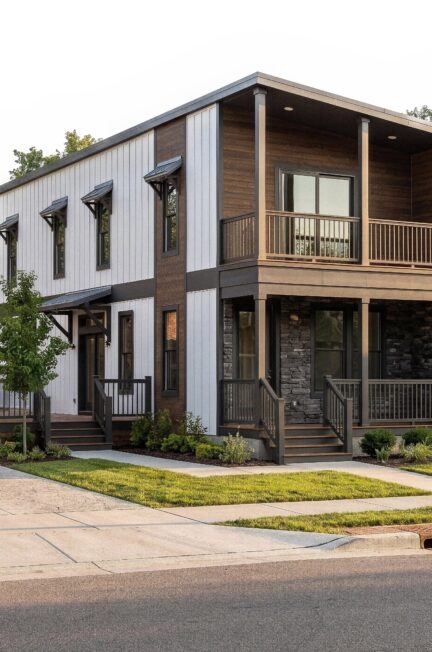
A 2-story manufactured home made it’s national debut on the National Mall in Washington, D.C., in September 2026 and it’s pretty darn exciting.
The concept home, built by Champion and called the New Horizon, is 100% manufactured home – meaning it was built on a permanent steel chassis in a factory but the chassis for the second story is a bit different thanks to some HUD code regulation changes.
Manufactured homes have always had a bit of a design problem, or rather a lack of design option problem. The chassis, while a modern marvel of residential construction, has given us some amazing advantages in home construction. It allows a full-sized home to be transported at speeds of 55 mph or more but that same chassis limits a manufactured home’s design possibilities.
In this article, we’ll go over the details of the New Horizon and why a second floor hasn’t been added to a HUD manufactured home until now. We’ll learn about the new law that made this exciting new design possible and what the industry has in store for us in the future.
Did They Really Build a 2 Story Manufactured Home?
Absolutely, and it’s not a new concept, two-story manufactured homes were available 50 years ago, sorta.
A few trailer and mobile home brands pioneered 1.5 story and telescoping 2 story mobile home prototypes in the late 1940s and1950s.
The 1954 Stewart Split Level and the 1956 Pacemaker Tri-level mobile homes were popular across the nation but had some issues with leaks.
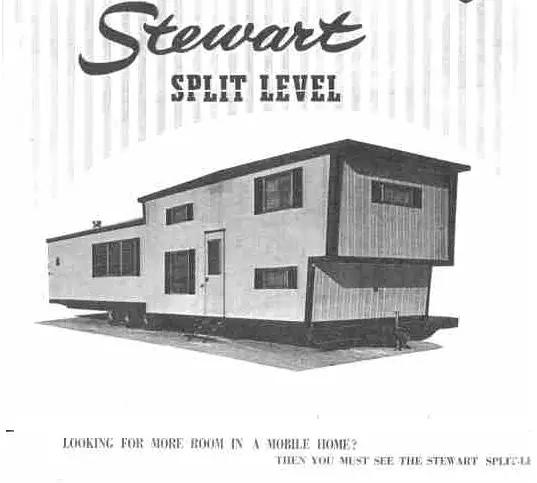
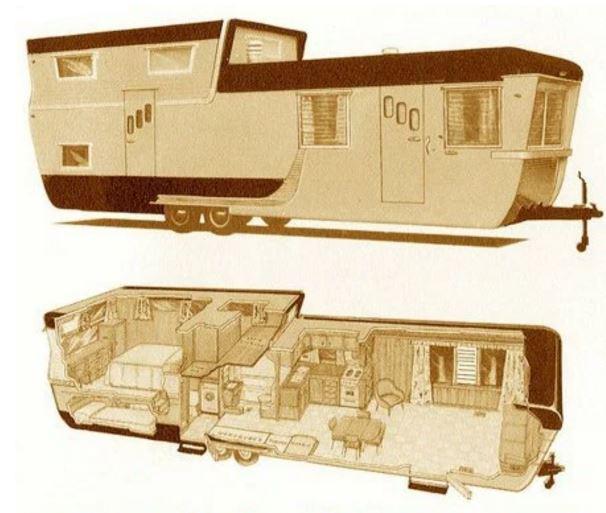
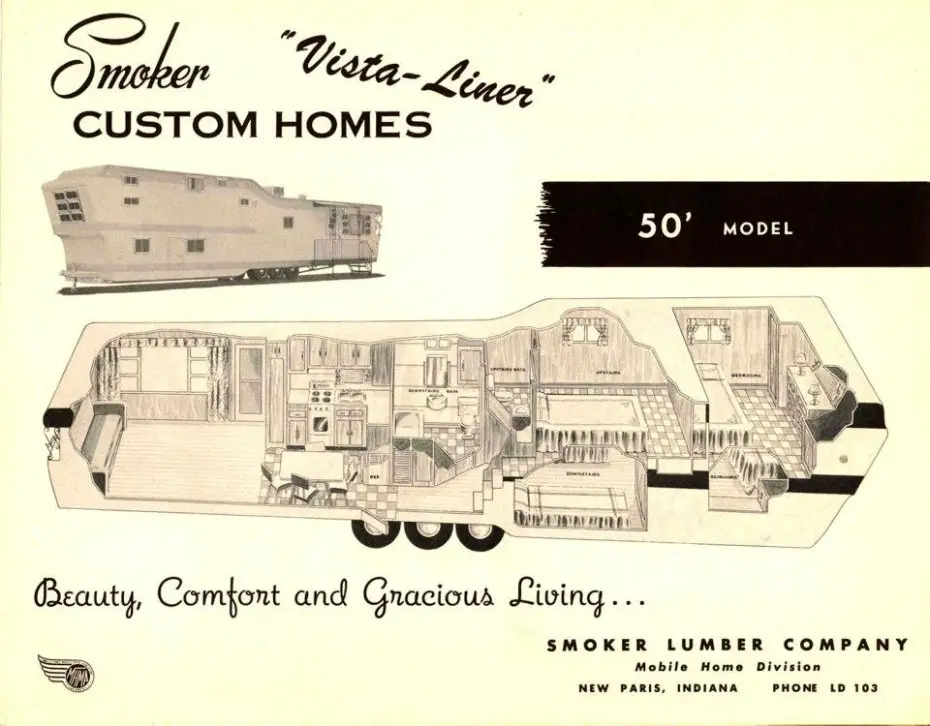
The 1947 Liberty 2 Story Portable Home was Ahead of Its Time
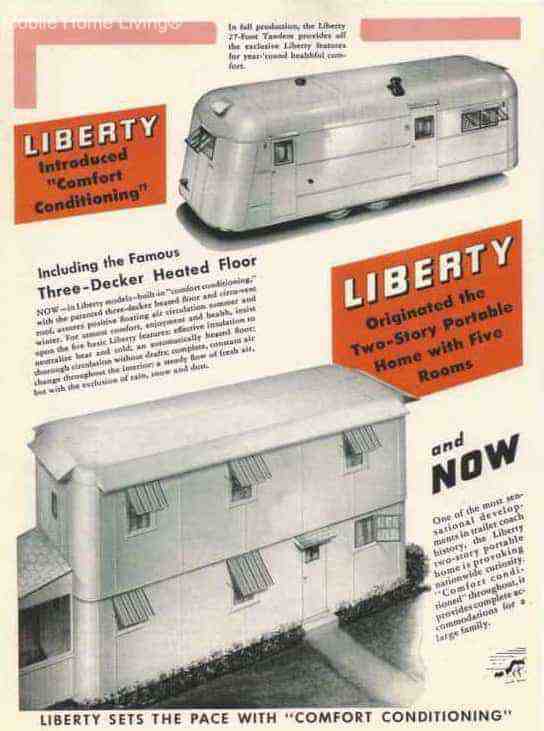
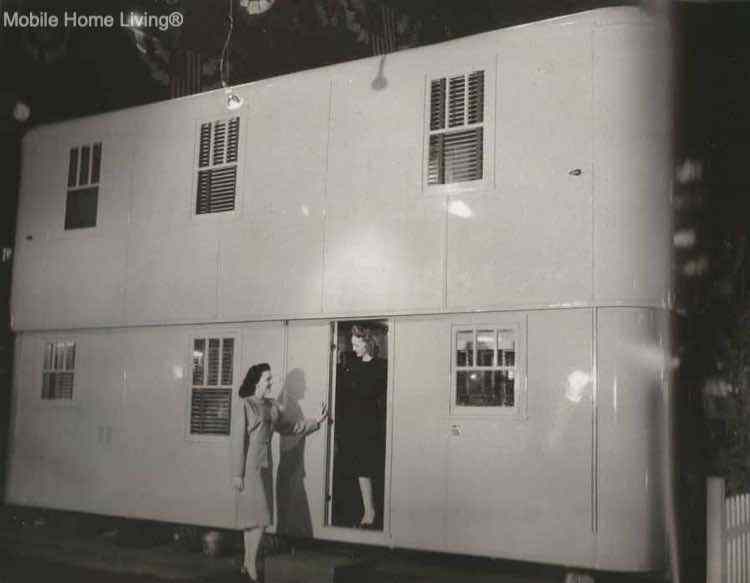
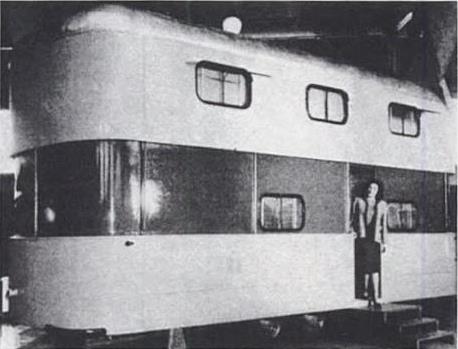
The vintage trailers shown above were possible because the homes were no wider than 8 foot and not really built for full-time living though many families doing just that.
Champion’s 2 Story Model is Exciting
The 2 story manufactured home that Champion had on the Capital lawn 2 weeks ago is called the New Horizon and it is exciting for a couple of reasons.
The new design from Champion Homes was only possible because the US Federal Government relaxed their regulation and their definition on manufactured home chassis.
The phrase ‘removed second-floor chassis’ is the key here. But what exactly does it mean? And why is it such a big deal?
To understand it all we need a quick lesson in manufactured homes construction.
The HUD Code in plain English
Every manufactured home built since 1976 follows a federal building standard called the HUD Code.
The red metal certification label attached to the siding of new manufactured homes is a national stamp certifying that the home was inspected and meets the HUD code standards.
Before we go any further, let’s review the difference between a manufactured home and a modular home. While manufactured homes must meet the national HUD code their counterparts, modular homes, are built in a factory but not built on a chassis and they must meet state and local building codes just like a house built on site does.
The steel chassis problem
Here’s where things get interesting. Manufactured homes are built in a factory and transported to your land, so for decades the rules required each section to be built on a permanent steel chassis, basically a steel frame under the floor that stays with the home forever. Think of it like the frame of a pickup truck, only it’s under your living room.
That steel frame is great for getting a home down the highway. But stack a second story on top of one and you’ve got a mess of engineering, cost, and weight to deal with.
Because HUD Code homes have to be capable of being moved, two-story homes with tall, steep rooflines were impossible.
Policy folks at one housing nonprofit put it plainly: the chassis requirement made it hard to build two-story homes or small multifamily buildings. probuilderivoryinnovations
So for decades, manufactured homes grew out but not up.
What Changed: The ROAD to Housing Act
In July 2026, Congress did something a bit out of character – they relaxed their code law for manufactured homes in an effort to help lower housing costs.
The law that eliminated the federal chassis mandate for HUD-code housing was a bipartisan effort they named the 21st Century ROAD to Housing Act. It became law on July 11.
For manufactured housing, the law is a big one. One industry write-up explains that its manufactured housing title broadens the federal definition of a manufactured home to include homes built with or without a permanent chassis. manufacturednationwide
There’s more coming, too. HUD has also put forward a proposed rule that would make the chassis requirement apply only to the lowest floor of a manufactured home, so an upper-floor section wouldn’t need one. reginfo
An executive at a manufactured housing developer called Villa, who sits on a HUD advisory committee, said this could make building homes more cost-effective. housingwire
Meet the New Horizon
Champion Homes showed the New Horizon at HUD’s Innovative Housing Showcase on the National Mall, September 22 through 24, 2026. Here’s what we know about it.
The basics
- Builder: Champion Homes (headquartered in Troy, Michigan)
- Size: 1,698 square feet
- Stories: Two, with the second-floor chassis removed
- Built for: Urban infill lots and tight city settings, with a small footprint to match
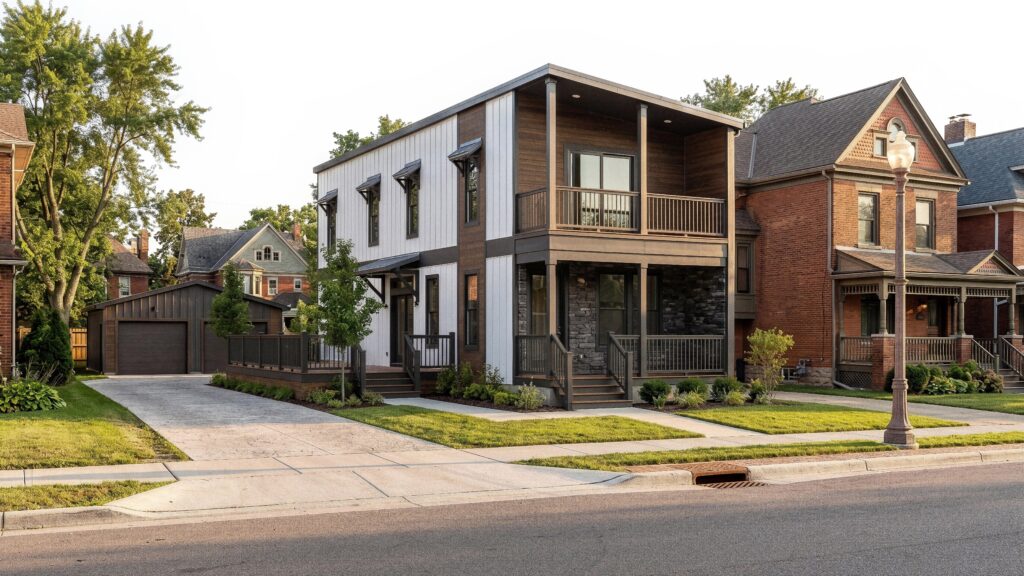
- Outdoor living: A front porch, a second-story balcony, and a large deck
The floor plan
Downstairs, you’ll find the kitchen, living, and dining areas, plus a dedicated office and a half bath. The primary suite is on the first floor, with a dual vanity and a shower/tub combo.
Upstairs, there are two more bedrooms, another full bath, a loft space, and access to that upstairs balcony.
So what does “removed chassis” actually do?
Without a steel chassis between the floors, there’s a whole lot less dead space between the first and second stories. According to Champion, that tighter gap gives the home increased curb appeal. In plain terms, it looks less like a stacked box and more like the two-story house you’d see on any neighborhood street. mhinsider
More than one way to build it
This part caught my eye. Champion says the New Horizon will come in multiple configurations: HUD Code, HUD Code with a removed chassis, and modular.
Why Infill Lots Matter
Now, I’m a small-town kind of person, so let me explain why Champion aimed this home at the city.
Land costs a fortune in a lot of places these days. A two-story home puts more living space on less ground, so a buyer can afford a smaller lot and still end up with plenty of room. Champion says two-story homes in a community setting allow more square footage on a smaller land footprint, and that retailers used to placing homes on rural land can use them to expand into urban markets. mhinsidermhinsider
That matters because manufactured homes are already a major part of the affordable housing picture. One analysis notes more than 8.4 million units nationwide and cites Harvard researchers finding that manufactured homes cost 27% to 65% less than site-built homes, excluding land. A design that fits on small city lots could open that savings to a whole new set of buyers. ivoryinnovationsivoryinnovations
The Showcase Itself
The New Horizon wasn’t the only home on the Mall. HUD’s sixth annual Innovative Housing Showcase brought out manufactured, 3D-printed, and smart homes, and the theme was “Made in America,” tied to the country’s 250th birthday and the 50th anniversary of the HUD Code. hud
HUD also reported that Second Lady Usha Vance and HUD Secretary Turner toured a two-story manufactured home that was built in only 10 hours on the Mall. That’s a mighty fast day’s work. That’s less time than it takes me to get through a church potluck line. hud
Also on display was Cavco’s Grande Arbor, billed as the first HUD-code home built entirely without a steel chassis. It isn’t two stories, though.
It has two primary suites on opposite ends of one level, designed for multigenerational living. Champion also brought a ranch-style home called the New Frontier (1,759 square feet, three bedrooms, two baths).
The Reality Check: What We Don’t Know Yet
Now, I wouldn’t be much of a manufactured housing advocate if I let you get your hopes all the way up without telling you the rest.
1. No price has been announced. Champion’s materials say “affordable price point” but give no number. When I find one, I’ll update this post. Be wary of anyone quoting you a price for this home today.
2. It’s not on the market yet. HousingWire reported that, even with the home on display, HUD must first finalize and implement the removal of the permanent chassis requirement before it officially reaches the market. Law passed, rules still catching up. That could take a while. housingwire
3. Your local zoning still matters. Even a perfectly legal home can run into a local board. In Virginia, a HUD-approved duplex design sat stalled for over a year before a county zoning board approved a variance, and that case is now being held up as a precedent. Zoning fights are very real, so check with your county early.
4. Land-lease communities may have rules. If you’re thinking about a park, ask management about height limits and design requirements before you fall in love with a floor plan.
5. Financing may take time to catch up. Lenders and appraisers need to get familiar with a new style of home. Talk to your lender early, especially if you’re considering the removed-chassis version on a permanent foundation.
New Horizon vs. a Typical Double-Wide vs. a Site-Built Two-Story
| Feature | New Horizon (Champion) | Typical Double-Wide | Site-Built Two-Story |
|---|---|---|---|
| Stories | Two | One | Two |
| Built in | Factory | Factory | On your lot |
| Governing code | HUD Code or modular, depending on configuration | HUD Code | Local building code |
| Chassis | Removed on the second floor | Permanent steel chassis | None |
| Footprint | Small, designed for infill | Wider, typically needs more land | Varies |
| Price | Not yet announced | Varies by builder and market | Varies |
| Availability | Awaiting final HUD rules | Widely available | Depends on builder |
Is a Two-Story Manufactured Home Right for You?
They could be a great fit if you:
- Own, or are shopping for, a smaller or narrower lot
- Want room for aging parents without giving up privacy
- Like the look of a traditional two-story home
- Are patient enough to wait for the rules and the market to catch up
You might want to wait if you:
- Need to move into a home in the next few months
- Live in a community with strict height or style limits
- Need firm pricing before you can make decisions
Your Two-Story Manufactured Home Questions, Answered
Can a manufactured home be two stories?
Yes. Two-story designs have existed, but they were rare and costly under the old chassis rules. New federal changes are making them easier to build.
What is the New Horizon?
It’s Champion Homes’ two-story manufactured home design, unveiled at HUD’s Innovative Housing Showcase in Washington, D.C., in September 2026. It’s 1,698 square feet and was designed for urban infill lots.
How much does the New Horizon cost?
Champion hasn’t released a price yet, only describing it as affordable. I’ll update this post when real numbers come out.
Can I buy a New Horizon right now?
Not yet. HUD still has to finalize the rule changes before chassis-free homes officially reach the market. Check with Champion or a local Champion retailer for updates.
Does the New Horizon have a steel chassis?
Champion says it has a removed second-floor chassis. The company also says the design will come in multiple configurations, including HUD Code, HUD Code with a removed chassis, and modular, so ask a retailer exactly which version you’re looking at.
Is a two-story manufactured home the same as a modular home?
No. Manufactured homes follow the federal HUD Code. Modular homes follow state and local building codes. Champion says the New Horizon can be built as either.
The Bottom Line
The New Horizon is proof that manufactured homes industry may be waking up from their 40 year slumber of inaction. I’ve complained for 15 years that the industry has failed to innovate and advocate and should have been at the forefront of the tiny home trend. But they haven’t, they don’t, and they weren’t.
A design that once would’ve been nearly impossible has now sat on the National Mall with a porch, a balcony, and a loft.
Is it ready for you to order tomorrow? Not quite. The price isn’t public, the rules are still being finalized, and your local zoning board has to have their vote too. But the direction is clear, and it’s a hopeful one for families who want more house for their money.
I’ll keep watching this story and update this post as news comes in. In the meantime, I’d love to hear from you: would you live upstairs? Tell me in the comments, and if you want the latest manufactured home news delivered to your inbox, sign up for the Mobile Home Living newsletter at this link.
Thanks so much for reading Mobile Home Living,
Crystal
Related reading:
Sources: MHInsider, HUD, HousingWire, Cavco Industries, Champion Homes, the Manufactured Housing Institute, and other industry reporting. Renderings courtesy of Champion Homes.