Category: Helpful Resources

A collection of helpful manufactured home resources for homeowners and buyers.

  • Federal Pacific Electric Panels – An Accident Waiting to Happen?

    Federal Pacific Electric Panels – An Accident Waiting to Happen?

    Meet Pam Willis, a fellow homeowner in the process of updating her vintage mobile home. We are honored to have her contribute to MHL! Today, she discusses her experience with a Federal Pacific Electric Panels (breaker box). These panels were used extensively between 1950 and 1990. 

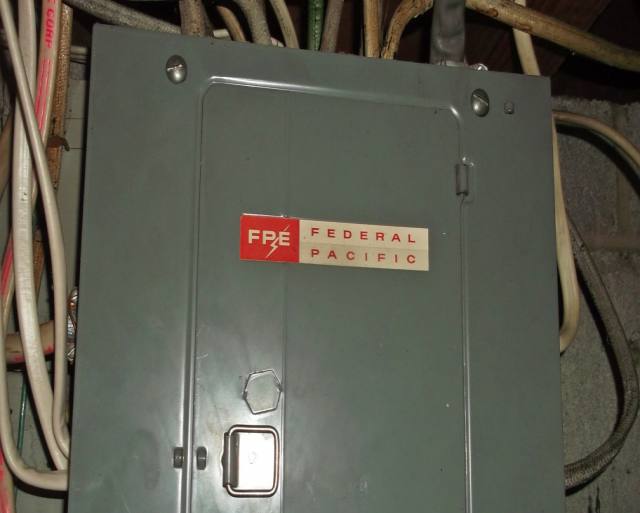
    Federal Pacific Electric Panels

    Little did we know when we moved into our 1975 Marshfield mobile home in 2013, that we had a fire hazard lurking in the form of our electric panel. My husband and I are pretty handy, but we don’t mess around with electrical work, and always call a professional. So, when we needed electrical work done in order to install central air, we called our electrician, Mark. Thank goodness Mark was on the ball, and pointed out that our electric panel was sub-standard. He also pointed out where a wire had overheated at some point in the past. Whew.

    We had a Federal Pacific Electric Panel, and that panel was in the bedroom right next to the bed! Our electrician recommended that the panel be replaced, as it was a fire hazard. That started me on a search for information about these panels. I also Googled Images for Federal Pacific Electric Panels, and the photos of burned out panels were horrifying.

    Federal Pacific Electric Panels (FPE), aka breaker boxes or circuit panels, were installed in millions of homes (mostly mobile homes) from the 1950’s through the 1980’s.

    Electricians, home inspectors and fire inspectors began to notice that the panels were failing, causing fires. Experts now say that these panels can work just fine for many years. However, just one over current or short can cause the circuit to overheat, and thus, cause a fire in the home.
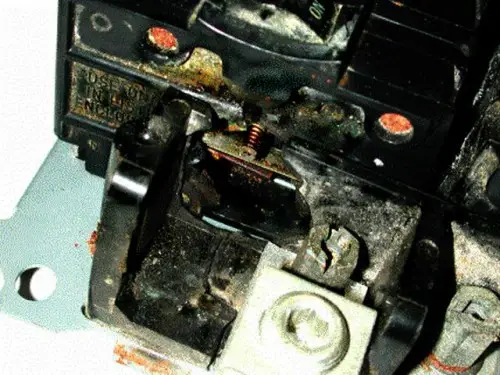
     

    federal pacific panel_burned_2


    According to IsMyElectricPanel Safe.com the following issues and malfunctions can occur with Federal Pacific Electric Panels:

    • Wires may be crowded inside the panel box.
    • Bus bars may be spring-mounted.
    • Breakers may be still active when in the down position.
    • Split-bus breakers may no longer meet updated safety codes.
    • Breakers may unexpectedly trip when the deadfront cover is removed.
    • Breakers may have loose connections to the bus bars.
    • Breakers are often jammed within their sockets, which can cause overcrowding within the panel.
    • Breakers can easily split when placed into sockets.
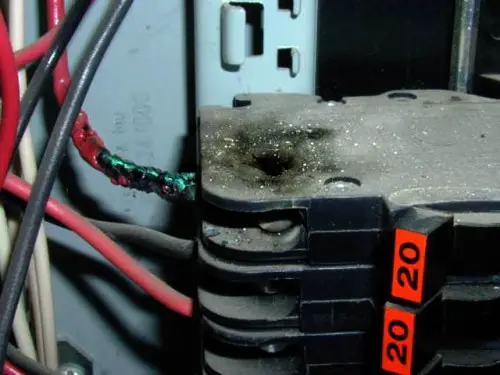
     

    federsl pacific_breaker_burned_


    A Class Action Lawsuit was filed in New Jersey in 2005 against Federal Pacific Electric. The New Jersey State Court found that FPE had committed fraud. The Court found that Federal Pacific Electric “knowingly and purposefully distributed circuit breakers which were not tested to meet UL standards.”  You can read the Class Action Settlement here.

    An expert who investigated complaints about the FPE panels determined that the breakers failed to trip at a much higher rate than those that met UL standards.

    According to a report, some Federal Pacific Electric panels failed to operate properly nearly 60% of the time in the event of a power surge. Source


    Zinsco Breaker Panels

    It also bears noting that there have been problems with another brand of Circuit Breaker Panel, namely ZINSCO.
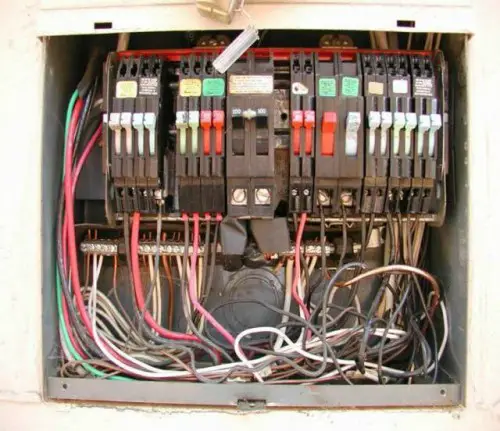
    Zinsco Panel breaker box

    Outdated Zinsco breaker panels can be found in many older mobile homes. According to usinspect.com, problems with Zinsco Panels include:

    • Certain parts of the panel contain aluminum.
    • The connection between the breakers and the bus bar are not solid.
    • Bus Bar corrodes easily.
    • Breakers may appear to be off, but internally are still conducting power.

    You can read about the ZINSCO panels here.

    Replacing the Panels

    We arranged to have our electrician change out our panel for a new (and UL tested) Square D panel the next week. Having the panel changed added a bit to the cost of having our Central Air installed, but certainly was worth the peace of mind. I don’t mind admitting that I was a bit nervous for that week while we waited for the electrician to come back and change the panel. There we were, in our little mobile home bedroom, sleeping right next to that darn panel.


    Square D Panel

    Keeping Friends and Family Safe

    Two years later, my sister was looking for a mobile home to purchase. I went with her to look at the various offerings. One of the first things I looked for was the electric panel, making sure it wasn’t a Federal Pacific or Zinsco.

    Here’s an informative video that can help you determine if you have a Federal Pacific or Zinsco breaker box:

    Is Your Electric Panel Safe?

    See if your electric panel is safe by clicking here.


    Thank you so much for reading Mobile and Manufactured Home Living!

    Written by Pamela Willis
     

  • No, I Will Not Stop Using the Term ‘Mobile Home’ – Get Over It

    No, I Will Not Stop Using the Term ‘Mobile Home’ – Get Over It

    In September 2011, I started Mobile Home Living.

    I bought the domain name, published through a free blogging platform called Blogger, and had no idea what I was doing.

    Looking back, it’s hilarious how naive and uneducated I was about the manufactured housing world and blogging in general. How this site eventually found its footing and gained popularity will always be the 8th great mystery of the world (at least to me).

    Mobile Home Living was born when my husband and I bought a 1978 single wide in 2011. It needed an update, so I searched online for mobile home remodeling and decorating ideas. There were only a few legitimate results and the idea to create a site that offered mobile home remodeling and decorating ideas, along with mobile home repair help, was born. You can read more about it here.

    I figured if I was looking for this information others were as well. I guess I was right.


    mobile home

    The Errors of My Way 

    By Mobile Home Living’s first anniversary I had already been contacted by a few people with the same complaint: I was committing a faux pas of epic proportions – I was using the term ‘Mobile Home.’

    The nerve of me! 

    By our fourth anniversary, I had been contacted dozens of times about my choice of words. The complaints usually came from an over-zealous salesman or someone working within the industry (but they never associated themselves with any one company).

    The argument was always the same; The words ‘mobile home’ conjured up negative opinions of the factory-built housing so the term must never be used again.

    New Rules = New Name?

    1976 is a very special year in the factory-built housing industry. You could even call it their rebirth. Though it would have been their second since they had a rebirth in 1954 after the term ‘trailer coach’ was changed to ‘mobile home.’

    July of 1976 is when a new federal law went into effect across the nation that regulated the construction and installation of ‘manufactured’ homes. HUD, the government department that oversees housing and urban development, had worked with the industry to come up with a minimum set of standards that all homes had to meet.

    Prior to these new regulations, the factory-built housing industry had basically run amok.

    Poor construction and terrible safety issues plagued mobile homes. Of course, there were a few companies that offered a superior home along with good customer service but there were far more companies that only cared about profit and their greed disgraced the reputation of the homes and the industry.

    These new guidelines significantly increased safety and construction standards for all factory-built housing and gave the industry an opportunity to shed their poor reputation. They were producing a completely different product from mobile homes, and that required a completely different name. Factory-built housing was to be called ‘Manufactured Homes.’

    Using the term ‘manufactured home’ was so important to the industry that they advocated to have the name change written into federal law!

    The Housing Act of 1980 states that mobile homes were to be reclassified as buildings instead of vehicles and that all mobile homes produced after 1976 were to be referred to as manufactured homes. Literature created or released by the federal government were only allowed to use the words manufactured home. The term mobile home was no longer allowed to be used in legislation.

    The reputation of mobile homes as poorly constructed homes of yesteryear would be forever vanquished with this new term!


    Related: How the Mobile Home Stigma Began


     So, Is It a Mobile Home or a Manufactured Home? 

    It’s a mobile home if the home was built before July 1, 1976.

    It’s a manufactured home if it was built after July 1, 1976.

    And if you wanna get real technical, it’s a trailer if it was built before 1954 when the association of trailer coach builders of America decided they wanted to be called the mobile home builders of America.

    The industry loves to change names!

    Oh, look, a very nice mobile home…oops, I mean manufactured home…..I mean trailer. 

    Nevermind, I’m confused, again. 


    manufactured home - mobile homeYou can see more of this beautiful manufactured home here. 


    So, What’s the Big Deal? 

    There’s no big deal really. I’m just taking a stand against all this silliness.

    I’ve been told that no builder or dealer would ever want to advertise on my little blog because they would not be associated with the term ‘mobile home.’ I guess it’s a good thing that I don’t accept ads (or any money at all) from builders or dealers directly (I have no say about third-party ad placement).  I want to remain neutral and honest about my opinions. The goal of this site is to be the voice of the people, not the industry.

    I have seen articles on industry sites that actually have rebuttals for salesman and employees to use if they hear the words ‘mobile home’ used.

    Once I learned about this name stuff, I tried to play well with others. I made an effort to use the term ‘mobile home’ when referring to a home built before July 1976 and ‘manufactured home’ for homes built after that date. I even changed the name of this blog from ‘Mobile Home Living’ to ‘Mobile and Manufactured Home Living.’


    Another Email? Oh, Joy……

    I tried to play along, but I still get the occasional email or comment explaining the importance of using ‘manufactured home’ and not ‘mobile home.’

    Here’s the latest communication that I received just a couple days ago:

    Your site is very interesting. Great site!

    But….. you really need to drop the term “Mobile Home”. The reason is, it gives people the view that these are “Trailers” and not homes.

    HUD changed it in 1976 to Manufactured Homes. If we as owners of these homes want to change all the misconceptions about these homes, the term “Mobile Home” must be eliminated across the board. It gives inspectors, insurance companies, banks, home buyers, etc. a total misconception of what these homes have become.

    There is so much wrong information given to people by so called, “people in authority”, because they think these homes are “trailers”, and the term “Mobile” is part of the reason….along with those people not knowing or caring to know what is fact and what is a myth.

    We as owners, need to start changing the misconceptions that has plagued these homes for many years. It is time to get the truth out about these homes, and helping our selves at the same time… just my opinion.


    The Issue With All this Silly Name Changing…..

    My issue with all this name changing is simple – you cannot change how people talk and you cannot change a product’s reputation by calling it a different name.

    I’ve called these awesome adobes ‘mobile homes’ my entire life and I’m not stopping now.

    My ‘Official’ Reply

    Here is my official reply to all this silliness about the two small terms that has caused so much controversy:

    The misconceptions of mobile homes are mostly true: some of the homes were junk, the buyers were preyed upon, and the industry was an unregulated nightmare.

    It is what it is. Own it and move on…

    The only thing that can remedy the industry’s reputation is to make better homes and have better customer service.

    The industry needs to focus on improving themselves and offering the best product at the best price possible and stop worrying about a term used by the people living in them or buying them.

    We only want to enjoy our homes. If you build a good home and create a good buying experience and stand behind your product, all 8 million or so owners living in mobile and manufactured homes across the nation will advertise for you better than any name change ever could.

    So, This is My Stand…..

    This is me, the founder of Mobile and Manufactured Home Living, saying to you that I love my home and everything it has offered me. It has completely changed my life for the better.

    A 1978 single wide has provided my family and me a better life! With no house payment, I have been able to give my daughter experiences I never had and that is a wonderful feeling.

    I don’t care what you call it…I call it home. 


    Thank you so much for reading Mobile and Manufactured Home Living.

  • Featured Manufactured Home Model: The Arlington by Palm Harbor

    Featured Manufactured Home Model: The Arlington by Palm Harbor

    Most new manufactured home models on display at dealerships have been professionally decorated so they are a great resource for decorating and remodeling ideas. That’s why we’ve decided to feature a new model on a regular basis – to share the new features available in present-day manufactured homes and provide ideas that can help you with your own manufactured home decorating and remodeling.

    Our first featured manufactured home model is The Arlington by Palm Harbor.

    The Arlington by Palm Harbor Homes

    The Arlington is a picture-perfect example of modern manufactured home design. It has a great floor plan, beautiful finishes, and comparable construction features of a site-built home. With 8 foot vaulted ceilings and ample built-in storage, this home is indicative of a traditional home in every way except one, price-per-square-foot.

    The stylist that decorated this home for Palm Harbor really knew how to put the home’s best features on display. It’s a gorgeous home and a wonderful example of the beauty and function that manufactured homes offer.

    Unfortunately, the Arlington is only available in Louisiana, Mississippi, New Mexico, Oklahoma and Texas. That doesn’t mean you can’t purchase a new home similar to this one – manufactured homes are easily customized and can be special-ordered with practically any floor plan, specs, materials, and size you can imagine.

    Here are the details and features of The Arlington:

    Model Details

    • Square Footage: 1,560
    • Bedrooms: 3   Bathrooms: 2
    • Exterior Dimensions: 52 x 30
    • Sections: Double-wide
    • Building Method: Manufactured


    Model Features

    • 8′ Sidewalls, vaulted ceilings
    • Dual pane windows
    • Entertainment center cabinet
    • Large island in kitchen
    • Factory-installed A/C included


    manufactured home model - new kitchen designs 2

    Storage is a big feature of this home.

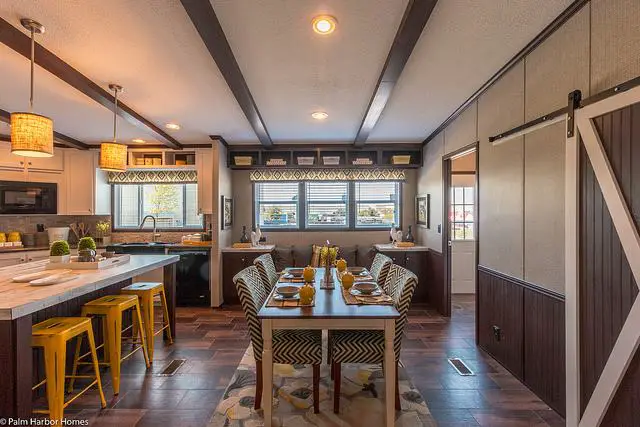
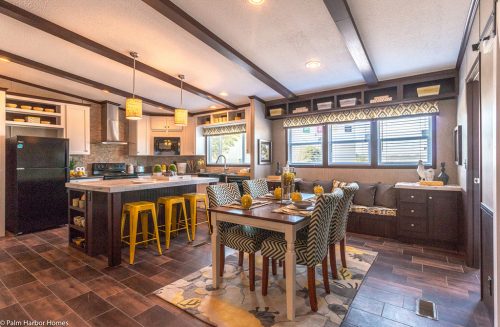
    Both the dining room and living room have ample built-in cabinetry and open-shelving. You can even choose to have a window seat placed in the dining room with even more storage.


    modern manufactured home model design- new kitchen designs 3

    Recessed lighting and stylish pendant lighting brightens up the kitchen and dining room.

    modern manufactured home design- new kitchen designs 3

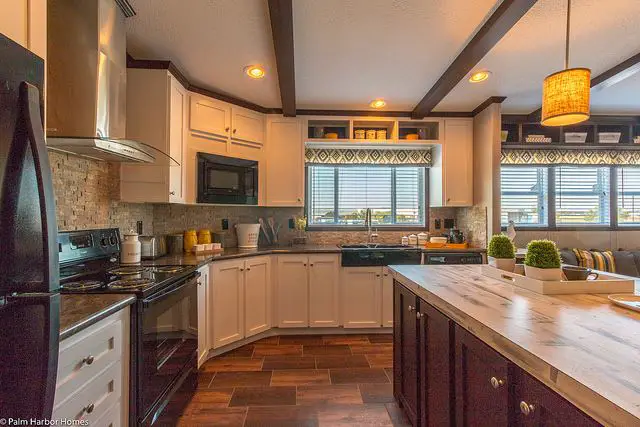
    White cabinets, a textured stone back splash, and various wood elements are combined to create a stylish, modern kitchen.

    Features such as a stainless steel stove hood, rectangular faux wood tile, a large island, and a farmhouse apron sink are popular choices found in modern kitchens. There’s plenty of counter space and storage!

    modern manufactured home design - new kitchen designs5


    modern manufactured home design - new kitchen design 6

    A sliding barn door is used to separate the dining room and a walk-in pantry. This modern manufactured home model has lots of modern style elements.

    manufactured home design - new kitchen designs4

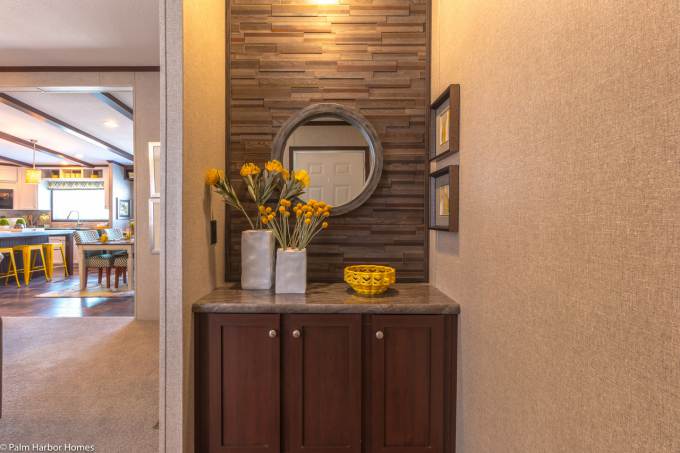
    Arlington - modern manufactured home design

    The entry way:

    Arlington manufactured home entry way

    From the entry way, you walk into the living room. The open floor plan of The Arlington is a popular modern home design.

    modern manufactured home design- new living room design


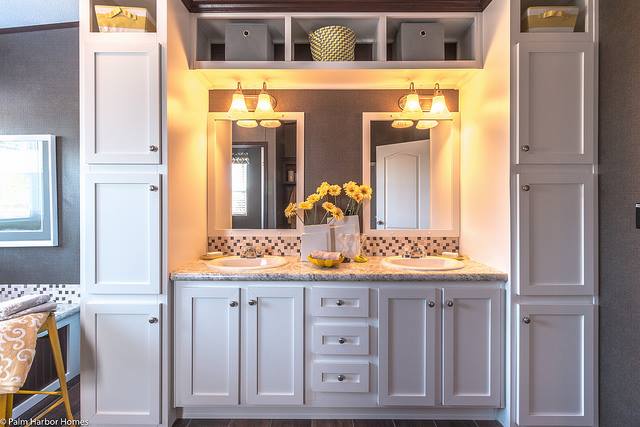
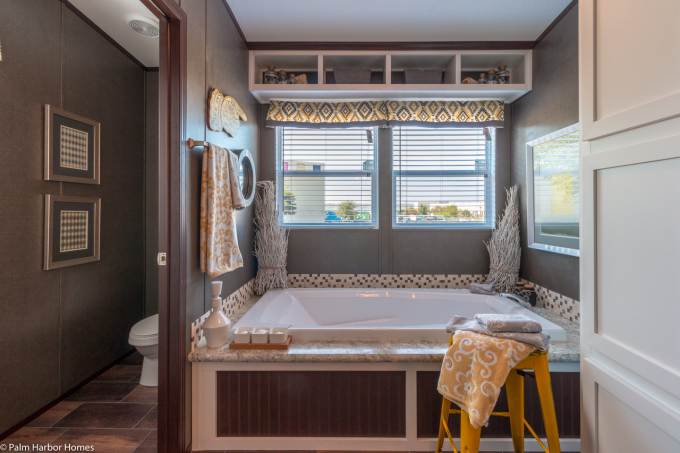
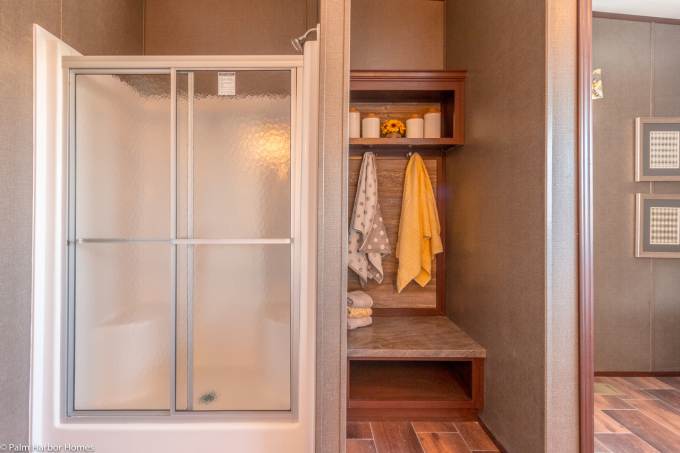
    modern manufactured home design - new master bathroom design


    arlington manufactured home design - master bathroom 2


    arlington manufactured home design - master bathroom

    Below is the floor plan for The Arlington. It is a simple but smart floor plan and indicative for most modern manufactured home models.

    All rooms with plumbing are placed together to reduce future leaking possibilities and minimize repair complications. Ample closet space along with a defined entry way keeps clutter in its place. The master suite is situated away from the other bedrooms to allow plenty of privacy.

    manufactured home - new floor plan designs 2

    The exterior of the Arlington:

    Arlington manufactured home exterior

    Love looking at new mobile home designs: Check out another design we featured The Sunset Bay By Palm Harbor.

    Please note:

    I’ve always been hesitant to feature new manufactured homes because I don’t want to seem like I favor one builder over another. However, I’ve came to the conclusion that not sharing these gorgeous new homes is a disservice to my readers. Please keep in mind that Mobile and Manufactured Home Living is not affiliated with any manufactured home company, we do not recommend or favor any one company, and we have not been paid to advertise these homes.

    Have you recently purchased a new manufactured home? Tell us all about it in the comments below! 

    Thank you for reading Mobile and Manufactured Home Living!

  • What Manufactured Homes and Site-Built Homes have in Common

    What Manufactured Homes and Site-Built Homes have in Common

    Lots of people have an outdated opinion of manufactured homes. Whenever they hear the word mobile or manufactured they conjure up images of small, thin-walled campers that can be pulled behind a vehicle.

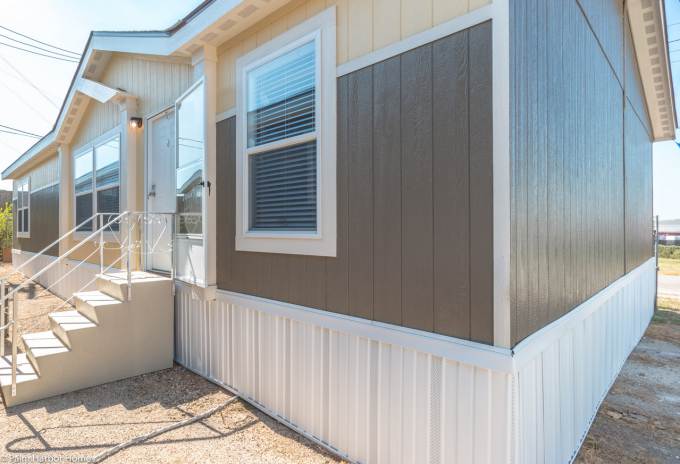
    Does the manufactured home above look like it can be pulled behind anything?

    The Palm Harbor manufactured home model you see above (and below) is indicative of a modern manufactured home. This is a premium model that is absolutely comparable to a site-built home in every way. It looks like a traditional home and it acts like a traditional home – its energy efficient, has the same framing, uses the same construction materials, and can be customized (and that’s just four things, there are several more). The only difference is that the manufactured home takes advantage of a technologically advanced factory setting and is built on a chassis.

    Related:  How Manufactured Homes are Constructed

    What Manufactured Homes and Site-Built Homes have in Common

    Budget, Mid-Range, and Premium Homes

    Even the mid-range and low-range manufactured homes have lots in common with site-built homes. Regardless of the price per square foot and the amenities offered, every manufactured home uses the same materials that a site-built home uses.

    There are three price points for both site-built and manufactured home. Not all homes have marble countertops! The most affordable manufactured homes are the budget homes. Those are the homes you’ll see most often on dealer’s lots. They are great homes at great prices! They simply use more affordable materials and are usually smaller. Oftentimes, they will use thinner framing and lower pitched roofing. This does not mean the home is inferior, it is simply built for those that have a smaller budget.

    The mid-range manufactured home is similar to a site-built home in just about every way. They have similar framing, roof pitch, material, and amenities. Yet, they are more affordable than a site-built home because being built in a factory allows the builder to control aspects that cannot be controlled with a site-built home. Builders are able to buy material in bulk, reduce construction time, and control material waste better. Having more control over the building process offers significant savings.

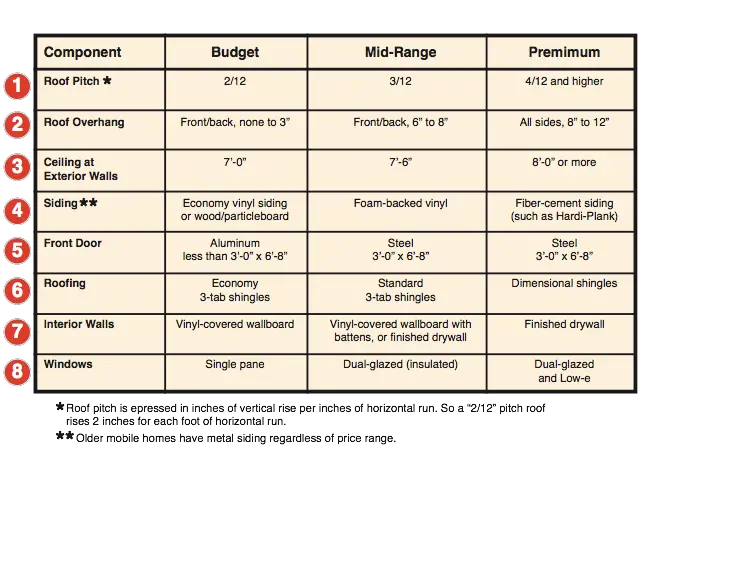
    The premium manufactured home is comparable to custom site-built homes with high-end materials. These factory-built homes can still be offered at a lower price-per-square foot over the site-built home. Here’s a chart I found on a very informative inspection site called McGarry and Madsen (they have lots of great information about buying manufactured homes) that explains the three price ranges often offered in the manufactured home industry:

    Well constructed Chart 2

    6 Things Manufactured Homes and Site-Built Homes have in Common

    Here’s a graphic that shares what manufactured homes and site-built homes have in common. It’s a perfect resource for anyone that has an outdated opinion.

    Manufactured Homes and Site Built Homes Common Infographic


    Don’t let the term manufactured fool you! These are great homes that are affordable. There’s a manufactured home for every budget and every need.

    Thanks so much for reading Mobile and Manufactured Home Living!

  • Manufactured Homes are a Smart Retirement Option

    Manufactured Homes are a Smart Retirement Option

    Retirement is something we all look forward too. We work hard for 30+ years to support our families and the reward at the end of all that hard work is retirement – it’s the icing on the cake of life!

    Unfortunately, a lot of us aren’t quite as ready as we need to be for retirement. The cost of living has increased significantly but income has stagnated. It takes every penny we have to live in the present so how are we suppose to put away for the future?

    An Aging Population 

    A large percentage of Americans are getting older and we need affordable housing more than ever. Heck, we need affordable housing for every age group but especially our aging baby boomers.

    RuralHome.org states:

    “….the senior population is expected to more than double in the next 40 years. Rural America is “older” than the nation as a whole and more than one-quarter of all seniors live in rural and small town areas. A rapidly aging population will significantly impact nearly all aspects of the nation’s social, economic, and housing systems. Most seniors wish to remain and age in their homes as long as possible, but rural elders are increasingly experiencing challenges with housing affordability and quality…”

    Retirement Isn’t Easy for the Average American

    If you are a working American living paycheck to paycheck, retirement may be difficult. The average middle-income earner will be expected to work till they are 65 before they can start getting a return from their social security.

    Retirement statistics are alarming. USA Today reports:

    “….About 36% of workers have less than $1,000 in savings and investments that could be used for retirement, not counting their primary residence or defined benefits plans such as traditional pensions, and 60% of workers have less than $25,000, according to a telephone survey of 1,000 workers and 501 retirees from the non-profit Employee Benefit Research Institute and Greenwald and Associates.”

    Related: Hey, It’s OK to Live in a Mobile Home

    Manufactured Homes are a Smart Retirement Option

    With an aging population and an affordable housing crisis across the nation it’s important that we find solutions.

    Manufactured homes are a smart solution for many retirees. Here’s why:

    Manufactured Homes are Affordable

    Manufactured homes are an extremely affordable housing option for any age group. Cost per square foot is almost half that of a site-built home!

    It’s no secret that a lot of retirees sell their larger site-built home and buy a smaller manufactured home. Often, they move south to enjoy the warmer weather in the process. Profit made from the sell of their site-built home can allow them to pay cash for an older mobile home and have money left over to pad their savings account. It’s a smart choice for many people.

    Smaller Homes are Easier to Maintain

    Most retirees don’t need a lot of house. Maintenance and cleaning for larger homes is more expensive. There’s also an increased chance of needing costly repairs in larger homes.

    The more you have the more upkeep you have to do!

    Retirement should be as simple and as easy as possible which is why people chose mobile home parks and condos that include lawn maintenance into the monthly rental costs.

    Manufactured Homes are Predominately Single-Story Homes 

    Steps can be difficult for retirees which makes the average single story manufactured home a great choice.

    You can have manufactured homes built to work with your specific needs. Many wheelchair bound homeowners order their homes with wider doorways and hallways , lower counter tops, and little to no overhead cabinetry.

    Related: Advantages and Disadvantages of Mobile Home Parks

    A Popular Housing Choice 

    Manufactured homes are best known for being a perfect housing option for retirees and young families just starting out.

    Close to 20 million people currently live in a mobile or manufactured home. They enjoy the comforts of modern living at a reduced cost. Don’t let the stigma turn you away from factory-built housing – they serve an important function in our society!
    Thank you for reading Mobile and Manufactured Home Living!

    Additional Resources:

    4 Ways to Go Broke in Retirement

    Retirement Pulse

    10 Things Retirement Communities Won’t Tell You

    Image Source: Flickr, George, 1963 Bell Gardens, CA., Dee’s MH Park


  • Hey, It’s OK to Live in a Mobile Home!

    Hey, It’s OK to Live in a Mobile Home!

    The world has changed a lot in the last 30 yearsThere used to be a set path we were supposed to follow. We were supposed to graduate high school and go to college. Then, we were supposed to graduate from college and get a job in some huge corporation with an IRA, health insurance, and two weeks paid vacation.

    A short time later, we were to get married and buy a home.

    This home would be our life’s largest investment. Our financial stability wrapped up nice and neat in rolls of warmth, blocks of stability, and boards of beauty.

    We’d work for that same huge corporation for a decade or so, get a raise, and maybe even dream of buying a bigger house that would hold our growing family.

    We wouldn’t worry because our beautiful home, that we so lovingly improved and maintained with pride, would increase its value. We would sleep soundly knowing that our family and our future was going to be OK because our financial foundation was cinder-block strong.

    We’d raise our children and then send them off to college so they could follow the very same path we did and after 30 years of loyalty, we’d retire from that huge corporation. Cash out our IRA and retire in peace.

    All was well and the middle-class life was good but that’s no longer the case.


    It's OK to Live in a Mobile Home-path to financial freedom is a little more complicated than it use to be.

    Today, the path is different…

    In today’s world, struggle is a common denominator among us. A good job, with good benefits and opportunity to advance, has vanished.

    Now, it takes two adults working full-time to afford the bare necessities.

    The middle class is shrinking at a drastic rate. Cities are too expensive for us to buy a home and when we can buy a home our investments are gaining equity at a slower rate, if at all. 

    In addition to higher housing costs, utilities and groceries are rising at an astounding rate while wages are staying stagnant.


    So What Do We Do? Simplify and Unlabel


    Since the infamous McMansion is out of reach for most of us we have to choose a different path.

    We have to choose our own path – our own way.

    For many of us, living in an affordable mobile home allows us to even the score out a bit in this poor economy.

    Paying less for living expenses allows us just enough extra money to travel, pursue hobbies, and provide for our families just a little bit easier.


    It’s OK to live in a mobile home because it allows us a better quality of life.

    Stop Letting People’s Labels Define You

    Those of us living in a mobile are all too familiar with labels. Our homes have many labels associated with them, but in this day and age, and in this economy, we have to put them aside and do what’s right for ourselves and our families. It’s OK to Live in a Mobile Home!

    Living in a smaller, more affordable home makes a lot of our lives a little easier.

    Read about manufactured home discrimination here. 


    Marc Ecko wrote a book called Unlabel: Selling You Without Selling Out. It’s about the labels that we use to describe ourselves and others. He makes a great argument that we need to stop letting these labels impact our lives and that we need to unlabel ourselves. Here are his own words:

    My philosophy is simple: unlabel.

    Not “un” as in the nihilist or negative sense of the prefix, but in the “refuse” sense of the meaning. Refuse to be labeled.

    Fight their labels.

    Ignore their labels.

    Peel off their labels.

    Oprah.com has a great article called How to Stop Letting Other People’s Labels Define You. The essence of the article is how to let go of negative labels.

    The ending paragraph:

    If you’re holding negative definitions of yourself, question them—I assure you, they are lies. The more you learn this, the less you’ll suffer the hell of self-loathing. People may tell you you’re crazy. That’s okay, child. It isn’t true. Now run along and play.


    It's OK to Live in a Mobile Home-unlabel yourself


    We must refuse to be labeled. Those of us that have chosen to live in a mobile home are adapting to an ever-changing economy. We are doing what makes sense for us and that’s all that matters.

    It’s OK to live in a mobile home! 

    When you’re gone, what will people remember most about you? If it’s the type of home you lived in then you’re probably doing something wrong.

    A home is a home; a place that protects us from the elements, provides a safe environment for our families, and gives us a space to be ourselves.

    It doesn’t matter if it’s on wheels, cement, or steal. It doesn’t have to cost a lot and it doesn’t have to be in a fancy zip code. All it has to do is give you a place to be you and a mobile home does that remarkably well.

    Honestly, it’s OK to live in a mobile home!

    As always, thank you so much or reading Mobile and Manufactured Home Living!


    Image Source: Double Wide by way of Steven Scott in a FB group called I Love Manufactured Homes (a great group!), Labels Illustration

  • Placing a Manufactured Home Over a Full Basement

    Placing a Manufactured Home Over a Full Basement

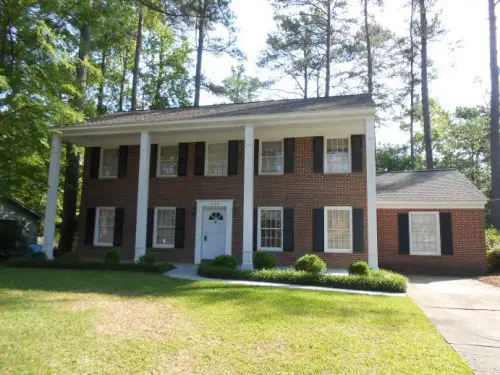
    When I was in elementary school I had a favorite house that set right outside my hometown. This home was regal and fancy. It was a two-story brick home with three white columns and to a middle-class coal miner’s daughter that had always lived in a manufactured home, this fancy brick house was my idea of a true dream home. (I didn’t even know placing a manufactured home over a full basement was a possibility at the time)

    This isn’t the home but it’s close:

    two story brick house with columns

    In high school, while riding with a friend we drove by that house and I mentioned how much I loved it and how I dreamed of owning it.

    Before I continue, I should mention that as a teen I was a bit embarrassed about living in a manufactured home, even though we lived in a very nice double wide, and my closest friends knew it. I didn’t take kindly to being associated with ‘trailer trash’ and even though I don’t think anyone ever called me that, I was still scared of being labeled with such a derogatory term. 

    Immediately after I shared my thoughts about the home my friend laughed. It was a deep, almost sinister laugh that took me by surprise. A laugh that you can’t help but ask, “WHAT?”

    She grinned and said, “Crystal, that is nothing but a double wide setting on a high basement. The homeowners own Southern Homes (the local manufactured home dealer). Of all the nice houses around here your favorite one is a manufactured home – how ironic is that?”

    I probably learned a very important lesson that day though I can’t tell you exactly what it was. Maybe that was the day I learned that manufactured homes are what you make of them. Or, maybe I learned that I was destined to live in a manufactured home and I was absolutely okay with that. Maybe I didn’t learn anything at all but should have.

    Placing a Manufactured Home Over a Full Basement

    The very true story above came about because I wanted to share a video with you that shows how a double wide can be placed over a high foundation and turned into a beautiful home.

    Basically, you get the site-built look at a manufactured home price!

    While the video states the home is a modular, the same can be done to a manufactured home. There are a few differences between manufactured and modular. While both types of homes are built in sections in a factory and transported to the lot for assembly, a modular home must pass local and state codes whereas a manufactured home only needs to pass a national code.

    A manufactured home is only limited by the restrictions we put on them.

    Manufactured homes can be turned into a two-story brick house with fancy white columns if that’s what you want! They can become huge ranch houses or small southwestern abodes.

    The sky is the limit and that’s one of the most beautiful things about factory-built homes; they allow us the freedom and the unlimited potential of a site-built home, at a fraction of the cost. Placing a manufactured home over a full basement is just one of many options for manufactured homes.

    Thank you so much for reading Mobile and Manufactured Home Living!

    Image Source

  • 4 Things to Consider Before Moving a Manufactured Home

    4 Things to Consider Before Moving a Manufactured Home

    Moving a manufactured home is not easy. You don’t just hitch them to a big truck and pull them down the road. You need permits and licenses and bonded professionals.

    Manufactured homes aren’t like the old mobile homes and recreational vehicles that could be moved with the turn of a key. In fact, one reason so many people take issue with the term ‘mobile home’ is that they aren’t very mobile at all. In fact, moving a manufactured home is a ‘professionals only’ job.

    Once a manufactured home is installed on its original site the vast majority of them remain there. Over 90% of all manufactured homes are never moved again after installation.

    If you’re thinking of moving your manufactured home, here are a few things you need to keep in mind:

    Can your Manufactured Home Be Moved?

    First things first, a manufactured home must be capable of withstanding the move. Older homes are often deemed unfit. The moving process is tough, even on homes in excellent condition.

    Some transport companies have a rule that any home being moved more than 50-100 miles requires new tires and other standard equipment on the home.

    Learn what to look for when buying a used mobile home here. 

    Zoning Issues when Moving a Manufactured Home

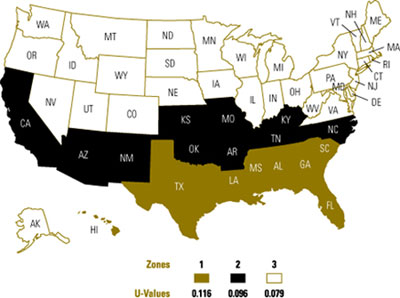
    Manufactured homes are built to different standards based on location. HUD has divided the country into three different thermal zones, roof load zones, and wind zones. Manufactured homes must meet or exceed the standards of each area.

    Below is a thermal zone map released by ManufacturedHousing.org:

    HUD Thermal Zones - 4 things to consider when moving a manufactured home
    The 3 Wind Zones.

    For example, let’s say you wanted to move a manufactured home from Michigan to Florida. Michigan is a Zone 1 wind zone and Florida is a Zone 2 and Zone 3 state. Zone 2 and Zone 3 areas are places close to oceans and therefore are more likely to be impacted by hurricanes and other damaging storms, so manufactured homes going there are built to withstand higher wind speeds. Therefore, you can’t move a home built to Michigan’s wind zone standards to Florida. But you could move a manufactured home from Florida to most parts of Michigan (only most parts of Michigan, though, because of roof load standards.)

    Learn about mobile home inspections here. 

    You also have to make sure there won’t be any zoning issues with the city or county where you would like it placed. Many towns have land use laws that prohibit single wides or manufactured homes more than 10-15 years old.

    If you’re planning to move it into a manufactured housing community, this won’t be a problem. But if you want to put it on a privately-owned lot of property, make sure the area is zoned for manufactured homes and find out if there are any.


    Moving a manufactured home - SavaConta - Flickr
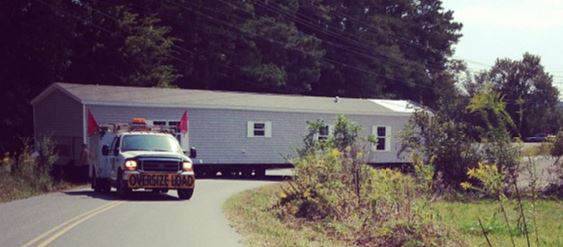
    A Single Wide Is Being Transported To Its New Home.

    Source

    Costs

    The costs of moving a manufactured home depend on the size of your home, location, and distance of the move.

    Moving.com’s article, Moving a Mobile Home? Here’s What You Can Expect to Pay, interviews a licensed Mover in Florida. He quoted the following:

    For a single-wide move, handling the entire move—from transporting the home within 50 miles to acquiring the permits to hooking up the utilities—will run the customer somewhere around $8,000. For a double-wide home, the price usually falls between $10,000 and $13,000


    There are other cost involved when moving a factory-built home such as permits, utilities, and labor.


    Finding the Right Moving Company

    Moving a manufactured home can be a tricky process. You want to find a moving company with lots of experience. Make sure they carry the right insurance, are licensed to move homes in your state (and other states you might be passing through), can get all the necessary permits and bonds, and know whether or not a police escort is needed. This site has a free ebook about moving a manufactured home here. 

    Don’t cut corners on this step or use a anyone you haven’t researched. Working with a mover who isn’t licensed or doesn’t get the right permits could end up costing a lot more in the long run.

    See our Directory of Mobile Home Installation Manuals here.  

    Thank you so much for reading Mobile Home Living!


  • Evergreen Eco Homes: The Future of Manufactured Homes?

    Evergreen Eco Homes: The Future of Manufactured Homes?

    The manufactured housing industry has seen many great innovations over the last century. Since the first mobile home rolled off the assembly line we’ve seen homes get longer, wider, and more structurally sound.

    New companies with better ideas, using modern materials and more efficient methods of building, have allowed factory-built homes to become the well-built, energy efficient family dwellings we have today. All it took was one company to lead the way and show the other builders that there was a better way to do things and prove that the idea was profitable and I think I’ve found one such company!

    Related:  Another new manufactured home concept: The Clayton’s Gen-Now Concept Home.

    Evergreen Eco Homes: The Future of Manufactured Homes?

    Evergreen Eco Homes is a home builder out of Florida that seems to be a doing a fine job of paving the way for new building techniques for manufactured homes.

    (Note: I’m not affiliated with the company in any way and have not received any compensation for this article. I simply like what I see and wanted to share it with you.)

    Evergreen Eco Homes - detailed view

    I found Evergreen Eco Homes on Twitter a few months ago and have been keeping tabs on them. From what I’ve read and seen, these homes have some really great benefits and are available for purchase today at a seemingly reasonable price considering the material used and benefits achieved from said material.

    Evergreen Eco Homes Create Concrete Manufactured Home

    The Evergreen Eco-concrete home is built in the company’s Florida factory using a special reinforced concrete called FLEXXOWALL.

    One of the many benefits of FLEXXOWALL is that the material, combined with an intelligent floor-plan, allows the homes to have a panic room that can withstand tornado and hurricane force winds. That’s a feature you won’t see associated with factory-built homes often!

    The company’s website shares the advantages of FLEXXOWALL:

    Versatility

    • Fits any structural design and incorporates electrical and mechanical systems in the same formwork.The interior dividers are installed according to distance or separation requiring steel (rod) horizontalThe steel (rod) is vertically unobstructed by the separators, since they have a thickness of 1/8 inch and a spacing of 12 inches horizontally.Electrical boxes can be installed at the factory or in the field, screwed into the mold at the cement board panels.

    Resistance

    • FLEXXOWALL mold systems withstand lateral pressures concrete during pouring, without the need for external reinforcement, (see installation manual).

    Durability

    • Very good cement board, which meets all the parameters of degree and strength required by code. (See technical specifications Plycem).

    High quality finishes

    • Due to the type of surface, traditional masonry is removed and the final finish is cement board.

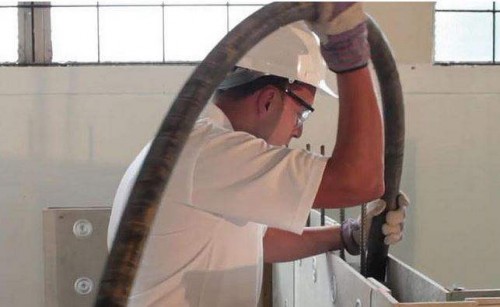
    The image below shows an employee pouring concrete into reinforced forms to create an Evergreen Eco Home:

    pouring Flexxowall into form to create a new Evergreen Eco Home

    Evergreen Eco Home Floor Plan Options

    The Eco home is available in 2 and 3 bedroom models though rooms and wings can be attached to create a larger home.

    It appears that these home’s prices start at $69,678.00. Since their 2 bedroom home has 591 square feet that equals out to around $117 per square foot – a little high compared to today’s manufactured home prices but keep in mind that these homes may have a greater ability to gain equity.

    The 2 Bedroom Eco Home Layout

    Evergreen Eco Homes - detailed floorplan 2 bdrm

    The 3 Bedroom Eco Home Layout

    Evergreen Eco Homes - detailed floorplan 3 bdrm

    Visualization of an Evergreen Eco Home Being Installed

    Crane placing a new evergreen eco home on buyer's property

    A Youtube video produced by Evergreen:

     The Eco Home is Eligible for HUD’s Title 1 Loan Program 

    The company seems to have covered all the bases, making it as easy as possible to buy their homes.  Their financing page states that the homes qualify for HUD manufactured home financing under the Title 1 program insured by the FHA. That’s an important aspect to remember because it looks like the company actually priced the homes in relation to the Title 1 maximum amounts. On their Financing pag,e it plainly states that prices for the homes start at $69,678.00 and that just happens to be the maximum amount one can borrow through the loan program.

    Related: You can learn more about loans and grants for manufactured homes here. 

    The Title 1 loan can be used to purchase or refinance a manufactured home, a developed lot to place a manufactured home, or a combination of both home and lot. Below are the maximum amounts available:

    • Manufactured home without land is eligible for up to $69,678.00 on a 20 year term.

    • A manufactured home lot is eligible for up to $23,226.00 with a 15 year financing term.

    • Both a manufactured home and developed lot is eligible for a maximum of $92,904.00 and a 25 year loan term.

    8 Reasons to Consider the Evergreen Eco Home

    The company has been very careful to create an energy efficient home with a pleasant modern aesthetic. It certainly appeals to my design tastes. Here’s 8 reasons the company wants you to consider their home:

    1. Re-enforced concrete with insulation makes it an eco friendly four seasons housing unit.

    2. Solar panels that can decrease both reliance and cost of your electricity bills.

    3. Water cistern gathers rain water for gardening, automobile washing.

    4. Panic Room to protect families against tornadoes or hurricanes, up to category 5.

    5. Built with lite concrete providing durability, strength and protection.

    6. Built using construction steel & aluminum forms making the structure monolithic for maximum strength.

    7. Leed lighting system to lower utility bills.

    8. 100% financing for 20 years through the Title 1 Loan Program.

    Evergreen Eco Homes - exterterior view 3 bedroomSummary

    The Evergreen Eco Home is paving the road for concrete homes that can be easily transported. While it’s still early for the Evergreen Eco Home, it’s a pleasure to see companies trying new things in home design! If we can build a beautiful, environmentally friendly home such as the Eco Home for less then 100k now, imagine what we can do a few years down the road!

    You can learn more about the Evergreen Eco Home here. All photos and videos property of Evergreen Eco Homes.

    I applaud Evergreen for their home and hope to see many more great homes hit the market!

    As always, thank you so much for reading Mobile and Manufactured Home Living!

  • Manufactured Homes are Earth Friendly!

    Manufactured Homes are Earth Friendly!

    To celebrate Earth Day, we created this info-graphic that details all the great ways manufactured homes are earth friendly.

    Related:  Are Evergreen Eco Homes the Future of Manufactured Homes?

    Manufactured Homes are Earth Friendly Infographic - what makes manufactured homes good for the environment


    Manufactured Homes: Affordable, Energy Efficient Homes

    Since the beginning, manufactured homes have been leading the way energy efficient housing. Their dedication to green technology and environmentally friendly building techniques are undeniable and on-site home builders have used concepts and techniques that began in a manufactured home factory.

    Manufactured Homes are Earth Friendly

    Manufactured homes are earth friendly in several different ways, particularly in their construction. They are named such because they are built, or manufactured, in a factory.

    Related: Mobile Home Facts and Frequently Asked Questions

    Advantages of Factory Building 

    Building in a centralized factory provides higher efficiency, greater precision, and improved craftsmanship. It also significantly reduces the environmental impact that often occurs on a construction site such as noise pollution and erosion issues. Imagine what damage is done to the earth while building a home!

    Computer Aided Planning = Reduced Material Waste

    Computer-aided planning and production line efficiency allows for more precise material handling.  A huge advantage to this is reduced material waste.

    For example, a piece of plywood can be precisely planned out to use every inch of wood. Less material waste is not only better for the buyer’s wallet but also for earth.

    Related: Building Better Manufactured Homes and Cars with Green Technology

    Bulk Material Purchase and Storage

    Because everything is based in one place and most often a covered building, materials can be purchased and shipped in bulk. This is both more cost effective and better for the environment due to reduced transportation needs.

    In short, manufactured homes are earth friendly, they always have been and will continue to be.

    Happy Earth Day!