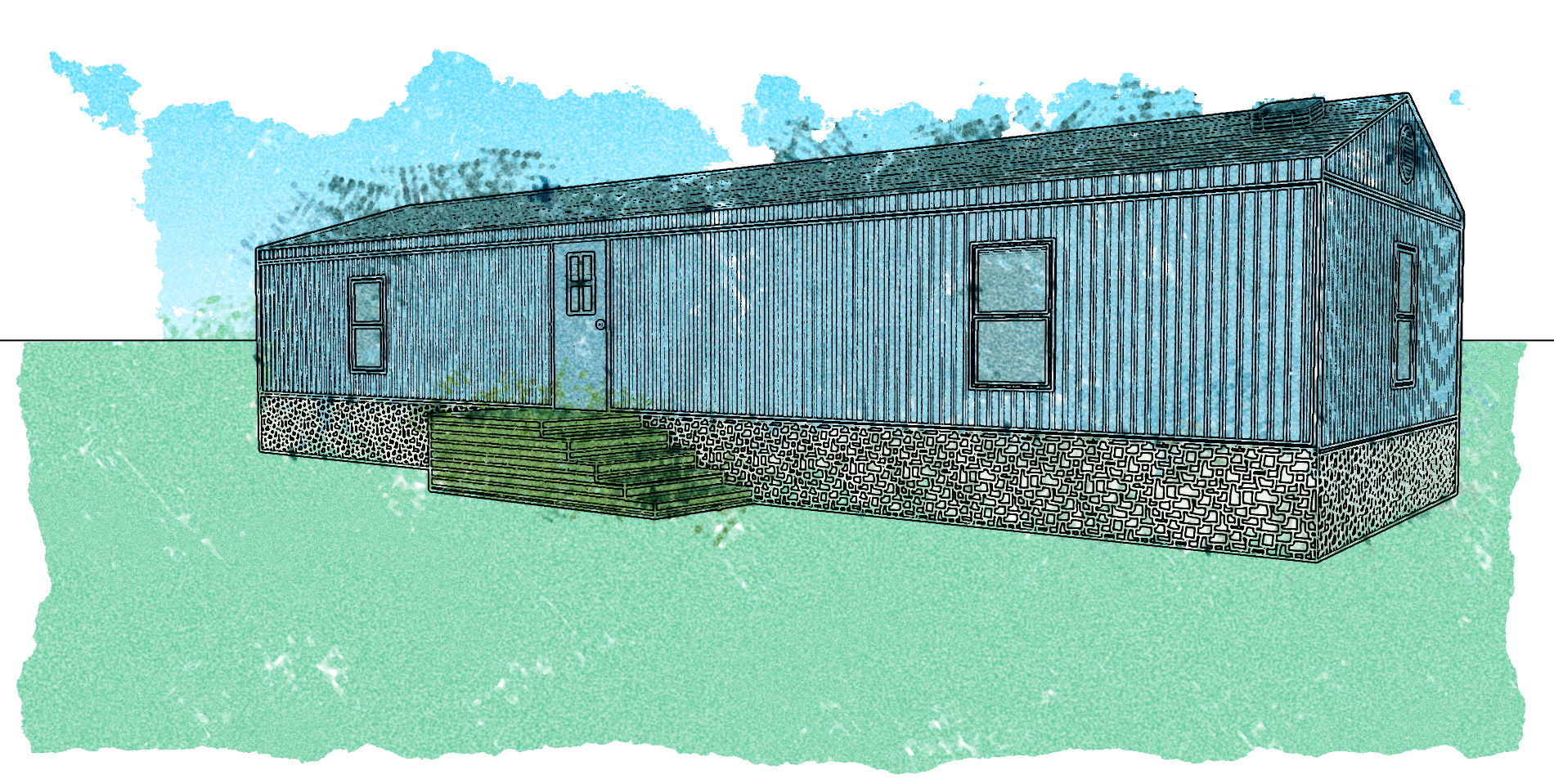
New mobile home siding instantly updates the look of your home, increases its value, and can increase your home’s energy efficiency. It’s a smart improvement project for older and newer manufactured homes.
There are several mobile home siding options to choose from such as stone, wood, cedar, metal, and vinyl. Your choices are endless!
In this article, we will cover the most popular mobile home siding materials, provide advantages and disadvantages of each material, and help you determine the best siding option for your home. We will also provide installation help and advice on hiring the best siding installers.
Benefits of New Mobile Home Siding
Additional protection for your home, a high return-on-investment, and increased energy efficiency are all great benefits for installing new siding to your manufactured home.
New siding protects and helps reduce heating and cooling costs
Siding protects your home from the elements and pests. It also helps prevent moisture penetration and the growth of mold, dust mites, and bacteria.
Another important aspect of siding is its energy efficiency. By upgrading your old siding you can increase your home’s life expectancy and reduce energy costs.
Read more about how siding can protect your home better.
New Siding has a High Return on Investment
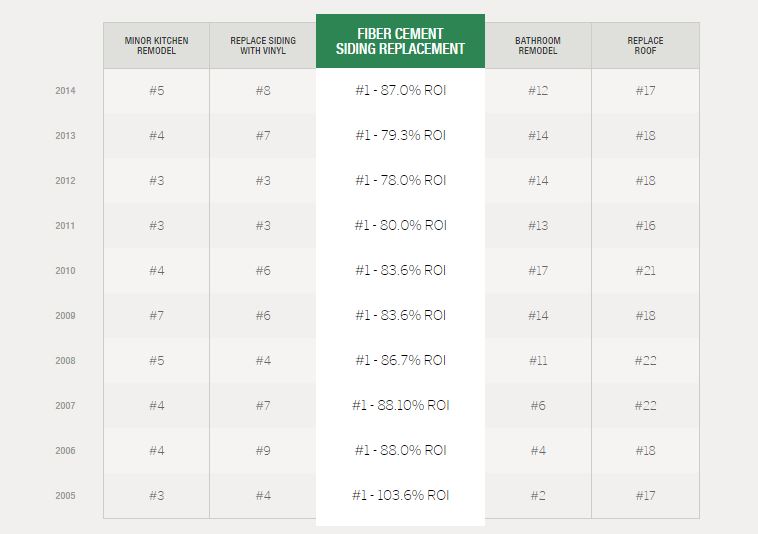
New siding can give you a high return on investment. Realtors® states that three different siding replacement projects have landed in the top 10 investments for homeowners time and again.
- Fiber cement siding can provide a return of 79.3 percent of costs.
- Vinyl siding can provide a return of 72.9 percent of costs.
- Foam backed vinyl can provide a return of 71.8 percent of costs.
Read more information about siding’s return on investment here.
Here’s a chart depicting the return on investment for fiber cement siding provided by JamesHardie, the manufacturer of the popular ‘Hardie Board’ siding:
New Siding is Energy Efficient
You can double or even triple your home’s energy efficiency with new siding. The R-Value is the standard calculation to determine energy efficiency and it has been proven that new siding can drastically increase your home’s R-value. HomeTech Exteriors shared the following advantages of installing new siding:
- Increased Energy Efficiency – Installing siding increases your home’s R-value, an important measure of the insulating capacity of any material
- Increased Structural Integrity – Expertly produced siding, like that produced by CertainTeed and Mastic, provides a nearly impenetrable force to protect your home
- Proper Moisture Management – If properly installed, siding will allow your home to “breath,” meaning moisture can get in and out
- Air & Noise Barrier
- Increased Curb Appeal
Use the R-value calculator here to get the recommended R-values for your home based on your location. Just input whether the home is new or existing, what type of heating source you have, and the first 3 digits of your zip code to get a list of the recommended values your home should have. For Southern West Virginia they recommended the following for my single wide mobile home:

Read more about how siding replacement can boost energy performance here.
By boxing the home in with additional insulation or foam board and then installing new siding you can substantially increase your home’s energy efficiency. You will need to account for added weight if you do this but it’s a great choice for homes that are permanently installed and won’t be moved again (as is the case with 90% of manufactured homes). Additional blocking of the foundation may be needed to account for the added weight but it’s a smart choice and can save you lots of money on heating and cooling costs.
Read more about insulation for your home here.
Read more about siding energy savings here.
Mobile Home Siding Choices
If you’re thinking of updating your mobile home’s siding you will need to decide which material suits your budget and needs best. Your local weather and ability to install the siding are important factors to consider too.
Consider the Weight of the Material
We’ll cover the most popular siding options along with their weights below. Weight is an important consideration for manufactured homes simply due to the way they are built. It doesn’t mean your home is inferior or poorly constructed – it simply means that it was designed so precisely that it can travel down a highway at 55 mph and still be as structurally sound as any site-built home.
If there is a chance that your home will be moved after the new siding has been installed the weight of the material will need to be considered carefully and additional reinforcement may be needed. Even if your home will never be moved again it is still important to understand that the home was built in such a way that additional weight could cause structural issues down the road so keeping the weight of the materials in mind is smart.

Using Two or More Siding Materials
There’s a new trend in mobile home siding and that’s using two or more siding materials or colors. The effect is beautiful and eye-pleasing. It can add dimension which makes the home look larger.
A popular way to use two or more siding materials on your home is to use rock or stone around the entryway and on the skirting and use vinyl siding everywhere else. It’s a beautiful look!
Here are a few choices for you to consider for your manufactured home siding:
Vinyl Siding
Vinyl is always a great choice, and fairly budget friendly depending on what type of siding you chose. There are insulated and non-insulated vinyl siding. Insulated costs more, of course. You’ll have to decide which is the best for your home and what kind of return on investment you want (energy savings over several years or resell value). The average recoups value for vinyl siding is 68%-70% on re-sell.
The color combinations are vast and vinyl lasts for a very long time. It’s color retention and fading issues are getting better with new technology, Georgia Pacific vinyl has a 25-year excessive fade warranty and a 50-year product warranty.
Some companies state that their products come in 350 different colors. Most state it can withstand winds of up to 110 mph.
There are pros and cons to vinyl siding as with any product. While it easy to install it isn’t watertight. Water has been known to seep into the cracks and destroy the wood and insulation underneath. To remedy that you could and should install a waterproof membrane under the siding. Also, make sure there are small holes in the siding to drain water (I’ve never seen any vinyl siding that didn’t have those, but just make sure to be safe). Distortions, melting and warping can occur, especially in high heat. There’s not much to do for that, maybe adding awnings and reduce reflective rays from pools and windows may help.
Download a vinyl siding installation guide here.
Weight is always an issue for manufactured homes and vinyl siding weighs about 60 to 70 pounds per 100 feet which are fine for moving the home if needed.
Read more about installing vinyl siding from Lowe’s.
Fiber Cement Siding
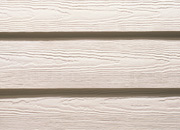
Fiber cement siding has some great benefits. It comes in various sized boards and thickness and is available in numerous styles. It can even mimic the look of just about any other siding on the market like vinyl and cedar shake. It’s rot and insect resistant and can even withstand ocean side conditions.
Although higher in cost than vinyl, fiber cement is still an economical alternative to wood siding. It is made of silica, cement, wood fiber, water, and other ingredients giving it outstanding durability. Since it is close to 90% silica (sand) it is fire resistant and can withstand very, very high heat.
Usually, fiber cement siding has a 50-year warranty with the ‘baked on’ finish warranty having a 10-15 year warranty against fade and color reduction.
One of the major cons for manufactured homeowners is the weight. Fiber cement board weighs close to 300 pounds per 100 square feet so that may be an issue if you ever need to move the home.
The two most common types of fiber cement siding are Hardiplank, made by James Hardie Corporation and Weatherboards, made by CertainTeed Corporation.
Installation is more expensive than vinyl, and you will have to paint it eventually (remember, the finish is usually only warranted for 10-15 years). You could go with horizontal or vertical installation or you could go with both to add some extra visual appeal.
Using Wood or Cedar as Mobile Home Siding
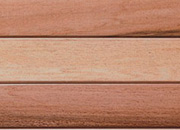
Wood or natural cedar is a good choice for manufactured home siding, whether for the entire home or just as an accent. There are a few different issues you’ll need to consider when using wood products – rot, water damage, and maintenance.

T1-11 Plywood Siding
T1-11 is a 4′ x 8′ foot wood panel that is grooved and can be used vertically or horizontally. Usually, homeowners go with the vertical installation. It’s not as popular as it once was since better, more waterproof material can be found around the same price ($30-40 a sheet).
T1-11 is available in two grades – OSB which is the cheaper grade is made from many smaller pieces of wood glued and formed into the grooved sheets and plywood, the more expensive grade, made from larger wood pieces that are glued and formed into the grooved sheets. Plywood is smoother and is usually the preferred choice for mobile home siding and is easier to sand and seal with either paint or stain. OSB T1-11 is rough and not easily stained or painted.
Related: Read more about installing T1-11 here.
Introduction to T1-11 Plywood Siding:
Installing Plywood Siding; Tips and Tricks Using T1-11:
Cedar Siding
Cedar offers a timeless complement to any architectural style from traditional to contemporary. Eastern and Western Red Cedar are used for siding, but there’s also Yellow cedar which is used for poles and posts mostly. Cedar siding is available in shake (small wedge planks), log cabin cut, lap, bevel, tongue and groove, and regular board and batten as well as a few specialty shapes. Wood siding is the same, minus the plank. Cedar is known for its natural insect repulsion as well as its decay and moisture resistance.
Cedar is known for its natural insect repulsion as well as its decay and moisture resistance.
There’s a choice of a kiln, or oven dried, or air dried. Oven dried costs more because it removes the most moisture which in turn allows for less shrinking and shifting.
You can also choose factory finished or non-finished. Non-finished wood has to be protected or painted every 10-15 years. Most wouldn’t dare paint cedar, though, it’s naturally beautiful!
Oil-based water sealant is the preferred method of protection. Wood should be painted regularly.
The weight of kiln dried cedar is a bit lower than fiber siding at an average of 292 pounds per 100 feet. This could cause an issue if the home needs to be relocated. Vapor barriers are necessary so factor that into your cost, too. The cellular structure of cedar is great for heat retention and cold resistance. We’ve recently featured a single wide with cedar plank siding and it is gorgeous, you won’t want to miss it!
Installation depends on the type of cut. Cedar planks are very labor intensive whereas plain wooden levels aren’t as difficult. You cannot use common nails or screws. Only galvanized, stainless steel or aluminum can be used to keep rust stains from appearing on the wood.
Stone Siding
Stone siding is a great option for mobile home siding. There’s no doubt that it’s beautiful, but it’s benefits are numerous as well. Stone adds dimension and gives a home the look of permanency, even if it isn’t. It resists rot, insect, fire, and water. It’s basically a perfect option for siding on a home.
Some designers suggest that you use stone only as an accent and not for the entire home but that shouldn’t keep you from doing exactly what you want to do. It’s your home after all! Adding stone to the foundation and accenting entryways and windows are great ways to use stone.
5 Types of Stone Siding
Regardless of how you use it, there are 5 basic types of stone siding that you can use on your mobile or manufactured home.
Real Stone
Real stone is simply rocks made from mother nature herself and little is done other than harvesting.
Energy efficiency is superb but installation is very labor intensive and to be honest, this is not a good option for manufactured homes unless the structure has been reinforced. It’s simply too heavy.
Real stone could be ok for skirting or accents but you would need to research more and get the lightest possible stone available if you wanted to install it to the side of your mobile home.
Note: manufactured homes are not inferior. They simply are not made for that much weight. It’s best to go through a quarry to buy it and cut out the middleman, if possible. Weight is a huge issue so there will be no moving the manufactured home if you do side it with stone. No warranty is needed.
Real Stone Veneer Panel
Real Stone veneers are real stones, cut down to about 1-inch thickness and placed together on a panel of wire or board. Weight is less of an issue with veneers.
Installation is just like placing regular rock but a lot easier since you’re dealing with panels that are thinner. Real stone adds great insulation value and well, doesn’t need a manufacturers warranty, it’s stone!
Real Stone Cladding
The real stone cladding is usually a granite or marble slab cut into 1′ (or less) thick slabs in various sizes (up to 8 feet). Usually, they are smooth (if granite or marble) but can also come in other stone types. If it does have a texture to it then it’s installed in a brick pattern. If it is a granite or marble cladding then they usually keep the seams perfectly square and very tight, giving the appearance of a seamless wall. Energy efficiency depends on the type and installation can be difficult.
If it does have a texture to it then it’s installed in a brick pattern. If it is a granite or marble cladding then they usually keep the seams perfectly square and very tight, giving the appearance of a seamless wall. Energy efficiency depends on the type and installation can be difficult.
Energy efficiency depends on the type and installation can be difficult.
Manufactured Stone Veneers
Manufactured stone or cultured stone veneers are sometimes called an architectural stone, too. They are made out of Portland cement and oxide coloring then formed within a mold in a factory. Since they are mass produced they cost less than real stone and come in various shapes, sizes, corner pieces and trim pieces. Installation is easy due to the decreased weight and panel system used. They come in various shapes and sizes as well as trim and corner pieces. Manufactured stone has a great energy efficiency factor. They do have warranties that can be as high as 50 years.
Since they are mass produced they cost less than real stone and come in various shapes, sizes, corner pieces, and trim pieces. Installation is easy due to the decreased weight and panel system used. They come in various shapes and sizes as well as trim and corner pieces. Manufactured stone has a great energy efficiency factor. They do have warranties that can be as high as 50 years.
Installation is easy due to the decreased weight and panel system used. They come in various shapes and sizes as well as trim and corner pieces. Manufactured stone has a great energy efficiency factor. They do have warranties that can be as high as 50 years.
Manufactured stone has a great energy efficiency factor. They do have warranties that can be as high as 50 years.
Faux Stone Panels
Faux stone is made of polyurethane or a polymer and combined with chemicals like fire retardants and UV inhibitors.
Higher cost faux panels even use real stone that has been smashed into very small pieces to give the appearance a more natural look. It’s very light at about 100 pounds per 100 feet.
Energy efficiency is not as good as real stone but still decent compared to other siding options. They should have at least a 25-year warranty.

Aluminum Siding
Aluminum siding has been used for decades in mobile and manufactured homes.
It’s lightweight and practically indestructible. It can’t melt but it can dent. You can easily paint it as well.
The energy efficiency and installation are comparable to vinyl siding. If this is what your home already has and you’re wanting to update it, painting it may be an option for you. We spray painted our single wides siding and it cost $70.00 for the whole home. It gave it a completely new look and will do just fine until we can afford the new roof and siding together.
Read more about steel siding here.
Updating Your Mobile Home’s Siding
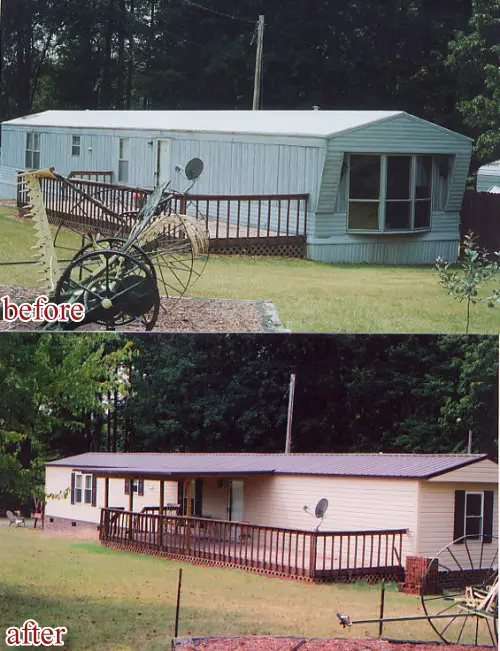
New siding is the best way to give a mobile home a complete facelift. New siding can improve the insulation abilities of a home and increase the value significantly.
The site Mobile Home Exteriors has some great before and after photos of mobile homes with new siding installed:
Mobile Home Siding for Flat Roofs
Installing new mobile home siding can be a bit more complicated if you live in a mobile home that has a flat roof. If that is the case, you will probably have to extend your roof line or devise a way to prevent water from getting behind the new siding. There are a few different options you can consider:
Any of the above could be used keep water away from the new siding but you have to be careful that you do not compromise the roof’s integrity.
Hiring Mobile Home Siding Installers
If you are having the product installed it is best to get a minimum of 3 estimates and make sure everything you expect is written out.
Always have a written agreement, not just a verbal one. Material lists should be detailed and accurate.
Don’t be scared to call past customers to check references! A true professional will welcome and encourage it.
Request their license number and insurance information – if you’re going to pay for a professional you should get a professional!
The Licensed Contractor Problem – A Master Is Not Always a Master
Here in WV, the lawmakers decided that everyone working on a construction project needed to have a license in 2010 (and many other states are the same way). To initiate the new law they gave current construction workers 2 years to be grandfathered into the system. Applicants could get one of three types of license: Apprentice, Journeyman, and Master without needing to take an exam to prove their knowledge.
The application stated that Masters in their chosen field needed 10 years experience and were supposed to prove their experience via tax returns and notarized forms. Problem was, WV received so many applications they couldn’t properly investigate all the applicants so now the state has thousands of so-called ‘Master’ plumbers, electricians, and contractors that have little or no knowledge or experience.
As long as applicants paid $75 and sent in the application during the first 2 years of the new law they were given a license without question. There are now several 22 year old’s carrying Master Licenses for plumbing, electricity, and framing that would have required 10 years of work experience in each field and/or passing a 3-6 hour exam.
With that said, please make sure your contractor has actually passed a licensing exam and was not grandfathered in. Many states did this so there are many contractors, plumbers, and electricians walking around with a Master License that shouldn’t have one.
Related: Hiring Contractors for your Manufactured Home Improvement Projects
Installing Mobile Home Siding – Videos
With a little know-how, you can install your new mobile home siding yourself. Research well and make sure you have the proper tools and a good helper. Contractor Culture is a good resource for finding the best tools for your project. They test and review all the name brands.
Once you have the tools, watching videos about installing mobile home siding will help if you are going to do the installation yourself or if you are hiring a contractor.
How to Install T1-11 Siding onto a Mobile Home:
Park Model Mobile Home Exterior Remodel:
How to Install Vinyl Siding:
Related: 6 Mobile Home Maintenance Tips Every Owner Should Know
Summary
Replacing your mobile home’s siding is a great home improvement project. New siding instantly updates the look of the home as well as increasing your home’s energy efficiency.
There are an unlimited amount of options and combinations for mobile home siding and new materials are being introduced into the market.
Cost is a huge factor in deciding which material is right for you but you also need to consider lifespan, weight, and installation methods. While one material may cost less it may take longer to install or need a special installation method thus costing more in the long run.
If you have any questions about mobile home siding please feel free to ask them in the comments below. We’ll do our best to get you pointed in the right direction.
Thanks for reading Mobile and Manufactured Home Living!