Battens are used to cover the seam where two VOG wall panels meet. By installing battens, the factory is able to build homes faster and cheaper. A key part of home improvement is Removing Mobile Home Wall Battens, which can help homeowners achieve a more polished look.
Unlike drywall or sheetrock, VOG panels do not require taping and mudding so the edges of the panels are not tapered and the installation process is much faster. This is ideal in a fast-paced manufactured home factory. This is not ideal for homeowners that want a seamless wall.
For many, Removing Mobile Home Wall Battens is the first step towards a more customized interior.
Steps for Removing Mobile Home Wall Battens
Understanding Removing Mobile Home Wall Battens is essential for homeowners looking to enhance their space.
You can remove the battens in your mobile home. Once the battens are removed you can paint, texture, or wallpaper over the walls.
Removing the battens is the easy part; however, Removing Mobile Home Wall Battens involves the skill to fill in the gaps that the battens were covering, ensuring the entire wall looks cohesive is the real challenge.
Related: Removing Walls in a Mobile Home
Using Caulk to Fill in the Seams After Removing Mobile Home Wall Battens
Use an acrylic caulk to fill in the gap or crack between your VOG wall panels. Remember, the panels do not have tapered seams like a sheet of drywall or sheetrock so filling in the gap smoothly and evenly can be difficult.
Here’s the process we recommend for using caulk to fill in the seams of vinyl walls in mobile homes:
Removing the Battens from Vinyl Walls in Mobile Homes
You’ll want to be careful when you remove the battens or strips that cover the seams between two VOG panels. A small thin pry bar that will fit under the strip
Here is a video that shows a man removing the strips that cover the seams of two modern VOG panels used in a manufactured home:
After Removing Mobile Home Wall Battens, it’s important to ensure a smooth finish by properly filling any gaps.
Prime the Wall
Prime the wall and ensure an even coat has been applied in the gap that the batten used to cover. Let dry. Repeat if necessary.
Fill in the Gap with Caulk and Smooth
Choose the caulk most suitable for your walls. Use the charts below to choose the best caulk.
Place an even bead of caulk in the gap to fill in the crack (you’ll need to work quickly at this point).

Using a wet finger, or smooth caulking tool, run along the gap to create an even bridge of caulk between the two VOG panels.
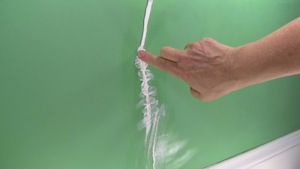
Use a straight-edged tool such as a credit card to smooth the caulk so that it creates an even surface across the wall. This process may require a few attempts to get enough caulk into the gap. Carefully remove any excess caulk from the wall with a wet rag.
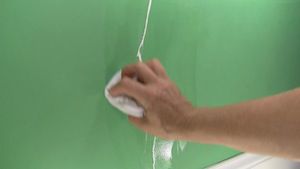
Allow to dry and ensure there is no shrinkage (choosing the correct caulk is important to keep the caulk from shrinking). Paint, texturize, or cover the wall with wallpaper, fabric, bead-board, shiplap – just about anything can be used to update mobile home walls as long as the framing can handle the weight.
David Jordan removed the battens and taped and mudded his mobile home walls and the results are fantastic:
How to Choose the Right Caulk
The two main types of caulk are silicon and latex but there are some caulks that are a combination of both.
The Home Depot has a handy rundown of each type of caulk below:
Use Latex Caulk For:
- Use to fill in gaps between crown molding and baseboards.
- Use to seal a door frame in place and seal the subfloor at the bottom of a door frame.
- For the inside of both doors and windows, use latex painter’s caulk.
- Repeated exposure to water can speed up the breakdown of latex caulk over time, rendering it weak, brittle and ineffective.
Silicon Caulk:
- Around sinks, tubs, and showers. The silicone acts as a water and moisture repellant.
- When installing bath fixtures to seal gaps between shower tiles, between sinks and counters, and around the base of the toilet.
- Outdoors in areas exposed to direct sunlight or rain as the silicone helps the caulk last longer.
- If you have an older home, sealing around the foundation to prevent air from entering where siding overlaps the foundation. You should also fill and seal all exterior areas where different materials meet, such as around windows and doors.
- Normally used around the full perimeter of windows to help seal the window to the header, sill, jack stud and jamb.
- Paintable silicone caulk can be used around the outside of window units to properly seal the window and the siding edge, or around the entire door unit.
Using Drywall Tape and Compound to Remove the Battens from Vinyl Walls in Mobile Homes
You can also use drywall compound instead of caulk, or if you want to take it even further, you can tape and mud the gap between the two panels.
Admittedly, it is difficult to get the tape even and it will be very difficult, if not impossible, to get the seam perfect since your VOG panels do not have tapered edges like drywall or Sheetrock. Still, if you’re more comfortable with drywall compound and tape it can be used to fill in the gaps.
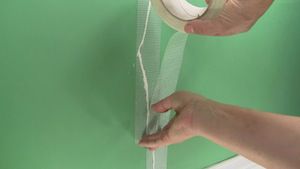
You’ll still want to primer the wall and the seam between the VOG panels. Tape and mud as you would sheetrock.
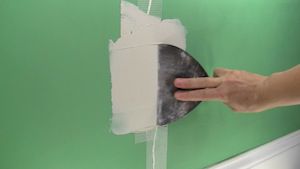

Lastly, you will need to lightly sand the compound to create an even surface. Paint, texturize, or wallpaper for a finished look.
Check out this video for more tips on how to paint those vinyl walls in your mobile home:
Adding a Texture to Vinyl Walls in Mobile Homes
Adding texture to your mobile home walls is a great method of updating your mobile home walls.
Drywall compound is used most often to add texture because it’s affordable, easy to get, easy to work with, and easy to clean.
You’ll still want to use a primer on your walls before you apply the texture to get the proper bond. Once the primer is dry you can begin adding your texture to the wall.

You can go with simple textures such as the ‘stucco’ look, the sand or orange peel, or complex textures. You can even use stencils to create raised textures:
Adding Orange Peel Texture to your Mobile Home Walls
One of our favorite websites, My Hearts Song, shares a step-by-step article about how they removed the strips and added an orange peel texture to their vinyl walls.
If removing the strips is your main priority and you want to texture your walls lightly, then you’ll definitely want to check it out. Geneva, the owner, has a great question and answer section, too.
Related: 11 Cheap DIY Wall Decor Ideas
Covering Vinyl Walls in Mobile Homes with Wallpaper
You can give your mobile home walls a whole new look by removing the strips (battens) and hanging wallpaper.
If using wallpaper, you will want to make sure the paper is thick enough for your needs.
Paintable wallpaper is easy to hang but it needs to be thick enough to withstand the wet paint and keep the paper from showing the gap made by removing the battens. Of course, you can always fill the seam in with caulk or drywall compound (see below).
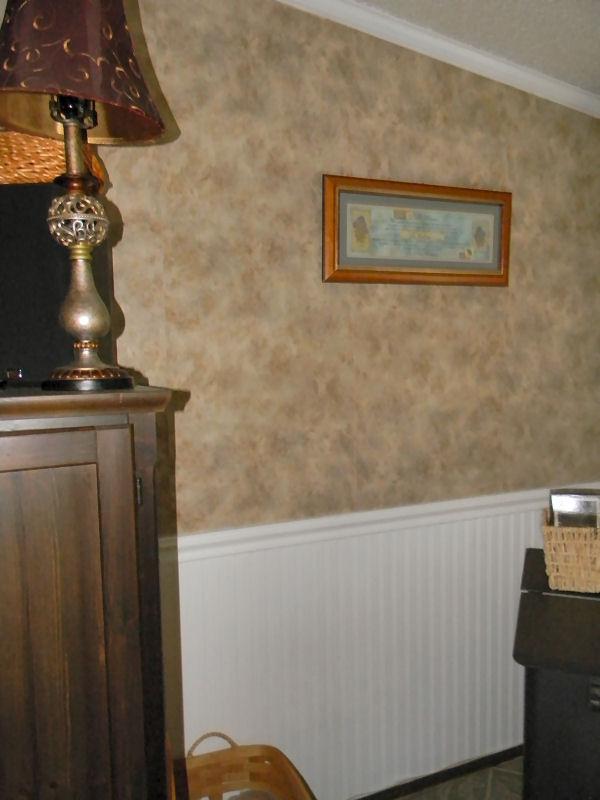
MyMobileHomeMakeover.com shares their experience wallpapering their vinyl walls. You can read the article here. The article mentions one issue they encountered when wallpapering their bathroom:
“In a bathroom we redid, we used only the wall repair wallpaper and painted it when we were done. This worked fairly well, but in some spots you can still tell there is an empty strip below the paper.”
Wood Paneling in Mobile Homes
My 1978 mobile home had faux wood paneling throughout the home but it was super easy to paint thankfully.
Two coats and I was done. However, I kept the paneling original with the lines or grooves. You don’t have to keep those, though. You can fill them in with spackle and then paint over them. Rachel Ray had a segment on her show that shows you how:
It is not easy to hang wallpaper with intricate patterns, especially on vinyl walls in mobile homes, so try to find a solid or simple pattern that can be matched easily.
This Old House has a great tutorial for hanging wallpaper here.