There’s a lot of misunderstandings and untruths about mobile homes and manufactured homes on the internet. While those of us who live in factory-built housing understand the reality of our homes, navigating the myths can be challenging for others.
The industry offers a broad spectrum of options, ranging from entry-level, affordable models to high-end luxury residences. Regardless of the price point, every home is held to rigorous standards; the U.S. Department of Housing and Urban Development (HUD) regulates the industry, requiring every unit to pass a professional inspection before it ever leaves the factory.
Where Lies about Manufactured Homes Come From
It’s no secret that mobile homes carry a heavy stigma. Unfortunately, the loudest voices speaking on manufactured housing are often the ones who have never stepped foot inside a factory-built home.
I’ve found that most of the misinformation surrounding mobile and manufactured homes typically stems from a simple lack of exposure—people don’t know what they don’t know.
If we can get the truth out about mobile homes there will be less stigma. These mobile home questions and answers should help a bit.
Frequently Asked Questions about Mobile Homes
What is the difference between a mobile home and a manufactured home?
The main difference between a mobile home and a manufactured home is June 15, 1976. Let me explain:
Both a mobile home and a manufactured home are built on a steel chassis with axles and wheels inside a factory. However, a mobile home was built before June 15, 1976. Manufactured homes were/are built after June 15, 1976.
Why is June 15, 1976 so special?
On that date, the HUD Code went into effect, establishing federal standards for safety and construction.
Of course, most people couldn’t care less which term is used. The industry, however, goes absolutely mad over the term ‘mobile home’ if a home was built after 1976.
This is the most asked question we get so we’ve written an entire article dedicated answering it here.
Fun Fact: The industry wanted to shed its poor image so they used the HUD law as a catalyst to do that (or tried anyway). You can read more about the industry’s fight against the term mobile home in our article No, I Will Not Stop Using the Term Mobile Home – Get Over It.
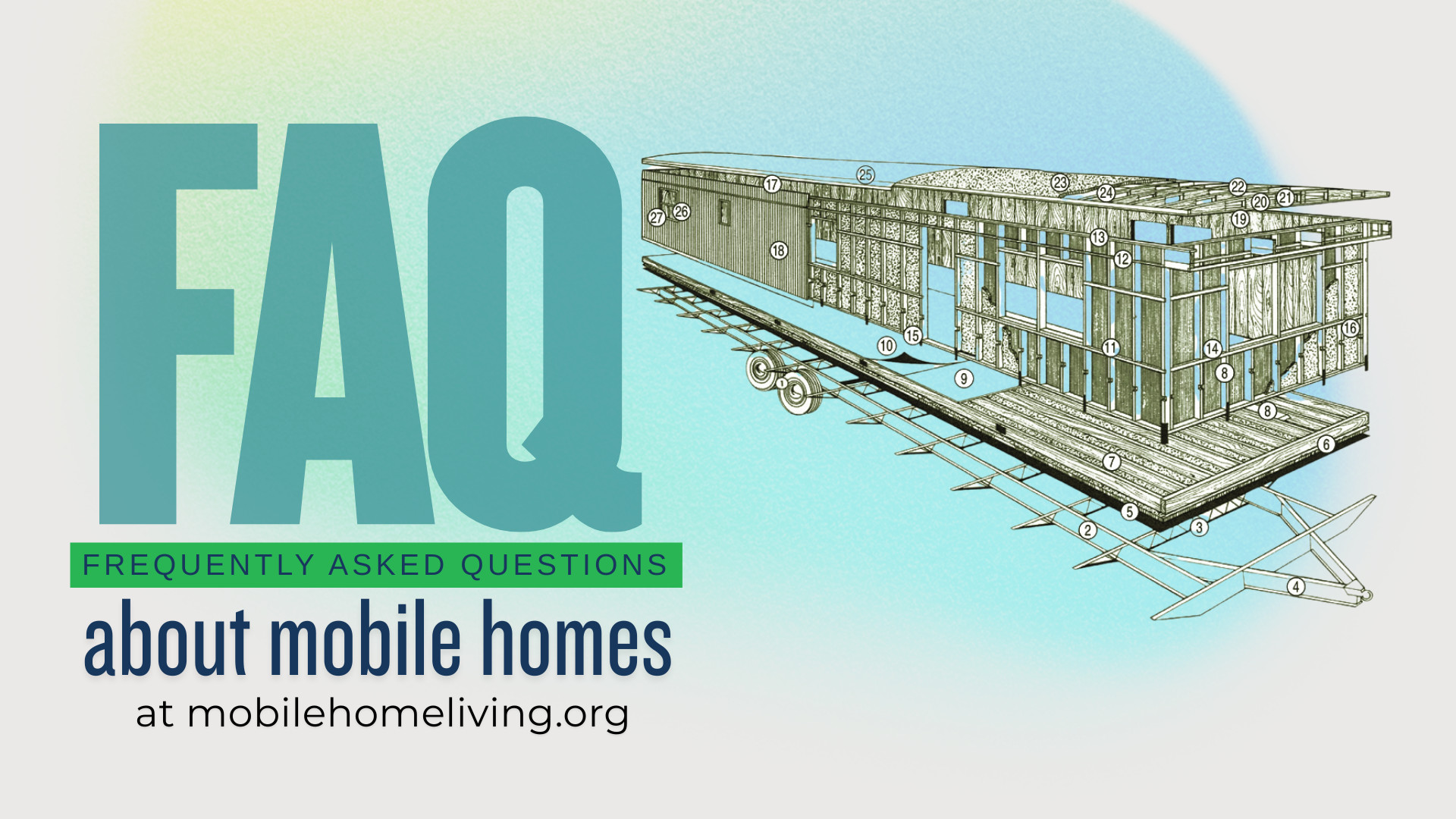
Are mobile homes built with 2X2s?
No. This is one of the most persistent myths. Modern manufactured homes are built using high-quality materials—including 2×4 or 2×6 wall studs—and must meet strict federal requirements for structural strength, wind resistance, and energy efficiency.
What are labels, titles, and certificates?
All transportable sections of manufactured homes built in the U.S. after June 15, 1976, must contain a certification label (commonly referred to as a HUD Tag) on the home. This label is the manufacturer’s certification that the home was built in accordance with HUD’s Manufactured Home Construction and Safety Standards (commonly referred to as the code or the standards). The Standards cover Body and Frame Requirements, Thermal Protection, Plumbing, Electrical, Fire Safety, and other aspects of the home. The Standards are published in the Code of Federal Regulations under 24 CFR Part 3280. This link to HUD can explain it a bit better.
How can I find the make, model or manufacturer of my home?
If your home was made after June 15, 1976, there should be a compliance certificate (HUD Data Plate) in the home. It can be on the inside of a cabinet door, under the sink, around the breaker box, etc. There should also be a red plaque on the exterior of the home that will give you the basic information such as the manufacturer and the model year. There should also be a manufacturers plaque around the end or front door of your home. This will be the case for some homes made before 1976, too. It’s more a form of advertising but it will give you enough information to get you started. You can also look on the tongue or frame of the home for a stamped number. This is the homes serial number. It is just like a vehicle’s VIN number and can identify the model and manufacturer. You may be able to get a rough idea of the year of the home by looking inside the toilet tank (assuming it’s the toilet that came installed in the home). Learn more about HUD tags and data plates here.
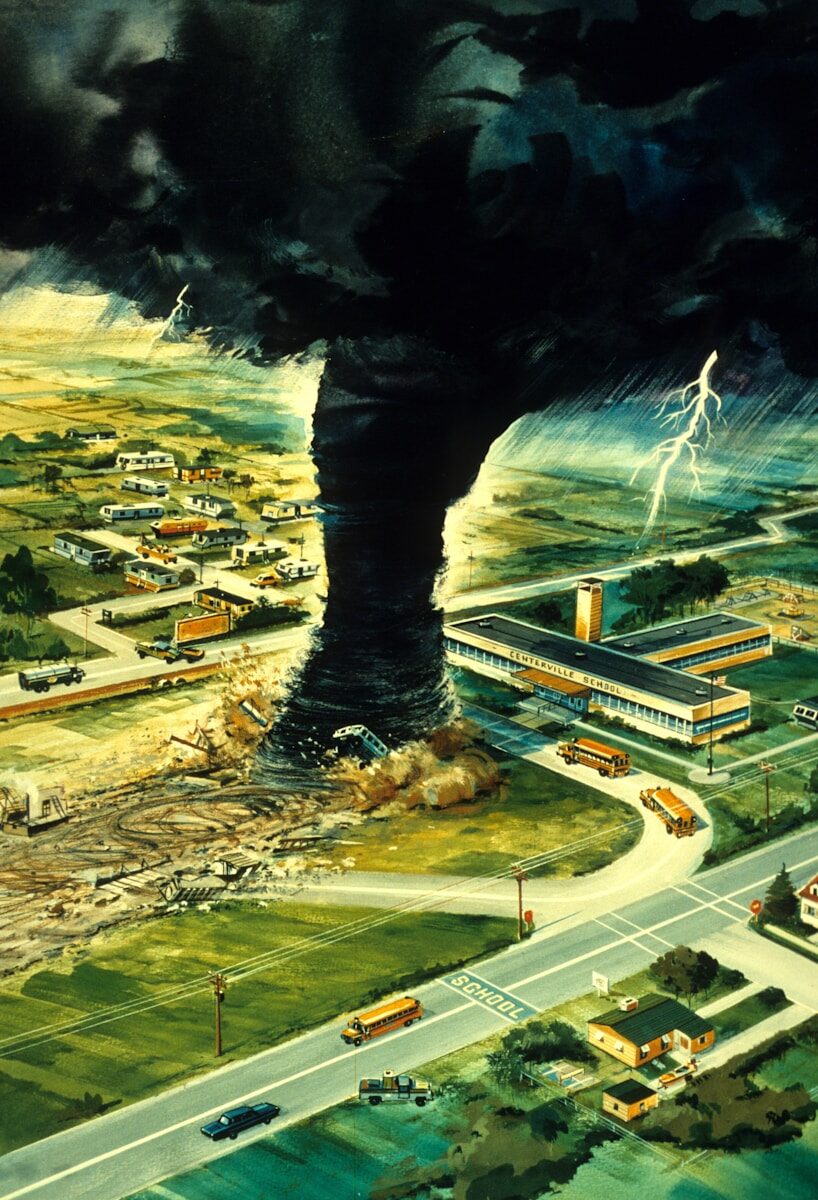
Do mobile homes attract tornadoes?
Absolutely NOT!
A tornado’s deadly force does not selectively discriminate between a site-built or a factory-built home.
There is no meteorological or scientific basis to thinking that manufactured homes attract tornadoes. The reality is one of coincidence: most manufactured homes are located in rural and suburban locations, where meteorological conditions favor the creation of tornadoes.
Apparently, mother nature dislikes us all equally and without prejudice.
Can manufactured homes really withstand hurricane or high winds?
Since 1994, HUD has enforced “Wind Zones.” Homes built for coastal or high-wind areas are engineered to withstand winds up to 110 mph (Zone 3). Statistics show that during major storms, properly anchored manufactured homes perform as well as, or better than, older site-built homes.
In areas prone to hurricane-force winds, HUD’s wind safety standards require manufactured homes be resistant to winds up to 100 miles-per-hour in Wind Zone II, and 110 miles-per-hour in Wind Zone III. In both of these zones, the standard for manufactured homes is now more stringent than the current regional and national building codes for site-built homes located in these wind zones.
This PDF released by FEMA about Understanding and Improving Performance of New Manufactured Homes During High-Wind Events is helpful for anyone wanting to know more on the subject.
An important element in the adequate wind safety of a manufactured home is the proper installation and anchoring of the home according to the manufacturer’s instructions. Installation standards are regulated on a state-by-state basis.
When properly installed and anchored, the manufactured home’s wind resistance is significantly improved. For each new manufactured home sold, the manufacturer must include installation instructions to properly support and anchor the home. This requirement is part of the wind storm protection provisions of the HUD Code.
A tornado’s deadly force does not selectively discriminate between the site-built and manufactured home or “mobile home” (those built prior to the HUD Code’s implementation in 1976). In most of the country (non-hurricane-prone areas), manufactured homes are built to withstand sustained winds in the range of 70 miles-per-hour. Above this range, a manufactured home will experience some form of damage.
Only in the case of severe weather, such as a tornado, are these areas likely to experience winds in excess of 70 miles-per-hour. It is estimated that approximately 40 percent of all tornadoes have winds in excess of 112 miles-per-hour. A direct hit from a tornado will bring about severe damage or destruction of any home in its path. If a manufactured home has a below-ground basement, the home’s residents should seek shelter there. If a home, site-built or manufactured, does not have a below-ground basement, the residents should seek immediate below-ground or other appropriate shelter from the storm’s possible effects.
During a tornado warning, a tornado has been detected. Residents should seek shelter in an interior room with no windows.
Can manufactured homes gain value or appreciate?
They sure can. Of course, there’s a lot of variables that play into the appreciation formula.
Data Comp Appraisal Systems looked at 185 manufactured homes in the state of Michigan. They compared the average sale price to the average resale price several years later. The study found the average value of the home had increased by $190, from $26,422 new to $26,612 used. That doesn’t seem like a lot but let’s dig deeper to further break down the numbers:
- 97 of those homes increased in value by an average of $2,985.
- The remaining 88 decreased in value by an average of $2,822.
While it was close, more homes appreciated by over two thousand dollars than not. For even further analysis and information you should read our article, Manufactured Homes Can and Do Appreciate.
Is it possible to get a traditional mortgage for a manufactured home?
Yes, but with caveats. If the home is permanently “affixed” to land you own and titled as real property, you can qualify for FHA, VA, and conventional loans. If the home is in a park or on leased land, you typically use a chattel loan (personal property loan).
What is a chattel loan?
A chattel loan is a loan for “movable” personal property. Because the home is not legally tied to the land, the bank treats it more like a vehicle or equipment loan. These often have slightly higher interest rates and shorter terms than 30-year mortgages.
Are mobile and manufactured homes more prone to fire?
No. The reason you think that is because the newspapers and TV stations don’t know how to feature any positive stories regarding mobile homes and journalist can be lazy and biased. Four stick built homes and a mobile home could catch fire and they would only report the mobile home fire.
Have you ever seen a positive news story regarding mobile homes? Me either!
On a more serious note, Foremost Insurance did a national fire study and found that site-built homes were more than 2 times as likely to experience fire than manufactured homes. They found that 17 site built homes out of 1000 had home fires as opposed to only 8 per 1000 manufactured homes.
Are manufactured homes energy efficient?
Yes. Since the 2023 updates to energy standards, new manufactured homes are often more energy-efficient than older site-built homes. They feature better insulation, “Low-E” windows, and sealed duct work, which significantly lowers utility bills.
In 1994, there was a new federal law initiated to make all homes more energy efficient. Manufactured homes have to abide by those laws. HUD went so far as to divide the country into 3 regions and manufactured homes produced for each region have to meet the performance zones for each.
Here’s what NMHOA says about it: A new thermal zone map for manufactured housing identifies three regions:
- the southeastern states are grouped from South Carolina to Texas in Zone I;
- the mid-zone of the nation is grouped from North Carolina across to California in Zone II;
- the remaining northern part of the country is grouped together in Zone III.
HUD’s new standards require that manufactured homes comply with one of three alternative options:
- design the home’s overall thermal efficiency to account for heat loss through the insulted surfaces of the thermal envelope (better known as Uo-values) for three zones;
- adjust Uo values with credits for high efficiency heating and cooling equipment;
- or by totally redesigning the home with new innovative technologies that use no more energy than published Uo values.
Note: Zone II, including Oklahoma, requires a Uo of 0.096.
These efforts are ensuring that manufactured homes remain affordable, not only in start-up costs but for the life of the home.
Can I remodel a manufactured home like a regular house?
Absolutely! You can paint, install new flooring, upgrade cabinets, and even add additions (though additions usually require an independent support system so they don’t stress the home’s frame). Always check local codes and HUD regulations before structural changes.
We have a great article about building additions onto mobile homes here.
We’ve published hundreds of articles with ideas and inspiration to remodel your mobile home. Click the buttons below to for each category:
Why are they called “mobile homes” if they aren’t meant to move?
Mobile homes started as travel trailers and campers so from the 1920s to the late 1950s the homes were smaller and truly mobile.
Today’s manufactured homes are designed to be moved once—from the factory to the home site. Referring to a 2,000-square-foot modern home as a “trailer” is like calling a modern SUV a “covered wagon.”
How long do manufactured homes last?
With proper maintenance—specifically keeping the roof sealed and ensuring the home stays level—a manufactured home can last 50 to 70 years or more. The “life expectancy” is virtually the same as a site-built home as long as the owner stays on top of repairs.