

Many mobile homeowners attach porches and additions onto their mobile homes incorrectly. It’s not usually a detrimental issue, thankfully, but an incorrectly installed mobile home addition can pose problems. In this article, we are going to cover mobile home additions as thoroughly as possible. We’ll cover the advantages and disadvantages of adding to your mobile home and all the basics of building an addition or porch onto your mobile home, plus a few more important things you should know.
The Basics of Building a Mobile Home Addition
There are a few basics you should know before you decide to build an addition onto your mobile home.
The top priority for any homeowner considering an extension to a mobile home is to understand that the extension must not be connected to the existing structure. This implies that the extension should be constructed independently with its own footers. This ensures that the load of the new construction is evenly distributed into the ground rather than onto the original home.
Mobile Home Additions Must Have Their Own Foundation So It Can Shift Independently of the Home
A mobile home addition must move freely from the home itself. Porches, decks, and additions must have their own foundation or footers so the structure can shift independently of the home. The addition is simply ‘butted up’ and attached to the mobile home, and ‘sealed’ so nothing impedes the separate movement.
In other words, an addition should have at least 4 footers, one at every corner to transfer its weight to the ground. If you only see two footers at the ‘end’ of the addition (the side opposite the home), then it’s probably wrong and should be checked by a licensed profesional.
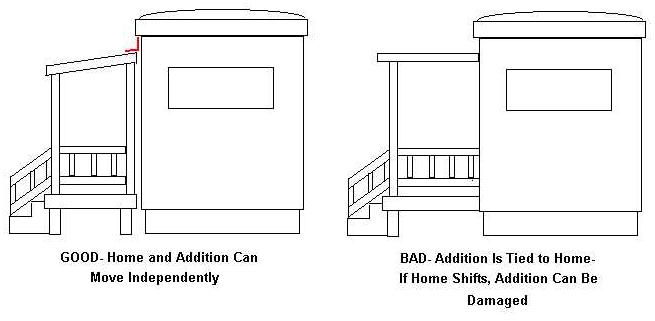
To put it simply, you aren’t attaching the addition to the home at all, you are building extremely close to the home and then sealing the crack between the home and the addition to prevent air and moisture leaks.
Footings for Mobile Home Additions
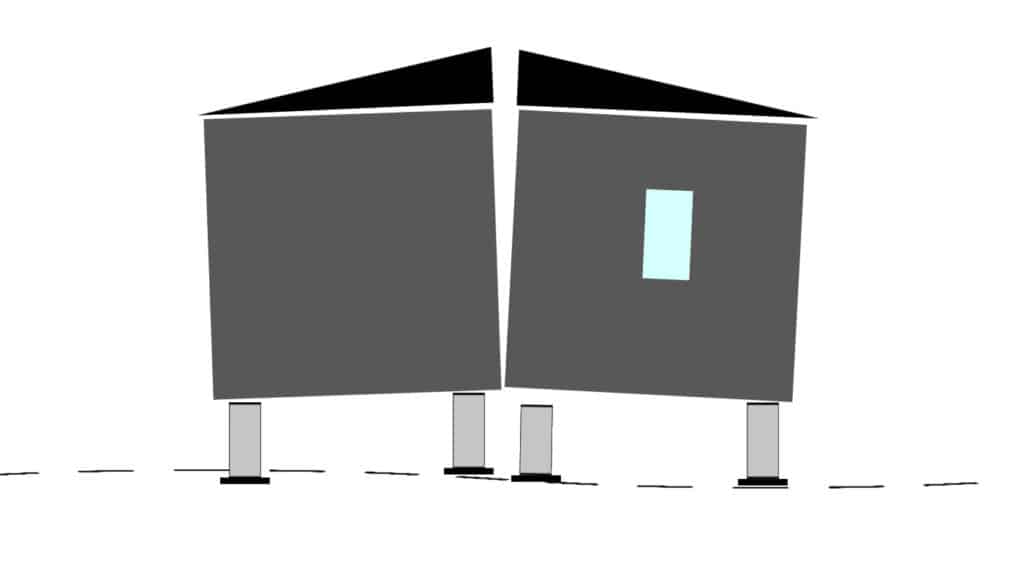
An addition needs a completely separate foundation from the home. And, like any structure, the footers must be placed below the frost line to keep them from shifting when the moisture around the cracks in the ground freeze causing the footers to heave and bow.
There are poured footers, cinder blocks, slabs, and piles. Footings for a mobile home addition should be determined by the depth of the frost line of your area, even if your home does not have the frost line footers so that shifting is minimal.
Here’s a map showing the frost line depths for the US:
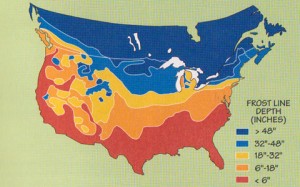
Footers are installed below the frost line so that the addition doesn’t sink or shift.
Financing and Insurance Issues for Mobile Home Additions
Additions to manufactured homes are not often seen as an ‘improvement’ – meaning it probably won’t increase the value of the home in most cases. It won’t change the classification of a manufactured home from personal property to real estate unless the home is permanently installed.
A big disadvantage of building an addition on your mobile or manufactured home involves financing and insurance. It may be harder to obtain both if your home has been modified in any way. If you didn’t get the proper inspections and permits you may run into serious issues if you try to sell the home later down the road.
Permits and Inspections
Some state mandates override local and county regulations when it comes to manufactured homes. Research properly for your location before you begin planning a mobile home addition. With some locations, you could run into so much red tape that the project ends before it even begins.
With all that said, mobile home additions are perfect projects for families that need a larger home but you must get permits and inspections done before, during, and after the construction process. Read about one manufactured homeowner’s experience while building an addition onto his single wide. He failed to get permits and inspections done and paid a price when he sold the home.
Addition on 1985 Liberty Single Wide
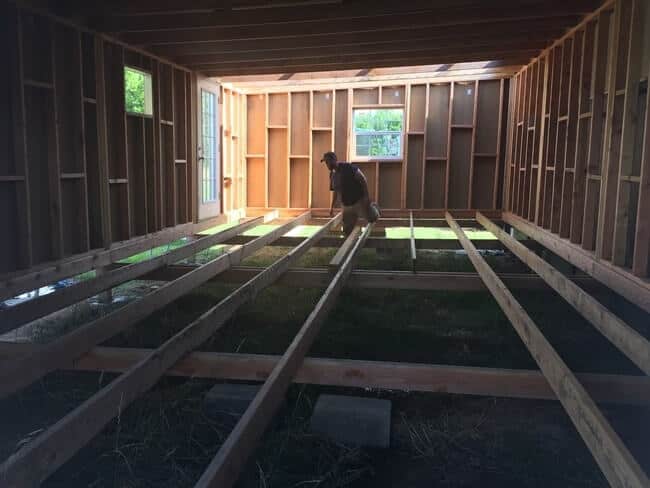
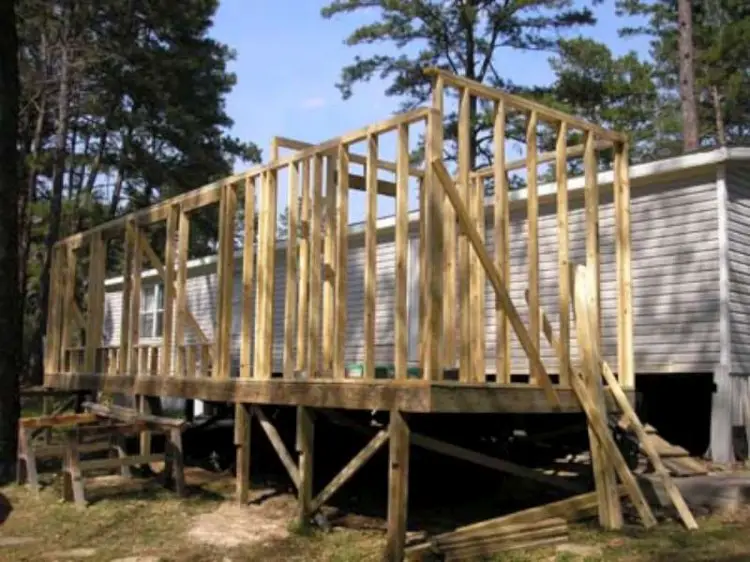
Sarah and Justin Wartick built an addition onto their 1985 Liberty single wide. You can see how they created the footers right up against the home and then framed the floor of it out (they were test framing the top in the first image). The second image shows the walls and roof have been framed and the floor joists being laid.
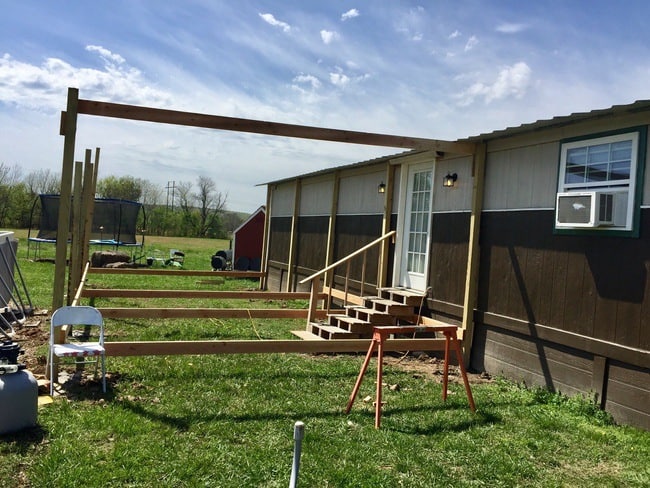
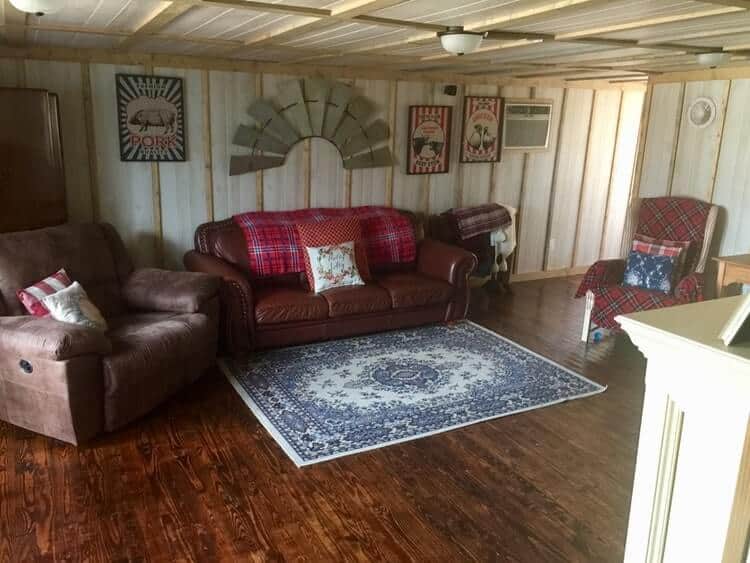
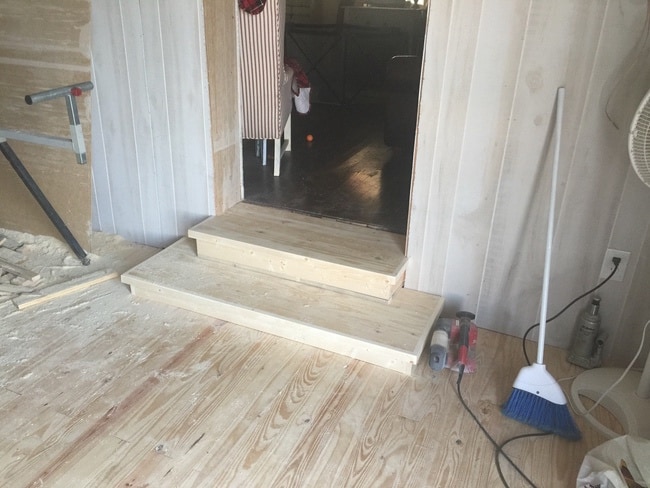
These next two images are the interior of the addition. The image on the right showing the door with the two steps is where the mobile home and the addition are attached. Technically, this is the only place the two structures meet other than where the roof and the siding are ‘sealed’ together.

HUD Guide on Manufactured Home Foundations and Support Structures
There are some great online resources about mobile home foundations. This guide about manufactured home foundations and supports is invaluable.
For information about general construction footers, Front Porch Ideas and More has some nice illustrations that show the poured concrete and pier footings.

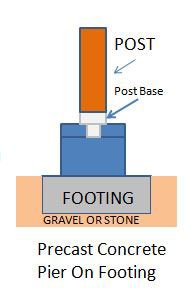
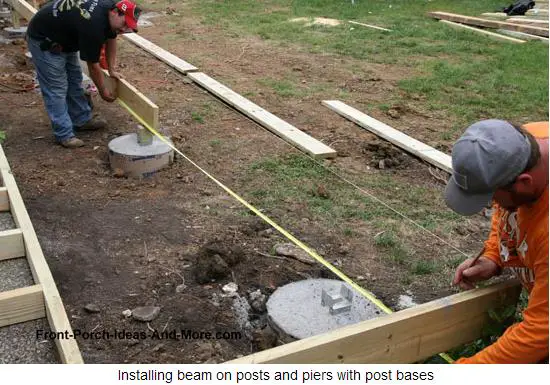
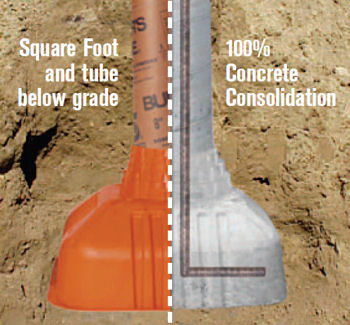
There are new products hitting the market to aid in DIY footings such as these square foot concrete forms.
Framing an Addition
You want the mobile home addition to having framing that is equal to or better than the framing that your home has. Of course, you’ll need to follow your local code.
Below shows a mobile home addition being framed out by SM Construction.
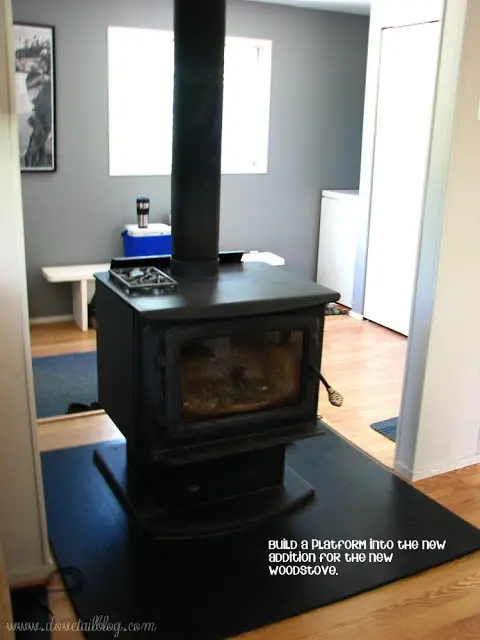
A great blog called Dovetail Blog shares its mobile home addition process in detail. It’s a small addition but the end results are beautiful:

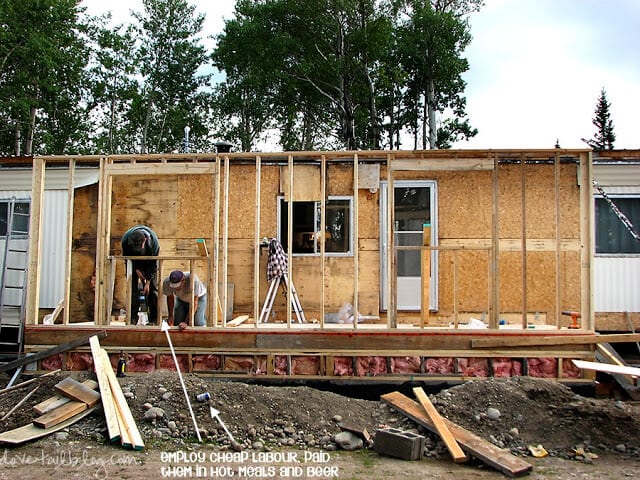
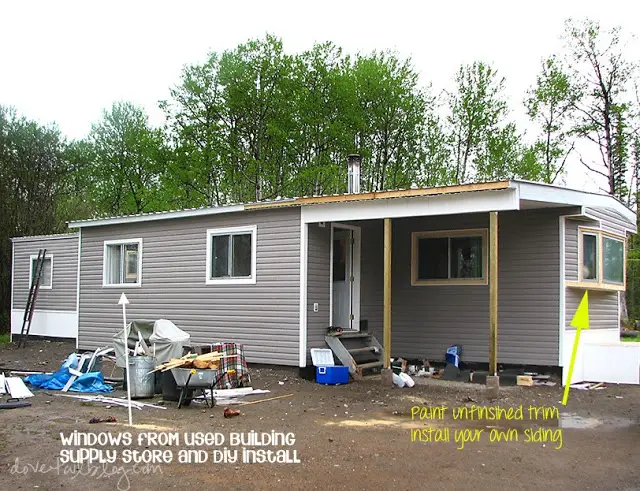
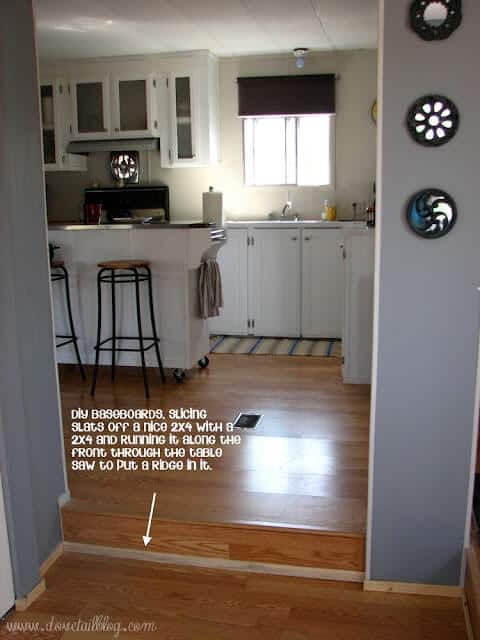
As you can see, they used poured concrete footings and extended the roofline down to the addition, keeping the pitch. The addition looks to be used as an entryway that houses the stove and is a few inches lower than the home, except for a platform that the stove sits on.
Here’s the interior of the home:
Opening Between the Home and the Addition
You’ll have to determine the size of your opening from the home to the addition. Doorways are easier to close up should the home ever need to be moved or the addition removed.
If you do opt for a wider opening between the home and the addition you will need to consider support issues for the opening. Wider openings, where studs would need to be removed, will likely require support beams. That’s not the smartest move for mobile home perimeter walls because those are your load-bearing walls. In other words, keep the opening small so that it’s easier to seal around the home and to keep from needing to support the perimeter wall with a beam.
Sealing Around the Mobile Home and the Addition
As stated previously, basic mobile home additions are not completely attached to the home. They are simply butted up to the home and then sealed all around to prevent leaks.
There are a variety of ways to seal the connection between the home and the addition. To seal the gaps between the home and the addition you can use weatherstripping, flashing, backer rod, caulking, and lumber. A backer rod is just a fancy name for round foaming that can be used as a membrane between the 2 structures.
There is a popular way to attach the siding of the home to the addition. Attach a 1×6 board to the home vertically so the addition will butt up against the middle of that board. You’ll attach another board with a lip to the side of the addition. Then, add weatherstripping and screw the lip of the addition to the board on the house – this brings the addition toward the home and helps seal it without overly damaging the home.
These questions were asked in the comment section of our very informative article about building mobile home additions found here.
Flashing and vinyl siding will cover it all up.
Use flashing to connect the Mobile Home Addition’s Roof
If the addition is lower than the roof on your home
To connect the addition to the mobile home if the addition is lower than the roof on your home, you will need to use flashing to seal the gap between the home and the addition’s meeting points.
Metal roofs
For a metal roof, you would tuck a single length of 18″ flashing, that has been bent to the needed angle, place the flashing under the homes roof edge and over the addition roof.
Attach to both with screws. Using 2″ neoprene flashing tape is always a good idea, and always seal the screws with weatherproof caulking (neoprene based).
One note about the flashing, you want as long a piece as possible, but you don’t want it too long. If the flashing is too long, it can cause cracks.
If the addition’s roof is higher than the roof on your home
If the addition’s roof is higher than the roof on your home, you add the flashing under the lip of the roof of the addition and over the roof of the home (the opposite of above). This creates what roofing professionals call valleys and are problematic areas on any home. Special care should be made to keep water from sitting in the valley that is created.
The graphic below is based on a graphic found on Mobile Home Repair that shows a concept for sealing a mobile home addition. The top drawing shows a cap built on the home (labeled Alum Cap) and a piece of wide weatherstripping folded over to make a bulb shape and screwed into a board on the top edge of the addition.
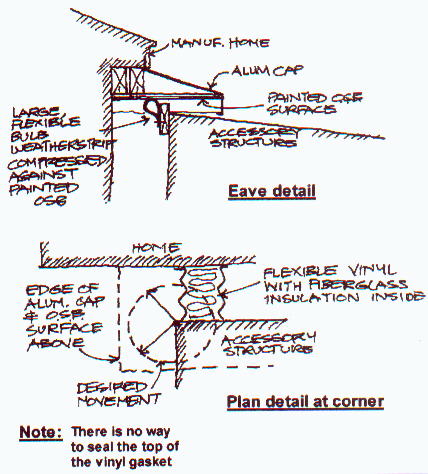
The bottom drawing in the image above is showing the home and addition from the top, looking down. A flexible vinyl with fiberglass insulation is used to seal the sides of the addition to the home. It allows the needed movement required if your home is not set on a permanent foundation that is set below the frost line – the best method to prevent shifting of a manufactured home.
If the 2 roofs are at the same height, you just use flashing. Screw and seal.
When planning structural modifications or additions to a mobile home, especially those involving metal frames or support structures, understanding welding techniques becomes crucial. Mastering welding positions—such as flat, horizontal, vertical, and overhead—ensures that welds are strong, secure, and compliant with building codes. Whether you’re installing a steel foundation, reinforcing skirting, or crafting custom frames for extensions, proper welding enhances the durability and safety of your addition. A complete guide to welding positions empowers DIYers and professionals alike to work more efficiently and confidently on mobile home projects.
Examples of Mobile Home Additions
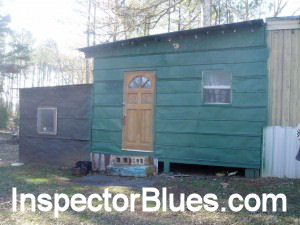
Below you can see a mobile home addition that passed inspection and can be found on The Inspector Blues blog.
It is independently supported, has wired smoke detectors, an exit, sits on an 18″ grade, and is built with pressure-treated wood. It may not be great looking but it had what it needed to pass its inspections and current codes are not lax at all.
Here’s a park model manufactured home getting an addition built onto it. Notice how they’ve done the roof:

Another park model manufactured home addition and carport built by HorseFly Construction:
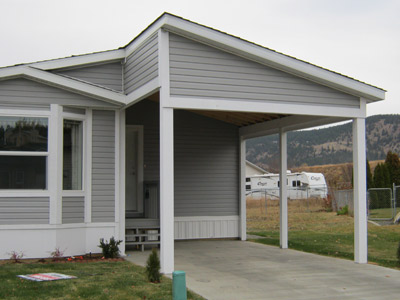
The next photo shows a huge addition built onto a double wide manufactured home by Addon Rooms:

Featured Mobile Home Additions on Mobile Home Living:
We’ve featured a few mobile and manufactured homes with additions:
- Gorgeous Single Wide Mobile Home with Unique Addition
- Like A-Frames? You Have to See this Unique Mobile Home Addition!
- Debt-Free and Dreamy 1985 Liberty Single Wide Mobile Home Remodel
- Building A Two-Story Addition onto a Manufactured Home
- Mobile Home Porch and Deck Guide
The Directory of Mobile Home Manuals may help you find more information about your specific builder’s suggestions about mobile home additions here.

4 Common Questions about Mobile Home Additions
Here is a great resource from HUD about manufactured home foundations that explains everything.
Summary
The basic concept of mobile home additions is to keep the addition separate from the home, while still allowing a connection that is weatherproof and leak proof.
Inspectors and building consultants are available at your local and state agencies, use them to your advantage. You want a safe, long-lasting addition that will make your homework better for you and your family.
If you have any questions, please comment below and I’ll try my best to find you an answer. As always, thank you for reading Mobile Home Living!


Hi Linda,
You’ll probably want to look for the door manufacturer’s manual. Other than that, I’m not sure as it would be based on design. Sorry.
Crystal,
Do you know where I would find information about replacing a window with a patio slider door?
That sounds like a great addition – you’re gonna have so much more space! To be honest, I don’t know the answer to your question. Roofing is always the trickiest part because each state/city have different rules. Sorry I can’t help!
Hello Crystal,
I am Planning on adding on to my manufactured home and i have some questions.
First of all i love you’re site it has been amazing reading thru all of these posts!! I own a home that is 13′-6″ by 66′ and i want to add on to the back side going 16′ by the 66′ so my home will be 29′-6″ by 66′. I plan on butting up to the original and keeping the addition a seperate structure. Now here is by question, is it ok to build a whole new roof truss going off of the front of the manufactured home to the back of the addition? Thank you for your help!
Hi Chad!
Adding an addition will be expensive but possible. When I priced our addition plan (8 feet wide by 24ish feet long) I came up with around $2500 in materials with 2 cheap windows and the bare basics on everything with no plumbing or electricity factored in. I never checked on labor because we were going to do it ourselves. In the contractor’s world, you usually get a minimum price of $110-150 per square foot on additions (in my area anyway, CA would be a lot more).
You may want to look into knocking the walls back in the hallway to give her more room. This wouldn’t be as expensive but you’d lose some space in the rooms (but gain it in the hallway). Depending on your home’s layout you may want to look into extending the rooms out to the exterior wall and getting rid of the hallway completely, too. She could just move through the rooms and not be restricted by a narrow hallway.
Best of luck!
hi my wife and I have a trailer home ( mini-home ) we call it and my wife is in a wheel chair, we were thinking about adding a piece to the front and going the whole length of the trailer with a piece about 10 or 12 feet wider to make room for her in the wheel chair because right now she has issues with the accessibility to our bedroom which is on the end and also the washroom which is also located towards the end and our hallway needs to be widened. on the opposite side is our oil furnace and as well as our washroom that we recently done and two other rooms one we use for a small spare bedroom and a storage room as well as our small linen closet and our washer and dryer, we do not want to disturb this side because we feel it would be better to widen our trailer on the opposite side especially where we have all ready spent $5000.00 plus on our washroom. So we are deciding on adding a piece so we can have a roll in shower with tile that she can roll right in as well the hallway would be widened which would make the accessibility for her a lot easier. we would like your input any suggestions for a floor plan would make it great. thanks and hope to hear from you real soon.
Hi Deb,
I’m sorry, I don’t. Slide-outs are more of an RV thing nowadays (even though they got the idea from the old mobile homes). Google RV blogs and or RV Slide out info and you’ll probably find something to get you started. Best of luck!
hi crystal , I am wondering if you have any in formation (plans) on slideouts partically
manual pushout pull in types ? sincerely deb
Hi Lyndsey,
That’s way over my head! Regulations are different but I’m pretty sure there is a ratio they use to determine those types of projects (total length versus total removal). You can’t lose the integrity of the home and that is derived from the roof down so the walls are vital. Keep in mind that for additions, you’ll need the new structure to be completely separate from the home itself.
You will want to get an engineer involved. Every homeowner that I’ve seen do this has had issues eventually because they enforced the home like a site-built and not the manufactured home that it is.
Best of luck!
I was wondering if you have any advise for taking out the 20foot section on the exterior wall in our kitchen and living room. We already have an addition there as a porch. I would like to take out the wall and make our living and kitchen space larger. We have a single wide. Also any advise on moving breaker box, furnace and water tank. I would like to add a laundry/utility room. Thank you
Great news Sue! Congratulations! Please keep me in mind after you get all settled – I’d love to see/share/feature your new home!
Hi,
Wanted to let you know after getting an Engineer to inspect and approve the garage (24 years later!) we were able to close on our home.
The lender was satisfied with his report, which he said it was done properly. He couldn’t believe he was needed in the first place!
Just another way for the bureacrats to squeeze more money out of property owners and get their noses in our business, if you ask me.
Thanks for your time.
Hi Sue,
It’s 100% dependent on the city or county laws. In the last decade just about every town, county, and state have initiated many new laws and regulations to create revenue (and jobs).
Kinda sounds like they are concerned that your addition is bearing on the manufactured home and they want to make sure it was constructed properly (as a completely separate and freestanding structure from the home).
You’ll want to hire an inspector that is qualified on manufactured homes (they’re out there, just a little hard to find).
Here’s a very informative website written by expert mobile home inspectors. There’s tons of great information!
http://www.mcgarryandmadsen.com/inspection/Mobile_Homes.html
Best of luck!
Hi,
We put our MF home on the market and it sold in four days. It was built in ’92 and at the same time a 21/2 garage was added. We are the third owners and had no problem getting appraised properly and getting a conventional loan when we bought in 2003. NOW the appraiser won’t recommend the lender loaning the funds to the new buyer because he doesn’t know if the integrity of the home has been compromised by the adding on of the garage though there have been no issues with the home during these 24 years since it was built. They want to see permits/plans/whatever that are now in storage by the county where it was built.
Are MF homes unable to be sold that have additions in Wa. State (Kitsap county)? We’re told we will need an L&I inspector out here to look at it though we needed no such thing 13 years ago.
My question is, if they can’t obtain the plans, will the inspector know if it’s a worthy structure and we would be able to sell then? Thanks.
Hi Loree,
Unfortunately the only addition images I have are at this link: https://mobilehomeliving.org/?s=additions
There’s a single wide that shows before and after images but that’s about it. I have a hard time finding images of mobile homes (which is why I started MHL – I wanted to see actual photos of our homes and not all site-built homes..lol).
Sorry I can’t be more help!
Hi! Do you have any before and after pictures of added additions? We are considering adding square footage to our bedroom by knocking out the exterior wall in our bedroom and also adding a new bathroom. We will turn our existing master bath into a walk in closet. We are also thinking about lifting the pitch of our roof and adding a new higher metal roof. Any info would be much appreciated as we are both nervous about this undertaking. We have also considered just removing our double wide from our property and building a new stick built house but we are thinking a renovation and adding additional square footage would get us what we need. With as much as we’d like to do, I’m not sure which way would be more cost effective though :)
Hi Frank,
I’m so sorry you’re dealing with this! Parks are closing at an astounding rate all across the country and there are little protections for the lot renters. I hope they are giving you a fair price for your trouble.
As long as the home didn’t lose any structural integrity (none of the perimeter studs or framing was removed during the addition’s construction) you should be able to move the home – you’ll just need to brace it and put plastic wrap on the door openings during the transport. To move the addition you will need to have a flat bed transport and they will need to jack the addition up and slide it onto their bed (much like they do large pre-built buildings and garages).
If the home’s framing was modified, you’ll need to get an engineer in there to take a look. I hope it all works out well for you! Please let me know how it goes!
You may need to
I have been living in a mobile home park for years and made additions to my mobile home. Now 30 homes are being EVICTED with 90 day notice due to owner selling land for state construction. I have to remove my mobile home from rental lot but doing so will leave 75% of the front of my home exposed due to the addition. Any advice?
Thanks for the comment Lucy.
I’m sure every state is different. In all the states I’ve been in (WV, VA, NC, SC, FL) homeowners out in the ‘country’ had little to no inspections or permit requirements. I understand a lot of local governments are changing that because it is another revenue stream and we know how governments love revenue!
I would have to politely disagree with the comment that non-city homeowners can do as we please and are exempt from the pure H– of permits. I live in a rural area miles from anything, and can’t even see a neighbor from my property. However, obtaining permits are a nightmare for anyone who wants to put up a shed or animal shelters, and forget letting Grandma live in a travel trailer on the back Forty like folks used to.
In the last fifteen years, our county building department staff have become beyond petty, while ignorant of basic building techniques. They get sued a dozen times a year for fining people inappropriately. Small-town nepotism insures they’ll never be fired, so…..
Many people in my area go ahead and do what they have to, then worry about getting caught and fined later. Trying to do it legally often results in conversations across the Permit Department counter that boggle the mind. “I have to hire a Structural Engineer to draw up plans for a dog kennel?”
I would still recommend finding out what you are SUPPOSED to do, if the local staff is professional and knows their job. Just be forewarned that idyllic life in the country is often subject to local politics and contradictory policy, just like city government.
Best wishes to all. It’s great to see so many people enjoying their mobile homes.
Hi Robert,
I’m not sure I understand what you’re wanting to do.
My generic answer would be that as long as your home is properly supported how your builder recommends (which is typically a pad or pier footers below the frost line and strategically placed under the chassis. The chassis’ are designed for that particular home’s weight and design so any modification would likely stress quickly. You can Google your make and model and see if you can find a installation manual for your home (or a similar model)
Best of luck!
I’m trying to find out if it is possible to put below ground footings on the edge around my mobile home, instead of inside below the attached metal beams. the idea I had was to put a beam, either metal or wood just inside the skirting with 18 inch footing supporting the blocks or other supports for the beam. so far, I cant seem to find who would know this. If it matters, I live in the texas panhandle, just above where the map shows a switch from <6 to 6 to 18 inches. I know moving the mobile home would add $2000 dollars or more to the project.
I would appreciate if you could tell me who I would have to talk to about this.
once I get this done, I'm planning on adding several addition over the next few years.
Hi Jim,
No. Unless you are willing to spend tons of money to reinforce and basically rebuild the entire structure you could not build on top of a manufactured home. They are simply not designed for it.
You could possibly build a completely separate structure above a home (with it’s own footers, rafters, etc.) using the right architectural design but I seriously doubt an inspector would allow anything like that to be built.
I’ve seen some decks built above a couple flat-roofed mobile homes. They are really neat but the decks are not attached to the home structurally, they have their own footers that hold and distribute the entire weight of the deck down to the ground.
Thanks so much for reading MHL!
Is it possible to build on top of a mobile home with a peaked roof
Hi Debbie, you should be able to call your court house and find out which department handles the permits. Good luck!
Do you know anything about the regulations or permit process in Pierce County, WA state
Hi Lori! Unfortunately, I don’t. You may want to call a local mobile home supply store and see if they have any recommendations. Good luck!
Thanks so much for reading MHL!
my husband and I would like to add on to our doublewide. Do you know of any contractors in SE North Carolina that can do this?
Thanks for the info on the different ideas on remodeling. You can sit and try to imagine what it would look like, but until it is done you really don’t have any ideas. Those in the for front are the ones taking the chances in the models they come up with. I personally think doing your OWN remodel is 10 times harder than having someone do it for you. You end up taking your time and changing it a 1000 times and then the frustration………….
We are In ga and considering an addition of a den/ library and a bedroom off that. Your site is helping us soon much.
Thanks a bunch!
Howdy! I’m not at all familiar with California codes but I suspect they have very stiff regulations for all building projects. Still, adding onto a travel trailer or park model would be the same as described in this article. You wouldn’t attach the addition to the unit at all, it will simply be butted up to it and then sealed around the openings.
I would check your city hall or court house and see what their codes are and then go from there. As long as you don’t modify the trailer or park model (other than making the hole) you should be able to do it without causing too many headaches.
Good luck and thanks for reading Mobile Home Living!
Any info regarding adding on to a park model rv or travel trailer? Like the rules and regs if any? It’s sitting on metal piers in LA County, Lancaster, Ca. Thanks a bunch!
Hi Rodney!
I know it would be simple enough to build onto a double wide but I’ve never seen a double wide divided with the addition in the middle. To be honest, that’s something a structural engineer would need to answer cause its way outta my league!
Double wides are essentially 2 single wides that are joined – your biggest issue would be building the middle extension properly to support the two halves in the needed manner. I would think its possible but its probably not cheap or easy – finding a contractor willing to do it would be difficult and the permits would be a nightmare in certain areas. It would probably be more attainable if you redesigned to add the addition onto the side of the home with a ‘separate’ roof over everything. With the right technique, the roofover could even hold a second story.
I believe anything is possible! It would definitely be different and awesome!
Thanks so much for contacting me – please keep us informed!
Karen, very interesting site, stopped in during my search for information about the type of addition I would like to make, but not sure if I can based on what I have read so far. I was hoping to run it by you so that maybe you could point me in the right direction.
I have a doublewide, 24X52, that is currently in a park, but fully paid for. We are in the process of purchasing land that is raw, needs to be developed, that we would like to move our home on to, and then make it bigger. I would like to have built on the lot a 18X52 modular extension, which would go in-between the two halves of my home, turning it from a 24X52 to a 42X52. I was hoping to find a company that would build the extension at the factory, set it up on my property, so that when we are ready to move we could then have the mobile home moving company break apart our home, and instead of re-joining the halves together, they would attach them to the new extension, and then we would remodel with the new floor plan that we are developing for the larger home.
My question is, do you know of any companies that would build this for us, or would we need to build it on-site ourselves? Also, I have run across some potential road blocks about how mobile homes can have additions attached, depending on the type of foundation used. Any information that you could give on this would be great. Thanks, Rodney
I am hoping to get my moms rental finished by the end of this year. These tips and photos have helped me a lot.
Thank you Sue! I appreciate you visiting!
Hello Smitty!
To be completely honest, I’ve never been around a manufactured home that set on a basement foundation but if I had to guess, I would think you would tackle an addition relatively similar to a regular manufactured home (assuming your codes are like West Virginias). You’d still want to keep the addition separate from the home.
Of course, your state and local codes will be the determining factor on it. I’d call your county building permit department and ask them or maybe look up your states codes online.
Thanks so much for reading MHL!
i have a 10×60 and want to add on. it sits on a basement w poured concrete walls. its dry and very stable. i’m in maine with lots of rock underneath…evrtywhere. any ideas?
Good information. Glad i visited.
thanks so much.
Hi Cassandra!
My family has had issues with manufactured home insurance after wanting to add an addition too. Heck, my in-laws had a time getting home insurance because of their coal and wood stove and we’re going to lose ours as soon as we install it. Manufactured home insurance needs an overhaul – how do they expect us to carry insurance when we can’t get it or afford it? To be honest, I’m not that knowledgeable about insurance. I only know what I’ve been told and what I’ve researched but I don’t really know if it’s correct. I’ll try to help though!
To answer your question about the foundation, I think cinder block may be your best bet. You already understand the difference between a permanently installed home and a home with a foundation so you have a head start on the situation. Most of the time, people (even some insurance agents) seem to think that because a manufactured home has cinder block or brick ‘foundations’ or skirting, that means the home is permanently installed but that’s not true – a permanently installed home is more about the straps and ties than the material of the skirting.
You could have just about any type of foundation added without having the home moved. A perimeter ditch would be dug directly under the home so that you wouldn’t have to difficult a time getting the material to meet the bottom of the home perfectly. The type of material you chose, what type of padding, and your frost line would probably determine the difficulty of the project more than anything.
You may want to check out some other insurance carriers too. It seems to me that with your home classified as real property you should be able to get insurance a lot easier and with less regulations attached to it.
I wish you the best of luck! If there’s anything else I can help you with please don’t hesitate to contact me at crystaladkins@mobilehomeliving.org.
Thanks for reading MHL!
I live in SC.
I was wondering if you know of a quick way to make a solid foundation to a mobile home without moving it. I am interested in adding to my mobile home BUT if I do, I want insurance to cover what I put into it. I have a Mobile Home deeded to the land and considered real property. Its bricked in. I attached a link to my plan that I’m contemplating doing. State Farm (my insurance) will not cover any add ons and actually void insurance if attempted. Someone at State Farm stated, “Insurance to Value” may be a way to cover any additions to the home without a foundation added to a MH. Not sure, do you have any advise that can help me?
http://www.roomsketcher.com/gallery/project/?pid=1670060
Hi Marlies! I’d be happy as can be with the photos alone but if you can list the things you did and any pointers you may have for us that would be great! My email is crystaladkins@mobilehomeliving.org.
Thank you!
I would love to be able to share what we have done so far with others in the same situation. I will see about getting my photos scanned into a file to share with you. Do you just want the photos or do I need to have a process written?
Hi Marlies! Of course I’m interested – I love to share updated manufactured homes (especially if they’re in WV)! My email is crystaladkins@mobilehomeliving.org – we can work together to get the article written to your satisfaction before anything gets published.
You’ve gotten a lot more done than we have so I should be getting advice from you but we’ve had a lot of success with Craigslist and the Re-Store. Craigslist has been very good for us- we’ve bought cinder blocks, rail road ties, lumber, tin, and even a vintage Centennial wood stove for $50 (it is awesome and I can’t wait to get it installed and use it this winter).
Hope to hear from you soon – I’d love to feature your home!
We are in the process of continuing adding on to our 1977 mobile home. The banks will not loan us the money to help finish this ongoing project. Any suggestions besides the bank of Home Depot or Loews? So far we have done a complete kitchen, living room, bathroom, utility room and entryway. We still have to do 2 bedrooms, the front porch and my sewing room. I have kept the pictures of what it looked like when I met my husband and some of the remodeling, if you are interested.
Hi Allen!
I’m not very knowledgeable about framing to be honest. I understand the basics but that’s about it. With that said, I don’t see why you would need to mimic the home’s structure at all. You would just need to build the addition to local building specs.
Karen,
I’ve been eye-balling your blog! Your home is perfectly country/primitive, and I love it!
I can’t wait to see it when you’re all finished up and hopefully you’ll let me feature your home someday!
Always great to hear from you!
Crystal,
Thank you so much for this post! I’ve been doing tons of research on mobile home additions and have really been coming up dry – anything I find relates to stick built structures.
Fortunately though, if I understand your article correctly using the stick built framing and building guidelines is perfectly fine, the only difference is how the addition is tied into the existing mobile.
Our mobile is sitting on concrete blocks with metal straps. We’re in Southern Texas so no frost problems but our soil is clay and expands/contracts quite a bit throughout the year.
We don’t want a step-up/step-down situation so I’ve been looking into a pier and beam foundation so that the sub floor can be level with the existing mobile’s floor.
Have you done any research on the proper joist / rim headers to use for a larger addition that’s using a pier and beam foundation? I.e. mimicking the mobile’s joist structure with steel I-Beams vs. the typical 4×4 PT beams with 2×12 wood joists.
Love the site, this article, and all of your work you’ve put into it. Thank you!