Category: Helpful Resources

A collection of helpful manufactured home resources for homeowners and buyers.

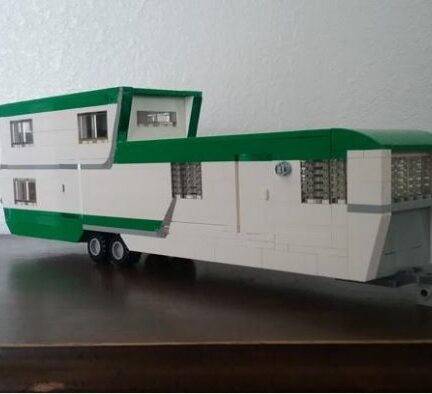
  • This Life-Sized Lego® Camper has Running Water

    This Life-Sized Lego® Camper has Running Water


    We recently featured a Lego® Pacemaker Tri-Level vintage mobile home that was constructed out of the bricks we all loved as a child.  If you missed the Lego® Pacemaker you can see it here.  This time, we have found a Life-Sized Lego® Camper!

    The original article can be found on the UK site, Caravan Times.


    Check out this super cool time-lapse video of the life-sized Lego® camper build:


    Life-Sized Lego® Camper

    This camper was made out of a total of 215,158 Lego® and it is amazing, just don’t take your shoes off inside.

    Life-Sized Lego® Camper

    This Life-Sized Lego® Camper Has Lights and Water!

    This camper stands over 7 feet tall and over 11 feet wide. One of the coolest things about it is that everything works, including the lights and sink.


    life-sized Lego® camper - water running in the sink
    How Awesome Is That?

    Related: Great Craigslist Vintage Travel Trailers For Sale


    life-sized Lego® camper - working sink


    This camper is amazing. You really can build anything out of those little bricks!

    If you have a mobile home or camper related project you would like to share with us please comment below.

    Related: Restored Vintage Campers – 1953 Airfloat Navigator

    Thanks for reading Mobile Home Living!

    See the original article here. 

    “LEGO®is a trademark of the LEGO Group of companies which do not sponsor, authorize or endorse this site”.


  • 4 Popular Questions about Mobile Home Subfloors

    4 Popular Questions about Mobile Home Subfloors

    This week in our Ask a Mobile Home Expert series, we are covering questions about mobile home subfloors. Subfloors are an important subject in the mobile home world. Most every home with the standard OSB subflooring will need to have their subfloors replaced eventually.

    OSB, or particle board, is a material made from small chips of wood that are glued and pressed together. It is a strong material but it soaks water up like a sponge. If you live in a manufactured home with OSB subfloor you will likely need to replace it eventually.

    Before we continue, you may want to check out our step-by-step guide to replace flooring in a mobile home here.


    Lowering a Raised Platform Kitchen Floor

    I have a question, we have a 1967 Magnolia single wide, mobile home, 12’x 63′, with a front step up the kitchen. I would like to strip out the kitchen and lower the floor so it would be the same level as the rest of the house for our retirement years. Is a raised kitchen framed up on an existing sub floor so it could be removed?? I would really appreciate your help in this matter. We need new cupboards, appliances etc so would be a complete renovation.

    Our 1978 Hommette single wide has the exact same step-up kitchen! I love it right now but I know it will be an issue as we age.

    In our home, the platform kitchen is framed up (there’s a frame on top of the original floor joists). To lower our kitchen, we would need to remove the floor covering, the sub flooring, and then remove the additional framing for the platform. Once it is all removed, we can lay new subfloor down (assuming the bottom joists are healthy). Your home is probably the same way.

    Without a doubt, this would be a large undertaking. However, if you are gutting the entire kitchen (cabinets and appliances) you could do it without too much of a hassle.


    questions about mobile home subfloors - floor tile finished for stove installation


    Installing Tile in a Manufactured Home 

    We just purchased a 1999 24×48 double wide home and we plan to remodel the whole thing one room at a time. My question is that I want to put the “wood” look tile in the laundry, kitchen, and living room. What is your opinion on installing tile in a mobile home? The home will never be moved nor has it been moved since the original owner had it set on the acreage.

    Tile is a great choice for many situations but there are a few things that should be considered.

    First, it is not recommended to install tile across the marriage line of a double wide. Tile is a more permanent choice and can be a real burden if you have to remove it for any reason. Settling issues are another factor. Manufactured homes can settle over time which is why it is recommended to do a re-leveling check every 2-3 years. One side of the home can settle differently than the other and cause cracking.

    Secondly, tile is a great addition to bathrooms but when installing tile in bathrooms or laundry areas it must be installed correctly with proper pans and liners. You want to protect the subfloor from water at all costs.

    The material of your sub-flooring will play a big factor when deciding to install tile. The cheaper OSB sub-floor that is s0 notorious in manufactured housing is not a good foundation for tile. The material acts like a sponge and soaks up water quickly which will bow and warp the wood. Tile doesn’t do well on wet and warped wood. if you are laying tile you need to consider upgrading the subfloor to plywood that doesn’t soak up water so quickly.


    questions about mobile home subfloors - mod manufactured home - subflooring installedl


    Best Sub Flooring Material

    I have water damage to my floors. I am in a 1995 single wide mobile home. The insulation is what came with it. I’ve read that I should keep the insulation below the wiring and pipes. Is this true? Or does heat get under the flooring from the heat duct? I’m tired of being cold!! What is the best subflooring to use?? Also, if the water has damaged the walls — how should I go about repairing them?


    Energy.gov states that as much as 25% of a home’s heat will be lost through the vents and floor. That’s a lot! It is recommended that you have your heat ducts and vents checked annually. You’ll want cracks and holes sealed with duct tape and that insulation be used under and around the ducts. This helps the heat that escapes from the heating vents to remain in the home.

    One of our readers installed insulating foam board under their mobile home and was kind enough to give us a full step by step guide. You can read it here.

    The most recommended subfloor material is 5/8″ plywood. If you can afford water resistant marine plywood for your kitchen, laundry, and bath that would be a good idea.

     Related: How to Replace Flooring in a Mobile Home 


    questions about mobile home subfloors - laying new subfloors down in a mobile home

    Step-by-step images provided Phillips Place Renovation, a blog that shares a couple’s gorgeous mobile home remodel. We featured the home here


    Questions about Mobile Home SubFloors

    What polyurethane coating would you recommend when painting a sub floor? 

    Painting your subfloor is a good idea because it can help seal the cheaper OSB and protect it from water. There are a few things to keep in mind when painting your subfloor. First, you shouldn’t use water-based primers or paints. The standard OSB subfloor that is so common in mobile homes soaks up moisture.

    Homeimprovement.com has a great list of all the best primers and paints for painting your mobile home’s subfloor. Suggestions include:

    • Sherwin-Williams ArmorSeal Enamel
    • Valspar Porch and Floor Enamel
    • Dutch Boy Latex Porch and Floor


    Summary: Questions about Mobile Home Subfloors

    A big thank you to all our readers that have asked questions about mobile home subfloors. If you have any questions please feel free to comment below and we will do our best to find your answer!

    We hope you have enjoyed these questions about mobile home subfloors and our Ask a Mobile Home Expert series. As always, thanks so much for reading Mobile Home Living!


    Disclosure: Any answers to questions posed and any recommendations or information provided herein should not be used as a substitute of an expert or any relevant professional that has inspected the issues in person.

  • Our Best Tips to Remodel a Mobile Home on a Budget

    Our Best Tips to Remodel a Mobile Home on a Budget

    Have you seen the price of a gallon of paint lately? One gallon of premium interior paint can run you $50! A good paint brush will cost an easy $15. The trick to remodel a mobile home on a budget is balance. You need to know where to splurge and where you can cut corners without losing quality (paint is definitely in the splurge column).

    We’ve had many home owners share their best tips to help remodel a mobile home on a budget. Here are just a few of them:

    Start with a Plan to Remodel a Mobile Home on a Budget

    Remodeling a mobile home on a budget requires great planning. You’ll want to know where to spend and when to save. Without a plan, you’ll most likely end up spending more than you had planned. Whether you’re planning to renovate your entire kitchen or just freshen up your bathroom you’ll need to make a list and set a budget.

    • A detailed plan of the changes you want made to the mobile home
    • Setting a realistic budget that covers your renovation needs and any surprise issues
    • Finding contractors that will do quality work at a reasonable price if the project isn’t DIY

    Related: Learn how to hire the best professionals for your mobile home remodel here.

    Remodel a Mobile Home on a Budget - prepare and plan the remodel
    Planning Your Mobile Home Remodel Out Can Save A Lot Of Time And Money.

    Save Money with these Kitchen Remodeling Tips 

    The most popular home remodeling project in the US is a kitchen update or complete remodel. Kitchen remodels are smart because they have a decent return on investment and cooking in a fancy new kitchen is pretty awesome. Appliances and styles wear out but you can give your kitchen an update with these tips:

    Counter Tops

    • Go with Synthetic Counter Tops – Counter tops easily define the look of a kitchen. Rather than going for expensive materials chose man-made materials. Synthetic counter tops have a long lifespan and stand up against wear and tear remarkably well. There are many styles available, many look just like granite and marble.
    • Paint the Counters  You can paint your old counter tops. Hear me out, the kits available today are 100 times better than what was on the market just a couple of years ago. The paint industry has had some serious advancements. Preparation seems to be the key to the best results.

    Cabinets

    • Just Replace the Cabinet Doors – Instead of replacing your entire kitchen cabinet just replace the doors. The standard lower cabinets in a mobile home kitchen are a bit different than a site built home because there are no floors in the cabinets. The frame for the cabinets are truly built into the space. Mobile home cabinets are also a bit lower in height than the standard site built home cabinets. By just replacing the cabinet’s doors you can save a lot of money and installation headaches.
    • Just Replace the Cabinet Knobs or Pulls – A mobile home remodel on a budget doesn’t have to be extensive. Small details are often the most important when it comes to home design. New door knobs or handles on your kitchen cabinets can be exactly what the space needs for a fresh new look.

    More Tips to Remodel a Mobile Home on a Budget

    • Keep the Same Layout– Keep your plumbing and electrical in the same location will save money if you are doing a complete kitchen remodel.
    • Scratch and Dent saves Money – You can save a lot of money by shopping in the scratch and dent section. A dent on the side of a refrigerator won’t be noticeable if you have a wall or a cabinet covering it.
    Remodel a Mobile Home on a Budget - DIY is always a great way to save money
    If You Can Diy You Can Save A Ton Of Money!


    Save Money on Bathroom Remodels

    A good bathroom or kitchen update will make the entire home feel more modern. Unfortunately, bathrooms and kitchens are the most expensive rooms to update. You can still remodel a mobile home on a budget and create a modern bathroom with the following tips.

    When it comes to a bathroom remodel, use the room’s small size to your advantage. Small spaces are a good place to splurge a bit and finding discounts on over stock or discontinued stock is a great way to do that. You can find overstock sales and discounts on small batches of home improvement materials like tile, flooring, mirrors, and wallpaper at just about every home improvement supply store.


    Related: Redecorate Your Manufactured Home without Breaking the Bank

    Save Money on Living Room Remodels

    For living rooms, you don’t have to do much or spend much to achieve a beautiful new room. Budget-friendly changes like new paint, new outlet covers, trim, or light fixtures can help transform living spaces cheap and fast. Repainted window frames and opting for bold wallpapers can do wonders, too.

    Our favorite living room updates in order: 

    • Paint the ceiling
    • Paint the walls
    • Update the flooring (new rugs work great)
    • New lighting (ceiling, lamps, uplight, and downlight)
    • Install thicker trim or paint the current trim
    • New light switch and outlet covers

    Furnishings and Decor

    Quality is what matters when it comes to furnishings. I learned the hard way with a $199 futon a few years ago. Had I spent just a couple hundred more it would have made a huge difference. If new furniture is out of your budget, consider doing some furniture upgrades. New upholstery and re-painting or re-staining the wood can make your old furniture look brand new.

    If you do need new furniture, it really does pay to buy the highest quality pieces you can. Consignment stores and Craigslist are perfect places to find good furniture at great prices. Furniture, like paint, is one of those ‘get what you pay for’ products. Quality pieces last longer and save money in the long run.

    Hiring Experts to Remodel a Mobile Home on a Budget

    One of our favorite mobile home investing experts, Rachel Hernandez, has had a lot of mobile homes repaired and remodeled. If anyone knows how to save money and work with remodeling professionals, it’s her. She usually has to do some kind of repair or renovation after every tenant vacates a home. Finding the right professionals at the right price is the key to a remodel a mobile home on a budget. To find these elusive professionals she recommends contacting the following people and asking for recommendations:

    • Local mobile home dealership
    • Local mobile home parts supply store
    • Your Parks maintenance crew
    • Community announcement boards

    Once you have a list of a few contractors be sure to interview them, call previous clients, and check for complaints. She also shares great information on her blog about renting mobile homes. While regular inspections are critical, property owners can monitor for Airbnb sublets to identify unauthorized use of their properties.


    The Bottom Line

    Preparation and spending the time and effort to shop for sales and overstock discounts are great ways to remodel a mobile home on a budget. In fact, it’s probably the best tip we can give you.

    Home renovations can be quite expensive, especially if you’re planning a large remodeling project. However, you don’t have to spend a lot to make a big impact. You should always consult a remodeling expert for big projects before starting.

    Thank you for reading Mobile Home Living!

  • Common Questions about Mobile Home Roofs

    Common Questions about Mobile Home Roofs

    This week’s Ask a Mobile Home Expert installment tackles questions about mobile home roofs. We’ll cover some common issues for both flat roofs and pitched roofs such as roof rumble and building an addition. Whether you need to repair a small section of your roof or replace the entire thing, we’ll point you in the right direction.

    Ask a Mobile Home Expert Questions about Mobile Home Roofs and New Roofs

    Are there any structural issues with putting roof trusses and a new roof on a mobile home? Did you have to provide structural calculations or anything? I heard that they are not designed to hold much weight.

    Mobile homes are designed completely differently than a site-built home. Their structural integrity is derived from the roof down (instead of the floor up like a site-built home).  Because of this, it will be necessary to have a roofing professional come in and use their knowledge and experience to design the best roofing replacement design for your home.

    In many cases, roofers install new posts right against the home every few feet to bear the load for the new roof. It allows for a new roof without adding additional stress to the home.


    questions about mobile home roofs - mobile-home-roof-over- foam-celotex-insulation-attached-to-a-mobile-home

    Related: Three Popular Mobile Home Roof Over Materials 

    Questions about Mobile Home Roofs and Roof Rumble

    I would like a solution for wind making my mobile home noisy.  Sounds like it will blow away. Can you help me?

    You are experiencing what is called ‘roof rumble.’ Unfortunately, it happens quite a bit with flat metal roofs. The wind is getting under your roof and the tunneling is creating the whistling sound you hear. It can be annoying!

    There have been many solutions and recommendations for quieting roof rumble on a mobile home. If you’ve ever seen tires sitting on top of a mobile home you’ve seen one remedy. The tires supposedly dampen the sound and keep the wind from getting under the metal. This is your old school problem-solving but hey, if it works, it works.

    There are screws you can use but they create holes in your roof. I don’t recommend adding holes in a roof even if you will be sealing and coating over them.

    Coating the roof with elastomeric roof coating, a white acrylic liquid, is probably the best solution. Pay particular attention to the edge of the roof. It is recommended that you coat your mobile home’s flat roof every other year.

    questions about mobile home roofs - elastometric mobile coat

    Learn How to Choose the Best Elastomeric Roof Coating here. 

    Questions about Mobile Home Roofs: Moisture and Leaks 

    I bought my home in 2009. In 2013 we noticed when it rains we get moisture at the bottom of our living room, dining room, and master bath walls. We called the insurance company and they sent an adjuster to evaluate our home. He said that we had flashing issues along the front of the home. He said it’s a manufacturer issue to call the insurance company. Unfortunately, they said this type of damage is not covered. Does anyone know how I can have this issue fixed? When it rains a heavy down pour we have moisture. Although not every time, we have had the problem a few times.
    Please help!

    An experienced roofer can probably find the issue in no time. It’s probably going to be a roofing, guttering, or flashing issue that is allowing the water to travel the path of least resistance down to the floor.

    It may be a window issue (assuming there is one in that location). New sealant around the window frame could be a quick fix. Learn how to repair common window problems at DIY.com. 

    If you don’t have gutters on the home you may want to consider installing them after you have this issue repaired as it helps carry water away from the side of the house.

    Some of the lower-end manufactured home models do not have exterior sheathing or house wrap. This means the vinyl siding is attached directly to the studs and only insulation is between the interior wall and the vinyl. Water has an easier path into the home’s interior in these cases. Exterior sheathing is a good investment if one can afford it.

    Related: 8 Great Mobile Home Roofing Tips – Find and Repair Leaks


    Remodeled Manufactured Home Inspiration - addition ideas - questions about mobile home roofs

    Putting A Roof on My Addition

    I have a question about building an addition to my single wide mobile home in Delaware. I am building a 14′ × 23′ addition onto the front side of the mobile home. The mobile home is sitting on blocks under the two main I beams not on pillars or foundation. I’m planning on not attaching the addition walls to the mobile home because of this. Also, the addition roof will extend above the mobile home roof due to trying to keep the floor level the same as the mobile home. Can the A frame addition roof be attached to the mobile home?


    How you handle the roof connection from the addition to the home is usually the trickiest part of any addition build for a manufactured home.

    Using the word ‘attached’ is a bit misleading when it comes to mobile home additions because the structures must be completely self-supporting. Technically, the addition’s roof will not actually be ‘attached’ to the home’s roof. It will be sealed together and then a valley will be created where home and addition meet. You will then use flashing and shingles to give the water a path to follow. Roofers use different cuts to create a valley. The valley weave and the California cut are probably most popular.

    This image represents a popular roofing technique for a manufactured home addition that is lower than the home. Notice how weatherstripping and insulation are flashing are used to create the seal.

    questions about mobile home roofs - ask a mobile home expert
    Source: Mobile Home Repair

    Related: Guide to Building Mobile Home Additions

    We hope we have been able to answer some of your questions about mobile home roofs.

    If you have questions about mobile home roofs please feel free to comment below and we will see if we can find you an answer.

    Check out next week’s “Ask A Mobile Home Expert” when we take a look at mobile home sub floors.


    And as always, thanks so much for reading Mobile Home Living!


    Disclosure: Any answers to questions posed and any recommendations or information provided herein should not be used as a substitute of an expert or any relevant professional that has inspected the issues in person.

  • Ask an Expert Questions about Replacing Floors in Mobile Homes

    Ask an Expert Questions about Replacing Floors in Mobile Homes

    This week in our Ask a Mobile Home Expert series we are going to answer questions about replacing floors in mobile homes.

    Our four most popular questions about replacing floors in mobile homes are below. If you want to replace your home’s flooring soon these may help you!

     4 Popular Questions About Replacing Floors in Mobile Homes


    Ask an Expert Questions about flooring in a mobile home.
    You Have A Lot Of Options When Replacing Flooring In A Mobile Home.

    Best Flooring

    My husband and I live in a manufactured home that is 20 years old. We have just had a new roof put on and new flooring put in. We had sticky vinyl plank flooring installed at the suggestion of the person we purchased it from. He told us that he installed it in his father’s mobile home and he is very satisfied with it. For us, it has been a nightmare. It is coming apart at the seams.  Also, the finish is coming off and it is just me and my husband no children. We are trying to get a new floor put in, what would you suggest? Is laminate a good choice?

    I’m not a big fan of the peel and stick flooring for a few reasons. The glue is extremely hard to work with and you’ll struggle to get the cuts straight. It really takes an expert to be able to install peel and stick flooring so that it looks good and lasts. Sticky tile isn’t as simple as the advertisements will lead you to believe. Click here to read Lumber Liquidator’s installation manual for peel and stick plank flooring. 

    I am a big fan of floating floor or laminate as some call it. These are tongue and groove planks that fit together to create a single plane of flooring. You can find brands that cost less than $.75 cents per square foot but the average price per square foot is around $2.00. We installed the cheapest brand Lowe’s had in 2012 and it has held up remarkably well against 3 people and 4 pets.

    There are a few things you should know before buying floating flooring.  First, you will need to purchase all the flooring at one time so you can get the best match (they manufacture flooring in batches). You will also need to buy an extra box or 2 because about 10-15% of the planks will likely be damaged on the lips or corners (this is especially true with the cheaper brands). Second, you must have a perimeter that allows the flooring to expand and move.

    You can read more about floating floors on Lumber Liquidators. 

    For bathrooms and kitchens, I like single sheet vinyl. It acts as a great water barrier and some of the higher end vinyl has a nice padding to it which makes standing a little more comfortable. I wrote about luxury vinyl flooring options but the flooring we put in our bathroom was just the mid-grade vinyl from Lowe’s and I’ve been very happy with it. 

     Ask an Expert Questions about Replacing Floors in Mobile Homes - installing hardwood flooring in a mobile home - installing real hardwood flooring in a mobile home


    Can you Install Real Hardwood Flooring in a Mobile Home? 

    We are selling our stick-built house and downsizing to a used mobile home in a wonderful co-op park at the ocean. As this is our ‘forever’ home, we are looking to upgrade it. Personally, I love the funky vintage whitewashed oak cabinets — including built-in china cabinet — and will be preserving them.
    The floors are vinyl and cheap carpet. I’d like to do hardwood floors throughout but can’t find anything to tell me if “nail-down” floors can be put in a mobile home. Can you tell me?

    Yes, you can absolutely install real hardwood flooring in a mobile home. It’s a great option!

    There are a couple things to consider. Probably the most important is crossing the marriage line in a double or triple wide. It’s simply not as good idea because of the hassle it will be to remove the flooring if the home has to be moved for any reason. More than 90% of all manufactured homes remain in the same place as they were initially placed so it’s not a big deal, just something to keep in mind. Settling could be another issue – if one pier settles and the home becomes unlevel you may experience issues such as separated boards.

    Another issue with real wood would be the particle board subflooring. Particle board is often used in manufactured homes as sub-flooring though it really shouldn’t be. It soaks water up like a sponge and the least little leak can cause bowing or warping. If you are set on using real wood flooring you will likely want to replace the sub-flooring with real plywood first. It’s not necessary but it would be a smart thing to do for the prolonged life of the flooring. Just make sure you lay down a moisture barrier, especially in the kitchen, mud room, and bathrooms.


    Ask an Expert Questions about Replacing Floors in Mobile Homes - installing laminate flooring - installing laminate flooring in a mobile home


    We get questions about replacing floors in mobile homes with real hardwood quite a bit. It’s a great idea to use real wood in your home though a little pricey, its warmth and beauty makes the cost worth it.

    Do I Need to Replace my Subfloor? 

    I have original carpeting in by double wide manufactured home. My home was built in 2001 and I would like to replace this carpeting in the dining room, living room, and two hallways with laminate flooring. Do I have to replace the sub flooring in order to make the change? I plan on buying the flooring from Lowe’s but because Lowe’s says they do not do flooring in mobile homes I have to call in a separate contractor to do it.

    You will not have to replace your subfloor when changing your floor covering unless there is damage.

    Soft spots and bowing are the two most common reasons to need to replace the subfloors in a mobile home and that is likely caused by water damage. I’d pull the floor covering up in the bathroom and kitchen first and see if you have any signs of water damage. Also, look around doors and windows and your laundry room. If you don’t see any damage you can go ahead and just replace your floor covering.

    If there is damage you will need to hire an experienced mobile home contractor since replacing subflooring is such a large project (that requires specific knowledge). Lowe’s will only install floor covering over healthy subfloors in mobile homes (or at least they did in WV).

    If your home has the standard OSB subflooring you may want to take this opportunity to go ahead and upgrade to a better material but if there is no damage to the original floor or you already have the upgraded plywood it isn’t necessary at all.

    Laminate is my favorite flooring for mobile homes. Since you have carpet you may be able to install the laminate right over the carpet (assuming you don’t need to replace the subfloor). That will save you money since you won’t have to remove the carpet and it will add a slight layer of insulation (every little bit helps). It will also reduce noise pollution a bit.

    Read our answers to the most asked questions about mobile home subfloors here. 

    Ask an Expert Questions about Replacing Floors in Mobile Homes - - tiling in mobile homes
    This Is A New Manufactured Home For Sale In California With A Tiled Surround (Source).

    Questions about replacing floors in mobile homes with tile is another common question. You can use tile in manufactured homes but there are some things you need to consider:

    Can you Use Tile in a Manufactured Home?

    I bought a 1979 mobile home last year and am ready to replace the flooring and remodel the bathrooms. The information you have provided on flooring is tremendous, thank you. I had a company come give me a quote to remodel the bathrooms. When I asked for tile on the floors and around the walls, I was told mobile home walls are not made to hold the weight of tile and neither is the floor. That surprised me as they are not large bathrooms by any means. Is there any way I can prepare my walls around the tub to have tile instead of a molded fitting? Then for the master bath can the walls and the floor is prepared for a fully tiled shower and tile flooring?

    Back in the old days, mobile homes could have 1″ x 2″ studs but these days you get a minimum of 2″ x 4″ (most builders are even going to 2″ x 6″ standard). Installation and setup were iffy but nowadays we have national regulations so shifting and sinking are kept to a minimum. Simply put, the old rules were based on the old homes.

    A newer manufactured home with at least 2″ x 4″ framing can handle modern lightweight tile as long as it’s done properly. You can’t use the heaviest Italian marble tiles but the lightweight composite tiles available on the market these days should be fine. Modern manufactured homes can withstand some serious weight per square inch (starting around 40 pounds per square inch, I believe) and some serious wind speed (110 mph). They aren’t the campers or trailers from the good ole days. They are engineering marvels!

    Make sure your subfloor is strong (both the joists and subfloor). For floor tile, you will probably want to use 1/2″ Durarock and the correct grout for that particular project area. If you are tiling a shower buy the best shower pan system you can find. There have been some great advances in the tiling industry in the last few years.

    Tile is great but I don’t like seeing tile cross a marriage line. It’s just a real pain should you ever have to move the home.


    Our Ask a Mobile Home Expert Series Continues Next Week!

    We hope that you found our questions about replacing floors in mobile homes useful! If you have a question about flooring add it below and we’ll do our best to help. We’ve answered over 6,000 comments, questions, and emails in the last 6 years so we are getting pretty good at it!

    Take a look at our article, How to Replace Flooring in a Mobile Home, here. 

    Or comment below with your question and we will try and find an answer! Be sure to check out next week’s Ask a Mobile Home Expert when we look at removing walls in a mobile home.

    Thanks for reading Mobile Home Living!

    Disclosure: Any answers to questions posed and any recommendations or information provided herein should not be used as a substitute of an expert or any relevant professional that has inspected the issues in person.

  • Smart Home Security Options for Your Mobile Home

    Smart Home Security Options for Your Mobile Home

    The growing home automation industry has been leaving homeowners impressed by new levels of convenience and security. Most of the attention in this field is focused on traditional, stationary houses, but there are plenty of ways to take advantage of smart home security options for your mobile home as well. With the following automated home gadgets, you can make your mobile home more secure, convenient and comfortable.

    These 5 smart home security options for your mobile home may help you lower your homeowner’s insurance, too. Be sure to contact your insurance company to ask if installing any of these devices can lower your premiums. Read how to buy mobile home insurance at the best rates here. 

    Top 5 Smart Home Security Options for your Mobile Home

    Smart Home Security Options for your Mobile Home - security cameras
    You Can Buy A 4 Camera System For Around $100 At Amazon.

    Security Cameras

    Today’s home surveillance cameras are better than their counterparts from decades ago because of innovations that extend their ability significantly. Many products store video footage on the cloud so that you can later review anything unusual that happened while you were away from home. Most models also have a compatible app in which you can access a live video feed from your smartphone if you ever get an alert about unusual activity. Some models incorporate night vision features, so you can use them 24/7.


    Smart Home Security Options for your Mobile Home - solar powered motion sensor lights
    Solar Powered Motion Detection Lights Are A Great Idea For All Homes. This One Is About $40.00 On Amazon (Affiliate).

    Security Lighting

    Security lighting is one of the most popular smart home security options for your mobile home. With smart security lights set up outside your home, you can program them to turn on whenever they detect motion or set a timer if it gets dark before you get home. Smart lights set up in your home can also be programmed to turn off and on to create the illusion that someone is home, even if you’re away for a short amount of time. Most of these systems also come with a smartphone app, so you can control your lights from virtually anywhere.

    Related: Read how to turn your mobile home into a smart home here. 

    Smart Home Security Options for your Mobile Home - doorbell cameras
    Doorbell Cameras Can Go For Less Than $50 (Affiliate).

    Doorbell Cameras

    Another smart home security options for your mobile home is a doorbell camera that lets you see the person at your door before you decide whether or not to let them in. Most of these devices include two-way chat capability, so you can speak to the visitor if it’s someone you’re unfamiliar with. Some models give you notifications on your phone so that you never miss a visitor. Like smart security cameras, doorbell cameras are able to record clips and 24/7 continuous video, if you ever need to circle back and check on any suspicious people or activity.


    Smart Home Security Options for your Mobile Home - window alarmsJPGSmart Home Security for your Mobile Home - window alarmsJPG
    You Can Add Window Alarms For Less Than $20 (Affiliate).


    Smart Home Security Options for your Mobile Home include Expensive and Budget Alarm Systems

    Alarm systems can be simple and affordable or complex and expensive but both are smart home security options for your mobile home. For protection on a budget, you can install battery operated window alarms that will sound if they detect movement or if the magnets have been separated.

    In addition to window and door alarms, a sophisticated alarm system can also detect any break-ins from your front door or windows and alert the proper authorities on its own. With sensors set up around your house, the proper alarm system will effectively stop, or at the very least, delay, the intruder to give you time to take the proper action. Some alarm systems also come with different add-on gadgets, such as cameras and lights, for a little boost to your overall security.

    Smart Home Security Options for your Mobile Home - smart locks for front door
    This Kwikset Lock Is $60.00 On Amazon (Affiliate).

    Smart Locks 

    Installing smart locks in your mobile home make it a breeze to enter and leave without worrying about multiple physical keys. If you ever wonder if you locked your front door after you left your mobile home in the morning, the smart home app will ease your worries with the press of a button. Specific models also allow you to add trusted contacts so if you ever need to let someone into your home, only people that you personally add will be able to enter. If you ever change your mind about certain people, all you need to do is revoke the appropriate privileges.

    All the security solutions described above come in small sizes, making them ideal for mobile and manufactured homes where space is at a premium. You can add these smart home security options for your mobile home, without spending a fortune, and be able to look forward to a safer, more relaxing environment to live in.

    Read more about mobile home security here. 

    Thank you for reading Mobile Home Living!


  • Manufactured Home Discrimination is Everywhere

    Manufactured Home Discrimination is Everywhere

    Manufactured home discrimination is a very real issue in America. Manufactured homes and the people living in them are one of the few remaining groups that face outright discrimination and bias. This isn’t about name-calling or humorous jabs, either, there are outright bans on manufactured homes in towns across the nation. Discrimination doesn’t get much more obvious than that!

    Manufactured Home Discrimination is Everywhere!

    In addition to outright housing bans, manufactured home owners face blatant discrimination in practically every industry involving housing. This includes finance, insurance, and real estate.

    Banks usually refuse to finance most manufactured homes or if they do finance them they have numerous restrictions. Insurance companies use unfounded data to charge more to insure a manufactured home over a site-built home. Realtors and appraisal companies often refuse to deal with manufactured homes at all.


    Manufactured Homes are Banned Across the Nation 

    Many people have protested, both publically and privately, to keep manufactured homes away from their site-built homes for fear of lower property values and higher crime rates.

    In response to these protests, towns have been placing land use restrictions on manufactured homes for decades.

    Our 10 Favorite Craigslist Manufactured Home Listings in July 2017 - Asheville NC single wide -manufactured home discrimination

    Man, They Sure Do Hate Single Wides 

    One of the most popular land use restrictions involves single wides, they are not allowed within city limits in most areas of the nation.

    My hometown in West Virginia, in one of the poorest counties in the entire country, prohibits single wides from being installed within city limits. This is a town of coal camp homes that are over 60 years old and built with no insulation (maybe a single layer of newspaper). The walls are often framed with 2″x 2″ studs but a brand new single wide isn’t allowed.

    Luckily, our property is grandfathered in so if we remove our single wide from the property we have one year to install a new single wide, otherwise only a double wide will be allowed.

    Double wides are a bit more acceptable but the list of regulations they must meet are usually long and expensive. Common restrictions are roof pitch, siding material, foundation design, skirting, and even landscaping.

    Community Living - What to Expect from a Mobile Home Community - park - manufactured home discrimination

    They Don’t Like Manufactured Home Communities Much, Either

    It isn’t just the homes that are discriminated against, entire manufactured home communities have been kept from development due to mundane ordinances and land use laws. These parks don’t even have to be close to the gated communities. A manufactured home community going in on the same road can cause protests.

    According to Frank Wolfe, co-owner of the 5th largest manufactured community owner in the United States, new manufactured home park construction is effectively banned in almost every major city in the U.S., “There are less than ten mobile home parks built per year in the entire nation combined.” (manufacturedhomes.com)

    If one manufactured home can plummet property values and bring drug dealers and violence into a community just imagine what several manufactured homes would do?

    Read the 154-page report ‘Regulatory Barriers to Manufactured Housing Placement in Urban Communities’ here.


    NIMBY – Not in My Neighborhood!

    These regulations and bans against manufactured homes are due to a phenomenon called ‘not in my neighborhood.’

    NIMBY is a fear and prejudice based on emotions more than actual facts or data. Some people can’t let their bias of mobile homes go even though their opinions are based on decades old experiences and unfounded data. You could give them endless statistics and data backed up by undeniable resources but it will never change their opinions.

    They don’t understand that the modern manufactured home is a completely different thing from the older, and much more mobile, homes of the past.

    Read about how the mobile home stigma began here.


    But Unwritten Bans on manufactured Homes are Just as Common

    In some cases, a town may not have a written ban on manufactured homes but that doesn’t mean they actually allow them. They simply put the burden on the building inspections and permitting office to ensure all new homes meet the codes and the standards of the neighborhood, and the neighbors, and the nearby businesses. It’s not hard to create a situation where it becomes too expensive to install a manufactured home. We actually suspect that exact scenario happened to one of our readers.

    You can’t fight unwritten bans. Heck, you can barely fight written bans without a lot of money and a ton of connections.

    Read the 27-page report, Rescuing Manufactured Housing from the Perils of Municipal Zoning Laws, here. 

    hiring home improvement professionals - review all permits and contracts - manufactured home discrimination

    Manufactured Home Discrimination in Banking and Finance

    It’s no secret that many lending institutions refuse loans for manufactured homes. Finance discrimination of manufactured housing begins with the US government.

    Fannie and Freddie maintain a distinct set of criteria for mortgages secured by manufactured housing that include more demanding appraisal requirements and, for some lenders, an extra pricing charge. Fannie Mae does not permit state housing finance agencies (HFAs) to include MH mortgages in their preferred pricing programs for securitized loan sales. Most lenders follow the lead established by the GSEs (whether or not they actually sell loans to the GSEs) and treat manufactured housing mortgages as different than mortgages for site-built homes. Many lenders simply avoid MH entirely.  (Source: I’M HOME)

    Discrimination Against Buyers that Don’t Own Land

    If you want to buy a new manufactured home and install it in a beautiful manufactured home community you will likely be restricted to a personal loan or chattel loan at higher interest rates.

    It’s a system setup to benefit a select few and was created by design. It’s no accident that you will probably have to finance your new manufactured home through the very dealer that sold it to you. Not to mention at higher interest rates than comparable home loans.  Consider it a ‘buy here, pay here’ deal for manufactured housing instead of used cars! Ironically enough, manufactured home salespeople are paid on commission just like a used car dealer.

    One study indicates that the rates for chattel loans are typically at least two to five percentage points higher than those on mortgages for similar homes and that the chattel loans typically hold twenty-year, rather than thirty-year, terms. A 2006 study found one lender’s chattel loan rates ranged between seven and 10.5%, and a second lender’s between 7.5% and 15%. (Source)


    Read STEPS FORWARD: Delivery of Competitive Manufactured Home Financing in Land-Lease Communities, Especially with Long-Term Security of Tenure, here. 

    They Discriminate against Land Owners, too!

    Don’t worry, manufactured home buyers that own their own land will likely face discrimination as well.

    If you do own your land that the home will be installed on you will probably be asked to use it as collateral against the home loan.

    If I own my land, I should be able to put any kind of home I want on it. I can understand restrictions if the property is within a gated community or part of a housing authority but not private property.


    Are Manufactured Home Loans Really More Likely to be Foreclosed? 

    Nope. These higher interest rates are not warranted. Recent analysis shows that manufactured home loans perform just as well as site-built home loans. In a couple of areas, they actually do better than site-built home loans!

    A groundbreaking I’M HOME report released this week by CFED in partnership with the Fair Mortgage Collaborative, titled Toward a Sustainable and Responsible Expansion of Affordable Mortgages for Manufactured Homes, analyzes $1.7 billion in loan performance data and finds that, contrary to common belief, mortgages on manufactured homes perform as well as comparable site-built home mortgages.

    The study goes on to identify manufactured home mortgage products that actually outperform other loans. (Source)


    Click here for HUD’s Manufactured Home Lender List


     Learn about your mobile home's value (manufactured home discrimination)

    Manufactured Home Discrimination in Appraisals 

    The discrimination within the manufactured home financing industry begins with home appraisals.

    Many within the industry believe that real property appraisers commonly appraised manufactured homes for far less than they are actually valued. This, in turn, is reflected by the poor loan rates. It’s a vicious cycle.

    The report, Real Homes, Real Values: Challenges, Issues, and Recommendations Concerning Real Property Appraisals of Manufactured Homes, states:

    …in some cases appraisers may undervalue a property simply because it is manufactured housing, without adequate regard for the factors that should be taken into account in an appraisal: quality, appearance, interior finishes, other similar characteristics and truly comparable sales. The issue is important because an appraisal that does not value a manufactured home appropriately may prevent borrowers, particularly those with low or moderate incomes, from obtaining the financing that they need to purchase a home, and may artificially depress the asset value of a home, even if the owner has made major investments in it.

    ManufacturedHomes.com argues that it is a common practice for home appraisers to automatically lower the value of a home as soon as they determine it to be manufactured. In turn, lenders will use these lower appraisals as justification to discriminate against the manufactured home borrowers.

    Read the 48-page report, REAL HOMES, REAL VALUE: Challenges, Issues, and Recommendations Concerning Real Property Appraisals of Manufactured Homes, here. 


    Realtors Spread Misinformation 

    Zillow, a popular online real estate listing site, has an advice thread that allows potential homebuyers to ask licensed real estate agents questions. It was in one of these threads that I learned about the rampant misinformation and outright lies that licensed real estate agents tell people about manufactured homes.

    The question was simple enough, Are Manufactured Homes A Poor Choice in Housing? Unfortunately, over 40 agents freely provided answers that were based on opinion and emotion far more than actual data.

    Click here to read the entire thread on Zillow.

    Just one of my replies in the thread:


    manufactured home discrimination - real estate agents repeating lies
    This Thread On Zillow Shows More Than 40 Real Estate Agents Spreading Misinformation About Manufactured Homes. All The Information They Provided Was Based On Opinion And Not Factual Data.

     Yeah, I got a bit upset…


    how-to-buy-mobile-home-insurance - manufactured home discrimination

    Manufactured Home Discrimination in the Insurance Industry

    One of the best examples of blatant and obvious discrimination against manufactured housing is within the insurance industry. It’s difficult to find an insurance company to insure a manufactured home and if they do it’s not gonna be cheap. Also, you’ll have an even tougher time finding a company that will cover an older manufactured home or mobile home. You’d think, based upon this difficulty, that manufactured homes were more likely to catch fire or burn completely down, huh? That’s not the case at all!

    In fact, manufactured homes built after 1976 (when the HUD Code became law) have 38-44% FEWER fires than site-built homes!

    Here are a few more facts from the 2013 National Fire Protection Association (NFPA) report comparing fires of manufactured homes against site-built homes:

    • The fire death rate in HUD Code homes, those built after 1976, was equivalent to other site-built housing. And that manufactured homes have 38-44 percent fewer fires than site-built homes.
    • Manufactured homes have essentially the same fire death rate as other single-family residential homes.
    • Manufactured homes have a lower rate of civilian fire injuries per 100,000 occupied housing units than other one or two-family homes. Also, post-HUD standard manufactured homes are more likely than other homes to have fires confined to the room of origin. (Source)

    You can read more about the reports on Quora here. 

    Insurance companies certainly don’t want the truth about manufactured homes to come out. Consumers don’t complain much if they really think manufactured homes catch fire more.


    Journalists

    I wrote a whole article a few years ago about the obvious discrimination against manufactured homes within the modern journalism and mass media industry.

    Ever notice that you read a lot more about fires, thefts, murders, and other nefarious activities when it involves a mobile home than you do with site-built homes?

    You can read the article, Editorial: Mobile Home Journalism is Biased, here. 


    How Do We Fix Manufactured Home Discrimination? 

    We’ve established that manufactured homeowners are systematically treated differently by governments and industries. This isn’t just silly name-calling here, this is life-altering issues that impact our lives tremendously.

    So, how do we fix it?

    Speaking out against manufactured home discrimination is an important step. Most of us are so accustomed to the discrimination we don’t even realize it’s happening.


    Education

    I believe knowledge is power. Also, when people understand what they are up against when it comes to manufactured homes it creates a powerful consumer.

    We aren’t just fighting silly little opinions and rumors here. We are fighting against huge industries and governments that are making huge profits because of this manufactured homes discrimination. As a whole, we have to be vocal about these issues and make people understand that affordable housing has an important role in our country and that their fears are based on lies and emotions and not facts.

    Getting Help from Organizations

    One person may not be able to make a big difference against manufactured home discrimination. However, many people working together can.

    Thankfully, there are several national organizations that are fighting manufactured home discrimination. Organizations such as Corporation for Enterprise Development (CFED), Manufactured Home Owners Association of America (MHOAA), and the National Consumer Law Center (NCLC),


    Have you experienced manufactured home discrimination? Tell us about it in the comments below.

    As always, thank you so much for reading Mobile Home Living!


  • General Maintenance Questions about a Mobile Home

    General Maintenance Questions about a Mobile Home

    This week in our ask a mobile home expert series we are going to cover general maintenance questions about a mobile home.  Not all home improvement and repair issues fit into a single topic.  These questions concern leveling a mobile home, drywall, closet doors, skirting for a mobile home, and adding a heavy island in your kitchen.

    Ask a Mobile Home Expert Week 6: General Maintenance Questions about a Mobile Home


    Is It Necessary to Level my Home

    If the mobile home is off level by just a couple inches do I need to have it leveled?

    Yes, it’s a good idea to go ahead and do it before it gets worse. When a mobile home is not level it will add stress to the home. Signs of a unlevel mobile home include cracks in drywall and doors or windows that don’t open and close properly. A couple of inches wouldn’t be too difficult to remedy especially if you have access to some jacks and a water level.

    You should check your home with a water level every 18-24 months. Water levels are at Amazon for around $40 (affiliate link).

    Here’s an article about mobile home leveling that may help. 


    Drywalling over Mobile Home Wallboards

    Can you just apply Sheetrock over paneling without removing the original wall?

    You can! There are a few things that will need to be planned out. First, decide on the thickness you will use, 1/4″ is a popular size when installing over healthy mobile home wallboards.  If the walls are old or stained it’s never a bad idea to prime over it before the new drywall goes up.

    You will want to use extenders for your outlets, light fixtures, windows, and door jambs. You’ll need to know where your studs are located so a stud finder isn’t a terrible idea. Found this Youtube video that may help you:


    Replacing Closet Doors in a Mobile Home

    The doors in the mobile home I just bought have been removed from the closets. Where do I find them to fit?

    This is a great opportunity to get creative! 

    general maintenance questions about a mobile home - bifold closet doors
    Bi-Fold Doors Are Very Popular.


    The bifold closet doors are probably the most common and easiest to install. If you want to get a little creative you could always do sliding barn doors (I have a thing for sliding barn doors.) You’d need 2 tracks but there are kits you can buy nowadays that aren’t too expensive (or at least not as expensive as they used to be).


    general maintenance questions about a mobile home - sliding barn doors for a mobile home closet
    Sliding Barn Doors Are Awesome!

    Skirting my Home

    Your tip about checking the home skirting was very insightful. Are there different types of material that use to make the skirting? I wonder if there are any kinds that work better than others!

    Skirting needs to do a couple of things: help insulate your home and keep critters out. It also makes a mobile home look a lot better!

    There are several different materials available for skirting. Here’s our skirting guide that should help you out.

    The most popular material for mobile home skirting is vinyl. It’s not expensive and is fairly easy to install. Adding foam board behind the vinyl is smart for very hot or very cold locations.

    Brick, cinder block and wood are also popular.


    general maintenance questions about a mobile home - best mobile home skirting material
    Gorgeous Single Wide With Vinyl Skirting.

    See 6 Great Mobile Home Kitchen Makeovers here.


    Adding an Island

    I have a question about adding weight to our kitchen area. We have a 20-yr old single wide. We want to put an island in the middle of the kitchen. Do we need to be concerned about adding that much weight?  The size would be about 36-40 inches wide by 8 or 9 feet long.

    Story time! My father put a 6-man hot tub in the front corner of the master bedroom in his 1986 double wide. It was fully-functional for years and there was never a problem until I put a fish candle on the corner and it somehow fell into the tub and dyed the water pink.

    With that said, I don’t see why you shouldn’t be able to install the island. You have steel chassis running down and across your home.

    Our modern day manufactured homes aren’t the mobile homes from the 1960’s and as long as you reinforce excessive weight you should be fine.

    Related: 31 Amazing Kitchen Makeover Ideas and Storage Solutions


    Mobile Home Windows

    Hello! Your site is very useful, and I’m grateful to you for replying to readers questions about maintenance.
    One area not covered is Windows. In Southern California, we’ve been having heavy rains. My home is a 2000 double wide year from Skyline. During a heavy rain yesterday I found a medium fast leak from the corner top of the window. Any advice? Are mobile home windows different from regular windows?

    Thank you for your kind words! Always happy to help! To be honest, windows are a bit out of my comfort zone because I’ve not been around many installs or replacements.

    I did finally get around to writing a post about replacing mobile home windows. Just click here.

    Since water follows the path of least resistance leaks usually start well above the area that they eventually appear. You will want to find out where the water is coming from and in the majority of cases, I’m told it’s likely a blockage in your gutter letting water flow down the side of the home or a flashing issue. It could also be degradation of the sealant around the window or an issue with the sheathing under the siding (if you have it).

    Modern manufactured home models started offering standard sized windows, thankfully.  However, each builder differs so don’t hold me to that. Best of luck!


    Our Ask a Mobile Home Expert Series Continues Next Week!

    We hope these general maintenance questions about a mobile home have been helpful!

    Remember to comment below if there is a question we can help you with.  Also, be sure to check out next week’s article in the Ask a Mobile Home Expert Series when we will be answering questions regarding replacing flooring.

    Our previous Ask a Mobile Home Expert articles:

    Ask an Expert about Mobile Home Venting Issues and Sewer Smells

    Ask an Expert about Removing Battens from Vinyl-Coated Wallboard

    Ask a Mobile Home Expert Questions about Mobile Home Additions

    Ask a Mobile Home Expert about Mobile Home Ventilation Problems


    Thanks for reading Mobile Home Living!

    Disclosure: Any answers to questions posed and any recommendations or information provided herein should not be used as a substitute of an expert or any relevant professional that has inspected the issues in person. 

  • Let’s Compare a Shipping Container Home to a Manufactured Home!

    Let’s Compare a Shipping Container Home to a Manufactured Home!

    In this article, we will attempt to compare a shipping container home to a manufactured home. Naturally, I have a strong opinion about manufactured homes but I’ll do my best to keep neutral in this article.

    Browsing the web for manufactured home remodels lead me to an article about a couple in Louisiana that took two shipping containers and turned them into a gorgeous home. How awesome is that? They essentially took trash and repurposed it into a home and it only cost them $200,000!

    Wait. What? $200,000? 

    Shipping container homes have been a popular trend in the last few years. People love the idea of taking an old corrugated metal shipping container, 40 foot long and 8 foot wide, and turning it into a stylish, modern, and very tiny home.

    I can’t help to wonder why anyone would choose to spend hundreds of thousands of dollars to repurpose a shipping container into a home when they could have bought a manufactured home with basically the same shape, size, amenities, and features at a quarter of the price.

    Don’t get me wrong, any new home for a family is awesome. A home is a home whether it cost $5,000 (like ours in WV) or $500,000. Getting to choose exactly what kind of home you live in – from the layout to the color of the trim, is an amazing, life-changing experience.

    To compare a shipping container home to a manufactured home may open up the discussion as to why shipping container homes are so cool and trendy while manufactured homes are stigmatized. I think we can do that with respect for all choices.

    With that said, we will compare a shipping container home to a manufactured home. The areas we will compare include:

    • design and style
    • permit and regulations
    • cost and financing

    Let’s Compare a Shipping Container Home to a Manufactured Home by Design and Style


    Design and Style of a Shipping Container Home

    Shipping container homes are not cheap. Seth Rodewald-Bates and his wife, Elisabeth Davies are a Louisianna couple that used two shipping containers to create their dream home. The total cost of the project was right around $200,000. The land was $5,000 and the 2 shipping containers were $5,000 each. The other $185,000 was spent turning the containers into a home.

    Recycling two shipping containers and turning them into a stylish, modern home is commendable. This is not a project for the faint of heart. It takes a lot of planning and preparation to achieve what this couple has achieved.

    The home is roughly 720 square feet but it still has enough room for a kitchen island, five chairs, a sofa, a 10-foot desk, two bikes, and a set of bookshelves that hold over 400 books. One of the best features of this shipping container home is the 14′ ceilings.

    It’s a beautiful home:


    Compare a Shipping Container Home to a Manufactured Home - interior of a shipping container home
    The Interior Of A Shipping Container Home Is Long And Narrow, Just Like A Manufactured Home.


    Compare a Shipping Container Home to a Manufactured Home - Kitchen Design
    A Narrow But Well-Designed Kitchen In A Shipping Container Home.


    The couple decided to leave the original markings on the outside of their new shipping container home to keep the look original. Rustic metal is the new trend for siding.


    Compare a Shipping Container Home to a Manufactured Home - exterior of a shipping container home
    We Found This Great Home On A Neat Architectural Site Called Jetson Green.

    Now let’s compare a shipping container home to a manufactured home: 

    Design and Style of a Manufactured Home

    Single wide manufactured homes are probably a popular resource for architects when they plan shipping container homes. The manufactured home industry has certainly perfected small home design and layout over the last 90 years.

    This kitchen has all the modern amenities and features as the shipping container home it’s just in a different style:

    compare a shipping container home to a manufactured home - interior view of kitchen
    Kitchen In A New Single Wide Manufactured Home That Costs Less Than $50,000.


    While you can’t get 14′ side walls in a manufactured home, you can get cathedral ceilings.

    compare a shipping container home to a manufactured home - exterior of a single wide
    A New Single Wide Manufactured Home That Costs Less Than $50,000. (Source For Both Single Wide Images)


    For about half the price of the shipping container home above you could buy a new double wide manufactured home that’s triple the size and looks like this:

    compare a shipping container home to a manufactured home - interior view of kitchen in double wide
    Gorgeous Kitchen In A New Double Wide Manufactured Home That Costs Less Than $100,000. (Source)


    Permits and Restrictions

    if we compare a shipping container home to a manufactured home in the area of permits and restrictions, the shipping container home wins hands down. Container homes have fewer permitting, building, and installation restrictions than manufactured homes.

    Container homes do not have the history of manufactured homes so there’s no stigma impacting them. They will be welcomed in many communities and developments.

    Many townships and cities won’t even allow a single wide to be installed within their city limits at all. Double wides are a bit more acceptable but they will typically have a long list of requirements that must be met before they can be installed. Common requirements are porch or decks that make the homes look more site-built and specified skirting materials.

    Shipping container homes are the clear winner when it comes to permitting and regulations.

    Related: Ending Mobile Home Myths and Misinformation


    Cost and Financing 

    Manufactured homes have a much lower price per square foot than a container home based on similar specs.

    David Price, a shipping container architect, says he can construct a container home for about $175 per square foot whereas a  site-built home is around $225 per square foot.

    The average manufactured home costs $28 per square foot.  

    Financing a shipping container home isn’t as easy as financing a true site-built home but it’s not as difficult as financing a manufactured home.

    The fact that shipping container homes are easily transportable puts them in a similar category as a manufactured home. An article titled Your Next Home May be a Shipping Container explains:

    “…because they are so new, one potential downside is that because containers are mobile, it brings into question how to finance such projects…..Because of their mobility by truck or rail, they’re just as mobile as a mobile trailer home…..Container homes may have the same financing issue. Because of their mobility by truck or rail, they’re just as mobile as a mobile trailer home…”


    If the shipping container is attached to the foundation is easier to obtain traditional financing. There are also grants available because of the recycling and environmental benefits of turning a shipping container into a home.

    Financing a manufactured home isn’t easy. Thanks to predatory and subprime lending practices over the years the manufactured housing industry has suffered from high bankruptcy and foreclosure rates. Add a fear of low equity returns and a blatant bias and ignorance about the homes and you get a situation where it is difficult to find competitive financing. Read more about financing a manufactured home on HUD.gov. 

    Simply put, manufactured homes are definitely the winner in the cost per square foot. Shipping container homes have an advantage in financing options, though.

    Related: 3 Financing Options When Buying a Manufactured Home


    Summary to Compare a Shipping Container Home to a Manufactured Home


    There are benefits and advantages for all homes. In this case, I have to let my bias shine and declare manufactured homes as a clear winner over shipping container homes. My reasoning hinges on the cost per square foot though I figure if shipping container homes have just as much trouble getting financed as a manufactured home (and at similar interest rates) you’ll probably be better off just buying a manufactured home at a lower cost.

    You can design and choose your layout in a manufactured home just as you can a container home. Energy savings and environmental benefits are comparable. The stigma just isn’t attached to container homes and that’s not enough of a reason to pay triple the price to me. How about you?

    What do you think about shipping container homes?

    Thank you for reading Mobile Home Living.

  • A Manufactured Home Installation Horror Story

    A Manufactured Home Installation Horror Story

    Pat didn’t want much. Close to retiring after decades of working, she was ready to leave the noisy congested city and relax in a quiet, tree-lined neighborhood. She dreamed of a small single wide and just enough yard for a garden. She figured it couldn’t be too difficult to do; People buy and install manufactured homes every day. Unfortunately for her, it turned into a manufactured home installation horror story.

    Pat researched to find the make and model that best suited her lifestyle. She wanted something simple and small, eventually deciding on a gray 644 square foot single wide. Her next job was to find land for her new manufactured home.

    Is a manufactured Home Right for You? 


    The Lot Across from the Golf Course

    Patricia eventually found a half acre lot with an old home on it (seen below). It was right across the street from a popular golf course.  The view was great and the possibilities for her new home was exciting.


    Patricia's manufactured home installation horror story (lot with old home )
    The Lot With The Old Home That Was Deemed Uninhabitable. The Home Would Be Demolished And Pat’S New Single Wide Would Be Installed. Well, Should Have Been Installed….


    The Town  

    You can tell the neighborhood across from the golf course once thrived. Cute middle-class homes line the streets but the factories slowly left and the people followed, leaving many homes to sit abandoned. If you walk through the neighborhood you won’t see a manufactured home anywhere. Dilapidated homes, yes. Manufactured homes, no.

    The township’s website brags about its low crime, high median income, and above average home values. It’s a town where you want to raise kids and build a dream home.


    The events that occurred after Pat bought the land is a true manufactured home installation horror story that will boggle your mind or infuriate you, probably both.

    As it turns out, Pat could have any kind of home she wanted on that lot except the one she bought.


    This is a story of over-regulation, confusing and complicated permitting and inspection processes, poor communication, and terrible consumer education. 


    Manufactured Home Installation Horror Story - the new manufactured home
    Pat’S New Single Wide Manufactured Home.

    Pat’s Simple Plan

    Patricia’s plan was simple: she would buy the property, demolish the abandoned home, and install a brand new single wide in its place.

    It should’ve been quick and easy.

    She should be living in her new manufactured home, enjoying her retirement and have friends and family over for Sunday dinners. Sipping tea on the front porch while watching the golfers.

    Instead, she is sharing her manufactured home installation horror story with us in hopes that she can save someone else from her nightmare experience.


    Pat’s Manufactured Home Installation Horror Story Timeline 

    Pat’s timeline, from the moment she found the property to the moment she finally gave up fighting, is mind-boggling.

    Pat jumped obstacle after obstacle.

    When one issue was remedied another one popped up soon after and this continued for over a year.

    Like most of us, Pat had never dealt with permits, inspectors. She was a city girl buying her first piece of private property. Of course, she researched best she could but it didn’t prepare her what followed.

    October 2015

    October 2015: Pat was shown the property and immediately liked it. She then visited the manufactured home dealership and the salesman advised her to check with the township to see if manufactured homes were allowed.

    October 2015: Pat met with the Zoning Board Director and he says that the town does allow manufactured homes in their city limits but Pat will have to go before the Zoning Board to put it on that particular lot. (We could not determine the reason for the special permit requirement.)

    October 2015: Pat pays the $500 zoning board fee to get a hearing date in November.

    Click here to read the ZONING, SUBDIVISION AND LAND DEVELOPMENT LAW IN PENNSYLVANIA provided by SALZMANN HUGHES, P.C.

    November 2015

    November 2015: Pat put a tentative offer on the land pending approval from the zoning board.

    November 2015: She goes in front of the zoning board with a tentative site plan and they approve it. She has been given permission from the town to demolish the old home and install a new manufactured home on the property.


    January 2016

    January 2016. Now that the plan has been approved, Pat closes on the land and puts a deposit on the new manufactured home to start the building process.  The dealer said it would take a couple of months at least. She gives the bank a picture of the house and a copy of the site plan. No one seems concerned that it is a manufactured home. No red flags have been raised.

    January 2016. Pat begins applying for the various permits she will need to have the old home demolished and the new manufactured home installed. The town only accepts the demolition application and tells Pat she has to apply for one permit at a time.

    Whenever she asks the town questions about the forms or the process she is told that the town follows PA UCC building codes (click here to read the PA UCC code book). While researching for the forms, Pat is assured by the dealer that her new home meets all codes and gives her a list of their certified installers. She picks a gentleman that claimed 20 years of experience installing manufactured homes. He submits a proposal to Pat stating that the home will be installed on piers and that he will handle all utility connections to the home while meeting all codes and requirements. She accepts the proposal and hires the installer.

    While researching the forms, Pat is assured by the dealer that her new home meets all codes and gives her a list of their certified installers. She picks an installer with 20 years of experience. He submits a proposal to Pat stating that the home will be installed on piers and that he will handle all utility connections to the home while meeting all codes and requirements. She accepts the proposal and hires the installer.

    February 2016

    February 2016. The existing house is demolished.


    a manufactured home installation horror story (lot after home was demolished)
    The Lot After The Old Home Was Removed.

    March 2016

    March 2016. Pat applies for the building permit so they can begin on the foundation and pier support for the new manufactured home. It is rejected immediately.

    The inspector stated that the home must have a continuous foundation to protect from freezing. The installer assures Pat that the piers will be below the frost line per manufacturer’s recommendation and state law. The inspector doesn’t accept that the piers will be correctly installed below the frost lines. The building inspector doesn’t budge and requires a continuous wall foundation. Pat will need to hire an architect to design the foundation.

    March 2016. Pat hires an architect and they design the continuous foundation.


    April – October 2016

    April 2016 – October 2016. The inspector fought the manufactured home installation every step of the way.

    The inspector refused to accept the Architect Seals that are provided in the home’s manual by the builder to ensure proper construction. Pat had to go to the PA State Agency to have the seal accepted as it should have been from the beginning.

    October 2016. The inspector finally accepts the home’s architect seals but it’s too late to start construction because the foundation contractor is concerned about freezing and he wants to wait until the Spring to start.

    January 2017

    January 2017. The dealership begins charging Pat a monthly ‘storage fee’ for having the home on their lot even though the home has been paid in full. The dealer is well aware of the situation though they don’t really care and wasn’t very helpful at all in the fight to have the industry standard architect seals accepted by the inspector. They’ve been paid for the home so they could care less.


    March 2017

    March 2017. The contractor starts working on the foundation. The inspector stops all construction to have the soil quality tested since the new continuous wall foundation is classified differently. Pat has to hire a geoengineer to certify the soil quality and confirm proper compaction, $1200 and 2 weeks later the soil is fine.

    March 2017. At the end of the month, the contractor resumes working on the foundation for the new manufactured home. Inspector stops all construction because it looked to him like they were cutting too close to the root system of a tree at the edge of the property. It could be a danger to someone if the healthy tree dies and falls in the street. $1800 later the tree is cut down.


    April 2017

    April 2017. The framing for the foundation and rebar is installed. Concrete is ready to be delivered.  They call for an inspection. Inspector says he doesn’t see where the size of your house was approved. Oh, and the elevations seem off to him. All work is stopped until that’s straightened out.

    April 2017. Pat goes back in front of the zoning director and, of course, he says the size of the home is fine but for 644 square feet she will need a complete fire suppression system installed in the home. Also, the elevations of the lot are definitely off. Zoning director and inspector are adamant that the architect must have made a mistake in his calculations because the house is too high up and further excavation will be needed. The permit is pulled – no work is allowed until the excavation plan is revised.


    May 2017

    May 2017. The contractor gives Pat an estimate of $8,000 to do the additional excavation work the inspector says is needed. This is after she had to go back to the architect to have the plan foundation plan revised. Now, the water line coming into the property was not adequate to support the fire suppression system Pat was forced to install and that was going to cost another $3,000.

    Pat has spent thousands of dollars on surveyors, engineers, tree removal, additional architects time, and even had to go to the State Capital to have a simple architect’s seals accepted as it should have been from the get-go.

    She could not continue the cat and mouse game any longer.

    It was a tough decision to stop the project, but once it hit $45,000 over budget Pat knew the situation had clearly gotten out of control.

    After a year and a half of fighting, she finally gave up and walked away.

    Read about Ending Mobile Home Myths and Misinformation here.

    Manufactured Home Installation Horror Story - the new manufactured home - interior of the new manufactured home that would never be installed
    Pat Will Never Get Enjoy Her New Manufactured Home.


    What Went Wrong?

    Pat’s manufactured home installation story of trying to buy and install a manufactured home is a nightmare from beginning to end. It’s a mix of a buyer trusting that those involved were putting her best interests ahead of profit, misinformation, naivety.

    We are sharing Pat’s manufactured home installation horror story in hopes that it will help other families understand the process of buying and installing a manufactured home better.

    Pat admits that she did many things wrong and is the first to take the blame for this situation. She said she blames herself for being so naive to the process and trusting people that had a financial gain in the situation.

    She explains,

     “I just can’t understand why no one raised a red flag, but what I will say is whenever you are being pushed to pay you should slow the process down. The home salesman kept saying how busy they were and looking back I now know a Zoning Board Approval means nothing.

    They never really looked at the type of home I was building or how I would build it, when I complained about that they said that’s what permits are for.

    I should never have trusted that just because someone has been installing homes it makes them qualified to install your home on your site.”


    Read our best tips for hiring contractors for your manufactured home here. 

    Was Manufactured Home Discrimination Involved? 

    While there’s little proof that manufactured home discrimination played a part in the process it looks awfully suspicious. There are no manufactured homes in that neighborhood. They don’t mind having dilapidated homes falling apart around them, though.

    After I researched, I firmly believe that once the golf course and/or neighbors learned that a manufactured home was going to be placed in their quaint neighborhood they made a fuss and put pressure on the inspector.

    I have a few questions for the inspector. Granted, I’m no construction professional but I do know a couple and everyone I’ve spoken to about this has had some strong opinions. Very strong opinions.

    Questions like:

    Why did he refuse to accept a seal that has been accepted as standard protocol for manufactured homes in practically every state in the nation?

    In most states, specific seals are only required for residential and commercial projects with a total cost of 100k or more. This was a $40,000 single wide with 644 square feet of living space on a lot that cost half that.

    Manufactured home builders usually only sell homes that meet the state and wind zone requirements. In fact, it’s a law. They can’t sell homes that can’t be installed! Granted, there are many land-use restrictions and ordinances placed on manufactured homes but that wasn’t the case here.

    Why was such a complicated foundation required for a 644 square foot manufactured home?

    The foundation, whether slab or pier, would be built to frost line specs – every installer understands that rule. It was well-documented in the site plans that were submitted to the zoning board and in the permit requests.

    Why was the soil test not required before the initial application was accepted?

    Projects that move or modify the earth significantly requires erosion control measures. These requirements must be installed and in place prior to beginning any ground disturbing activities and prior to your first building inspection. Again, this would have been part of the original site plan.

    Why was the tree not a problem at first inspection?

    The site plan provided at the very beginning had exact measurements of placement. The tree didn’t move. 

    In most cases, tree protection requirements and inspection must be approved before other inspections can even be scheduled. That tree would have been an obvious danger or issues from the beginning. 

    Why was the architect’s design accepted and then suddenly found to be unacceptable?

    Why would a small home of only 644 square feet need an in-house sprinkler system?

    There are only 2 states in the nation that require sprinkler systems in all residential homes. Pat’s state is one of them.

    However, we found that the sprinkler requirement for one- and two-family dwellings was repealed, and the repeal was made retroactive to January 1, 2011. See Section 901(g).

    Municipalities with legally enacted local residential sprinkler requirements (adopted in a local building code ordinance in effect on July 1, 1999, or adopted per the Section 503 amendment process after the municipality elected to administer and enforce the UCC) may continue to enforce these requirements.

    I researched extensively and found that Pat’s township does not have its own requirement for sprinkler systems to be installed on one-family homes with 644 square feet of living space. Their website specifically states the following:

    The township adopted the Uniform Construction Code. The series of codes included within the Uniform Construction Code are those published by the International Code Council, Inc.

    Their Fire Sprinkler Permit Application also states: Fire Alarm System must be designed in accordance with NFPA 72 and the 2009 edition of International Fire Code.


    Read RESCUING MANUFACTURED HOUSING FROM THE PERILS OF MUNICIPAL ZONING LAWS Here. 


    The Inspector’s Reply to Our Questions

    I reached out to the building inspector in this situation and received the following reply (please note that all identifying information has been omitted):

    Dear Ms. Adkins,

    (Town’s Name) has no bias toward manufactured homes.  We adhere to State and Township codes. From the beginning and throughout the review process we provided UDT Code documentation to (Pat). UDT made every effort to accommodate (Pat) throughout the permitting process for the building and the site work which includes but is not limited to foundation, plumbing, and review of grading requirements.

    We would welcome any review of the Department’s application of the Code for this instance as every requirement was fairly applied and (Pat’s) Design Professional can verify each item called for was based upon Code.

    I have no knowledge of any complaints from residents directed to me or my staff.  Our staff worked diligently with (Pat) and are looking forward to (Pat) moving to (Town’s Name).

    Sincerely,

    (Name)

    Director of Code Enforcement and Inspections


    How Could We Have Stopped Pat’s Manufactured Home Installation Horror Story?

    If Bias and Discrimination Played a Role…

    If bias and discrimination played even a small role in this story the only thing we can do is educate those with bias and unfounded fears. Manufactured home discrimination is no secret, many towns have clearly written laws stating that manufactured homes are not allowed in their city limits. Discrimination doesn’t get much clearer than that.

    A town doesn’t necessarily need a written law banning manufactured homes though. They could just leave the burden on the building inspector to make installing a manufactured home too complicated and expensive for an average person. Sounds familiar, huh?

    If bias didn’t play a part than it was a combination of a seriously flawed permitting process, miscommunication, and misunderstanding.


    Homebuyers Need a Neutral Liaison 

    I think all manufactured home installations need to be inspected by a third party that has no relationship with the dealer, installer, or buyer.

    Buying a home is a pretty important step in most of our lives. Buyers need a more active partner during the buying process and until we get that there will continue to be manufactured home installation horror story like Pats.

    Read our top 30 tips for buying and financing a manufactured home here. 

    Maybe potential manufactured home buyers need a neutral liaison that is knowledgeable about the process of buying and installing a manufactured home and have nothing to gain in the situation. A person that can help potential buyers understand what their rights and responsibilities and can explain everything without the burden of making a sale hanging over their head.

    Read why you need a manufactured home inspection here. 

    Better Buyer Protections

    Manufactured home buyers also need better protections when it comes to the buying process. From the start, there are already three separate agencies involved: a dealer that sells us the homes, a bank that finances the home, and an installer that installs the home. All three will get monetary gain from the sale.

    Read about warranties and how to handle issues after you buy a manufactured home here.

    Maybe we need a clause like they use in traditional home sales where the buyer can back out should the installation be impossible. In the real estate world, a buyer has protections that allow them to back out of a sale should permits or inspection issues arise. That isn’t the case with manufactured homes.

    Summary: Pat’s Manufactured Home Installation Horror Story

    As the founder of Mobile Home Living, I’ve been fairly vocal about my love for the homes but my dislike and mistrust of the industry. Pat’s manufactured home installation horror story is another example of why I feel that way. I’ve seen my father, my uncles, my cousins, and even my in-laws deal with shady dealers and installers. My first experience with the manufactured home industry was with my parents when I was 8 years old! I remember listening to them talk about what they could do fix the leak at the fireplace of their 3-month-old double wide because the dealer wouldn’t.

    Read our ultimate manufactured home installation and setup guide here.

    Stop Commission-Based Pay at Dealerships!

    While this may not have a whole lot to do with the story above, I want to take this opportunity to disclose my dislike of the commission-based pay that manufactured home dealers use.

    The commission based pay system is setup to fail a home buyer from the beginning.

    Of course, I understand that dealerships are a profit-driven business and this is what capitalism is all about, but at the same time, how many manufactured homes will an average person buy in their lifetime? They can’t very well vote with their wallet (again) as is the great argument for capitalism.

    To Add Insult to Injury…

    Now that Patricia has called it quits, she is selling her new manufactured home. It never even left the dealer’s lot. She’s asking $32,000 which is a loss but she needs to put this nightmare behind her.

    The dealer not only charged Pat for monthly storage after learning about the numerous issues she faced but they are also charging a 10% consignment fee for showing the home to potential buyers.

    Yep…that’s a perfect example of your typical manufactured home dealership. It’s all about profit.


    Share Your Manufactured Home Installation Horror Story

    I know that many of you have your own manufactured home installation horror story because I’ve read many over the last 6 years. Let’s log them below and maybe one day we can use these stories to make a real difference in the industry. At the least, we can give potential home buyers a better idea of the situations that can arise.

    Manufactured homes play an important role in this country’s housing but there are some serious changes that need to be made.


    As always, thank you for reading Mobile Home Living!

    Note: We have purposely left all identifying details out of this article. This manufactured home installation horror story can happen anywhere.